

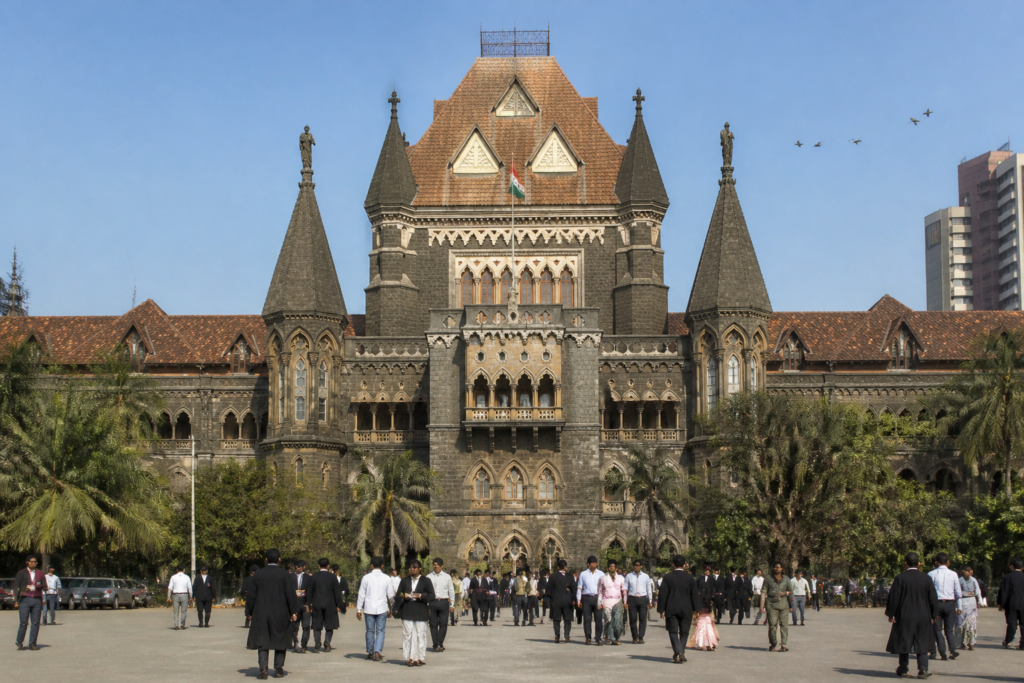
The Maratha quota case has returned to the beginning of its legal journey in the Bombay High Court, despite nearly 40 hearings and more than 60 hours of arguments over two and a half years. The immediate cause is the reconstitution of the three-judge bench after Justice Ravindra V Ghuge was appointed Chief Justice of the Calcutta High Court. The larger issue is institutional: a reservation policy affecting education and public employment can remain operationally uncertain while the court process repeatedly resets.
The newly constituted bench of Justices Makarand S Karnik, N J Jamadar and Sandeep V Marne began hearing the challenge afresh on October 9, 2026. The next hearing is scheduled for October 23. Since Justice Karnik had not previously heard the challenges to the 2024 law, the court treated the altered bench composition as creating a new judicial entity. Under the legal principle described in the report, every judge on a multi-judge bench must independently apply their mind to the entire matter, meaning that a change in even one member requires the arguments to begin again.
That procedural rule is designed to protect the integrity of judicial decision-making. But in this case, it has also created a difficult administrative consequence: the law has remained under challenge while the court’s time, lawyers’ preparation and the affected candidates’ expectations have accumulated across multiple rounds of hearings.
The 2024 law and the legal test
The Maharashtra legislature passed the Socially and Educationally Backward Classes Act in February 2024. It grants the Maratha community a 10 per cent quota in public employment and educational admissions under the SEBC category. The Marathas account for nearly a third of Maharashtra’s population, and the demand for reservation has been accompanied by statewide agitations over several decades.
The law is the latest attempt to provide constitutional and legal backing to the reservation demand. Maharashtra’s earlier laws, passed in 2014 and 2018, did not survive final judicial scrutiny. The 2018 law initially received approval from the Bombay High Court, which in June 2019 upheld the legislation but reduced the quota from 16 per cent to 12 per cent in education and 13 per cent in public employment.
The Supreme Court’s Constitution Bench struck down the 2018 law in 2021. It held that Maharashtra had not established the “existence of extraordinary situations and exceptional circumstances” required to breach the 50 per cent reservation ceiling laid down in the 1992 Indra Sawhney judgment. The 2024 legislation is therefore being tested against a recent constitutional history rather than in isolation.
The petitioners include lawyers, social activists and parents of open-category students appearing for NEET and other examinations. They argue that the Maratha quota will reduce the number of seats available to open-category candidates and adversely affect their children. The state, represented first by Advocate General Birendra Saraf and later by Advocate General Milind Sathe, is defending the legislation.
The first round of hearings began on April 10, 2024, before a bench led by then Chief Justice Devendra Kumar Upadhyaya, with Justices G S Kulkarni and Firdosh P Pooniwalla. On April 16, the court passed an interim order stating that admissions and government appointments made under the Act would remain subject to the final outcome of the case.
That order continues to define the position of candidates who have relied on the law. In June 2025, the state told the court that the interim order remained in force and that candidates could continue to claim the benefit of the Act. Every admission and appointment, however, remains subject to the final judgment. The result is a form of conditional certainty: candidates may proceed, but their position is not final.
How the case reached a third beginning
The first bench held more than 20 hearings. Arguments were made by senior lawyers for the petitioners, after which Advocate General Saraf began the state’s submissions. The hearings stopped when Justice Upadhyaya was transferred to the Delhi High Court as Chief Justice in January 2025 after being elevated to the Supreme Court.
A new phase began in May 2025, when the Supreme Court directed then Bombay High Court Chief Justice Alok Aradhe to constitute a new bench, ensure an expedited hearing and consider interim relief sought by students appearing for the 2025 NEET undergraduate and postgraduate examinations. Two days later, Justices Ghuge, Jamadar and Marne were appointed to the three-judge bench.
The new bench indicated that it wanted the final hearing to proceed quickly. It was told that the petitioners would require 12 sessions to present their arguments, while the respondents would need eight sessions, or four days, to defend the law. The bench said it would use the first, third and fifth Saturdays, along with other available hearing days, to move the matter towards disposal.
Extensive final hearings began on July 18, 2025. Most of the petitioners’ lawyers completed their arguments over nearly 12 effective hearings by March 2026. On April 8, 2026, Advocate General Sathe began submissions for the state after taking over from Saraf in December 2025. Sathe argued across nearly seven effective hearings until September 2. A June 12 adjournment was excluded because Justice Ghuge was hearing matters connected with the Lilavati Trust.
The second round ended not with a judgment but with another change in the bench. On September 6, the Centre cleared Justice Ghuge’s appointment as Chief Justice of the Calcutta High Court, about a month after the Supreme Court Collegium recommended the appointment. The case consequently required a third bench and a fresh hearing.
The institutional cost of a reset
The Maratha quota case shows how judicial continuity can become a significant factor in the implementation of public policy. The legal principle requiring a newly constituted bench to hear the matter de novo is not a delay mechanism by itself. It follows from the requirement that each judge must independently consider the complete case. Yet the practical effect is that the time already spent in hearings cannot simply be carried over when the composition changes.
The problem is particularly visible in cases involving admissions and government recruitment. The 2024 Act allows candidates to claim the quota, but the court’s interim order makes each resulting admission and appointment conditional. Students and job seekers therefore enter institutions or public service without the legal position being fully settled. The report does not establish how many candidates have received benefits under the Act, but it makes clear that the uncertainty affects both educational admissions and government employment.
The court also faces a scheduling challenge. The current bench consists of three judges who preside over separate benches for their regular assignments. A senior lawyer for the petitioners told the court that the parties were concerned that judicial time should not be rendered ineffective. The judges acknowledged the difficulty arising from their assignments and said they would try to accommodate the matter in future.
This makes the case a test not only of the 2024 reservation law but also of how constitutional litigation is managed when the same judges have competing responsibilities. The court’s effort to use Saturdays and additional hearing days indicates the scale of the scheduling problem, while the repeated bench changes demonstrate how vulnerable long-running cases are to judicial transfers and elevations.
A policy caught between legislation and adjudication
Maharashtra’s reservation policy has moved through repeated legislative and judicial stages. The state passed laws in 2014 and 2018, the High Court modified and upheld the 2018 law in 2019, and the Supreme Court struck it down in 2021. The 2024 Act represents a renewed legislative attempt after that constitutional setback. Its survival will depend on whether the state can meet the legal requirements that defeated the earlier law.
The political sensitivity of the issue is also established in the supplied report. The reservation demand was central to the 2024 Lok Sabha and Assembly elections, making the law part of a broader public and electoral debate. But the present legal process is governed by a narrower question: whether the legislation satisfies constitutional standards and can withstand the objections raised by the petitioners.
The case therefore illustrates the limits of treating legislation as the final stage of policymaking. A law may be passed by the legislature, notified for use and relied upon by citizens, yet remain subject to a judicial determination that can alter its operation. Interim orders keep the system functioning, but they do not provide the finality that students, applicants, institutions and government departments ultimately require.
The next stage will depend on whether the third bench can preserve hearing continuity and complete the arguments without another interruption. The court has posted the matter for October 23 and indicated that it will try to accommodate the case despite the judges’ regular assignments. Until a final decision is delivered, the 10 per cent Maratha quota will remain available under the existing interim arrangement, while every admission and appointment made under it remains subject to the outcome of the challenge.


