

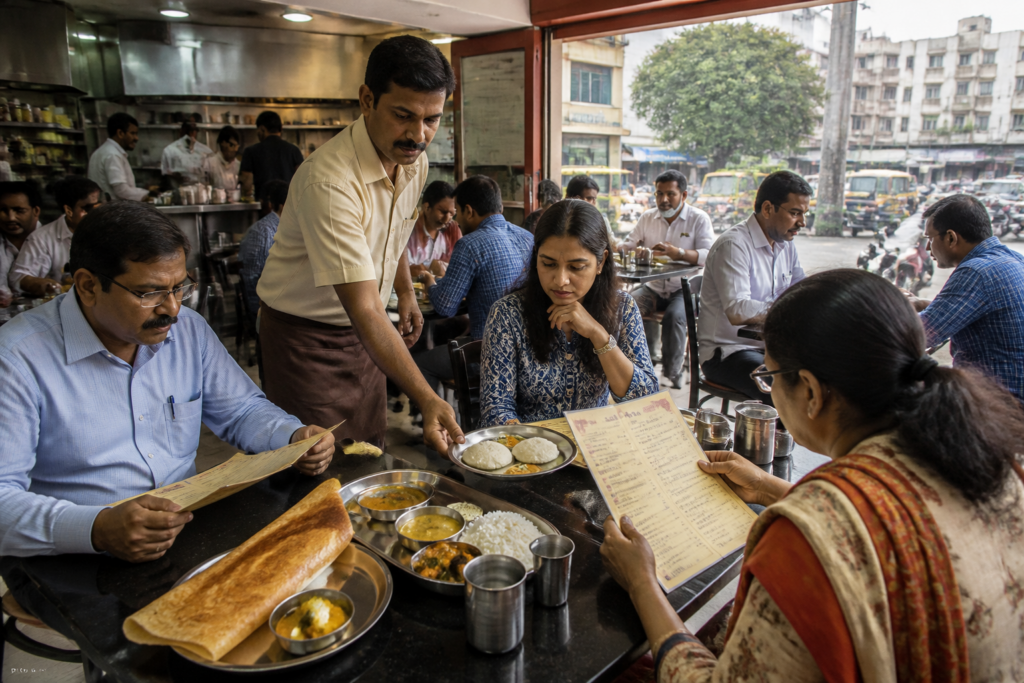
Mumbai restaurant prices are set to rise by 10% to 15% from next week, according to the Indian Hotel & Restaurant Association (AHAR), as eateries respond to higher cooking-gas, food, rental, labour and transportation costs. The increase could make everyday meals such as idli, dosa and dal-rice more expensive for office-goers, students, delivery-dependent professionals and families that rely on eating out.
AHAR president Vijay K Shetty said the increase would be a minimum of Rs 10 when calculated across menu items such as idli, dosai and dal-rice. AHAR has more than 25,000 member restaurants and bars. However, the association’s announcement does not impose a uniform or mandatory rate on every establishment. Individual restaurants will decide whether to revise prices and by how much, depending on their own cost structures and business models.
Online menus indicate how the proposed increase could affect common meals, although these prices are not citywide averages. Udupi Cafe in Powai lists idli at Rs 80, sada dosa at Rs 90 and dal khichdi at Rs 120. Udupi 2 Mumbai’s Dadar East outlet lists steamed idli at Rs 120, sada dosa at Rs 130 and masala dosa at Rs 165. A 10%-15% revision would take an Rs 80 serving of idli to about Rs 88-Rs 92, while a Rs 165 masala dosa would cost approximately Rs 182-Rs 190.
Prices also vary significantly between neighbourhoods and outlets. Swiggy listings show dal-rice at Rs 140 at Jyoti Refreshment in Dadar East and Rs 175 at Neo Welcome Restaurant in Ghatkopar West. The figures illustrate why customers will experience different increases depending on where they eat, rather than facing one standard price across Mumbai.
For regular customers, a modest rise could accumulate over a month. An office-goer spending Rs 150 a day on breakfast and lunch would spend Rs 165 to Rs 172.50 if the full amount increased by 10%-15%. Across 26 working days, that would add Rs 390-Rs 585 to the monthly bill. For two working adults with similar eating-out habits, the additional monthly expense could reach Rs 780-Rs 1,170.
Shetty said restaurants had absorbed higher expenses for as long as possible but were finding it increasingly difficult to do so as several costs rose simultaneously. Commercial LPG and piped gas are essential to kitchen operations, while restaurants also face higher costs for vegetables, pulses, milk, dairy products, edible oils, logistics, maintenance, utilities and equipment. Commercial rents and other real-estate costs add pressure, particularly in business districts and high-footfall neighbourhoods.
The cost pressure has also extended to pulses. A Times of India report published in October said retail dal prices had risen by Rs 20-Rs 30 per kg across the Mumbai Metropolitan Region after wholesale prices at Vashi APMC increased by Rs 10-Rs 20 per kg. The report attributed the rise to supply shortages, deficient monsoon rainfall, drought conditions, logistics costs and festive-season demand.
Mumbai restaurants have faced similar pressure before. In April 2026, another media report said Udupi Shri Krishna in Lower Parel had raised prices by 20% during a commercial LPG supply crunch. AHAR said the proposed increase was necessary to allow restaurants to maintain food quality, hygiene, service and employment. Customers have been advised to check current menus at their regular outlets, as the association’s announcement does not mean that every restaurant has already increased prices.


