

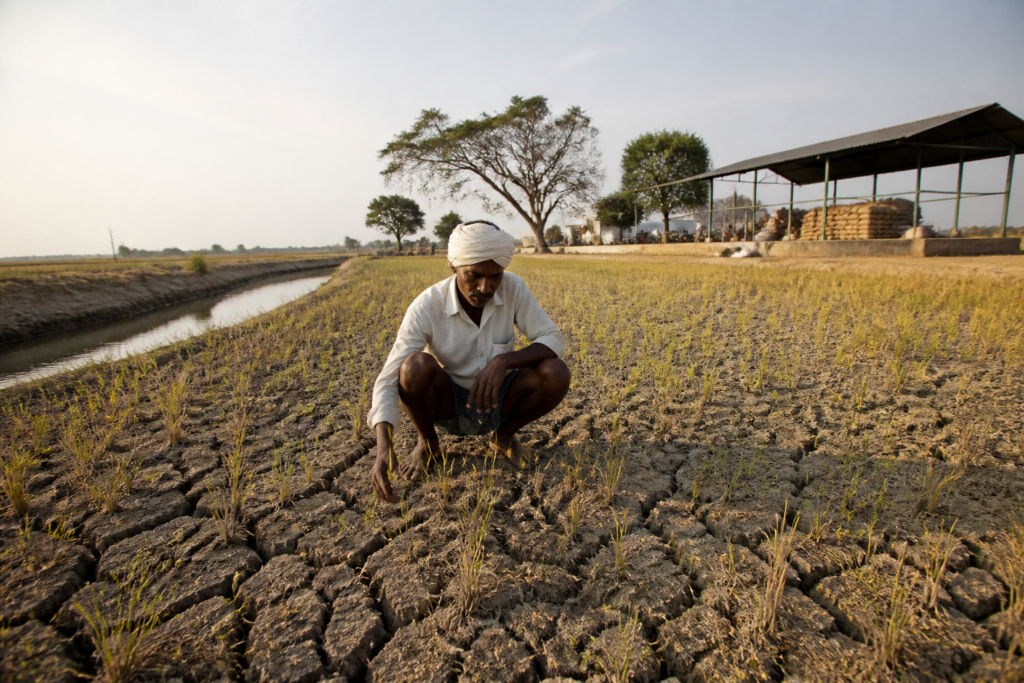
Karnataka’s rice and tur dal markets are showing how a water shortage can travel from fields to household budgets. A report by Prajavani says deficient rainfall, inadequate irrigation releases and adverse weather have reduced crop prospects across major rice-growing and tur-producing districts, while lower market arrivals and depleted stocks are pushing procurement and consumer prices higher.
The immediate concern is not limited to one failed harvest. It is the exposure of Karnataka’s food supply chain to a chain of linked pressures: rainfall uncertainty, dependence on reservoir releases, crop-specific water requirements, storage levels, milling capacity and the unequal distribution of price gains between farmers, traders and consumers. The report’s evidence points to a problem that sits at the intersection of agriculture, water governance and urban food security.
The effects are particularly important for cities because urban consumers are largely dependent on market supply rather than their own production. When the arrival of paddy and tur falls, households experience the impact through higher retail prices. The burden is most direct for low- and middle-income families, for whom rice and pulses are regular food purchases and rising prices leave less money for other needs.
Karnataka’s rice-growing belt is geographically spread across districts including Ballari, Raichur, Gangavathi, Koppal, Shivamogga, Mysuru and Mandya, according to the report. These regions do not share identical farming conditions, but the common pressure identified by the report is a shortage of rainfall during the current season. In some areas, water was also not released from reservoirs when crops required it, adding an institutional dimension to what could otherwise be understood only as a weather problem.
That distinction matters. Rainfall is a climatic variable, but irrigation releases are shaped by reservoir levels, administrative decisions, competing demands and the timing of water availability. For paddy, timing is particularly important because the crop requires substantial water. If adequate rain or irrigation is not available at the necessary stages, yields can decline sharply. The report says there is concern that losses in important rice-producing districts could exceed 50 per cent, although this remains a reported apprehension rather than a final official crop-loss assessment.
The market is already reflecting the supply pressure. Karnataka has about 700 rice mills, and mill owners told Prajavani that reduced rice stocks have forced them to purchase paddy at higher prices. The reported price of paddy has risen from approximately ₹3,500 per quintal two months ago to between ₹4,600 and ₹4,700 per quintal. That increase raises the cost base for milling and places upward pressure on the price ultimately paid by consumers.
The movement from farm-gate procurement to retail prices is not automatic or uniform, but the direction is clear in the account provided by the rice millers. When raw material becomes more expensive and available stocks fall, processors face higher operating and procurement costs. Those costs can move through the supply chain to wholesalers and retailers. For urban families, the result is not simply a higher price for one agricultural commodity; it is a recurring increase in the cost of an essential food item.
The tur dal market is facing a separate but related set of pressures. Karnataka, Maharashtra and Gujarat are identified in the report as major tur-producing states. In the Kalaburagi region, soil moisture deficiency and excessive heat delayed flowering in tur plants, raising concerns about production. Traders and mill owners also said adverse weather had affected both yield and quality.
Kalaburagi’s current production concerns are compounded by the report’s reference to flooding in the region during the previous year. The two events illustrate the volatility confronting farm production: excessive water in one season can damage crops, while inadequate moisture and high temperatures in another can reduce flowering and yields. For markets, the result can be a continuing shortage even when the causes change from one season to the next.
The report also highlights a less visible distributional problem. Higher market prices do not necessarily mean higher incomes for all farmers. Producers who retained stocks from the previous season may benefit from current prices, but farmers who have suffered crop losses in the present season may have little produce to sell. In that situation, the market price rises while the affected cultivator’s ability to benefit from it falls.
This separation between price and income is central to understanding the crisis. A farmer with a large marketable surplus can gain from a price increase. A farmer whose crop has failed faces the opposite combination: lower output, lost cultivation costs and more expensive food as a consumer. The report says market analysts believe the full benefit of higher rice and tur dal prices will not reach all farmers, particularly those affected by current-season losses.
For consumers, the supply shortage arrives through a market that is already sensitive to stocks and arrivals. The report says that rice and tur dal prices could stabilise if good rainfall occurs in late October and November. If that does not happen, traders expect prices could rise further. This is an assessment attributed to traders, not a confirmed forecast, but it demonstrates how closely market expectations are tied to the next period of rainfall.
The institutional question is therefore not only whether there is water in a reservoir or rain in a district. It is whether water reaches crops at the right time, whether production risks are identified early, whether storage and procurement systems can moderate supply shocks, and whether support reaches farmers who lose output rather than only those who hold stocks. The report does not provide details of a government relief package, crop-loss survey, procurement intervention or price-control measure. Those gaps are important because they determine how a weather-linked production shock is managed administratively.
The dependence on reservoir releases also shows why irrigation management cannot be separated from food-price policy. If water is released too late for a crop cycle, the eventual market shortage may appear months later, after the original administrative decision has disappeared from public attention. Consumers then encounter the outcome as a retail price increase, while the connection to water allocation remains largely invisible.
The same applies to storage. The reported reduction in rice stocks has increased the procurement pressure faced by mills. Stocks can provide a buffer between one harvest and the next, but that buffer is unevenly distributed. Farmers with storage capacity may wait for better prices, while those without it may sell earlier. Millers, traders and households also experience the shortage at different points in the chain. The available report establishes the stock pressure but does not quantify district-wise inventories or identify how much supply is held by each category of market participant.
The evidence also complicates any simple reading of higher food prices as a benefit to agriculture. A higher paddy price may improve returns for farmers who have produce available, but it can also raise milling costs and consumer prices. A higher tur dal price may signal scarcity rather than prosperity if it reflects reduced yields and lower-quality output. The central issue is not whether prices rise or fall in isolation, but who absorbs the loss and who captures the gain.
For urban Karnataka, this is a reminder that food security is partly an infrastructure and governance question. Cities depend on production landscapes outside their boundaries, on roads and market links, on mills and storage facilities, and on water decisions made across river basins and districts. A disruption in any one of these systems can eventually appear in urban kitchens.
What the available evidence confirms is a combination of rainfall deficiency, irrigation-related stress, crop damage, lower arrivals, reduced stocks and higher paddy procurement prices. It also confirms that the effects are unequal: farmers with stored produce may benefit, while farmers facing crop loss may not, and consumers bear a direct share of the higher cost. What remains to be established through official data is the final scale of crop damage, the district-wise production shortfall, the extent of retail price increases and the measures being taken to protect both affected cultivators and urban households. The next significant indicators will be rainfall in late October and November, fresh crop assessments, market arrivals and any official intervention in procurement or consumer supply.


