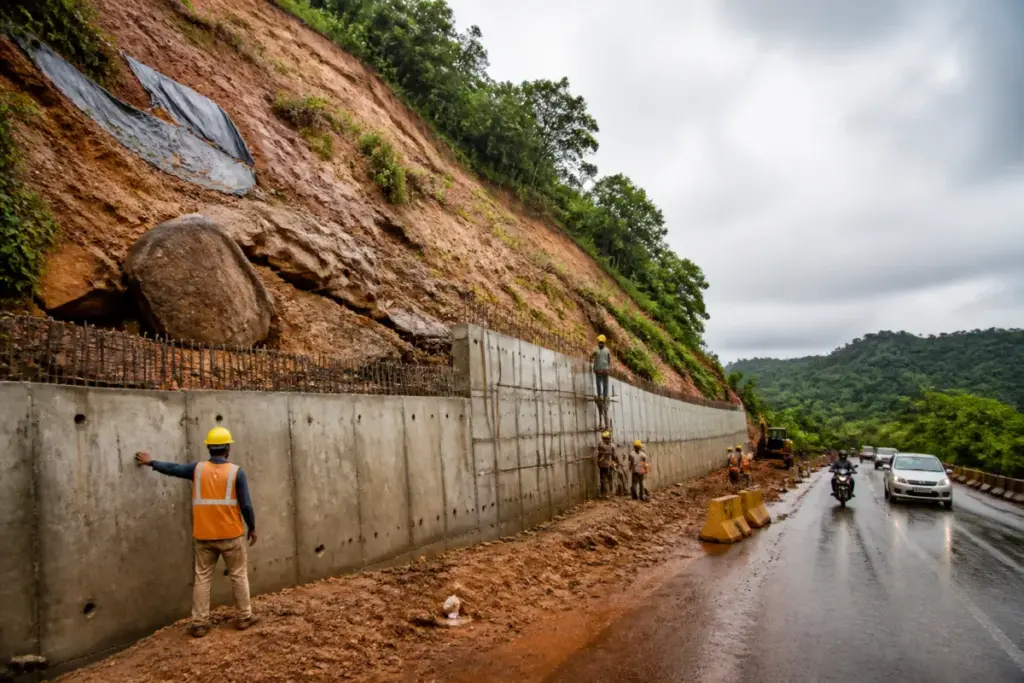
The Public Works Department has begun constructing a retaining wall along the Vathadev-Vhalshim bypass in Bicholim, Goa, after an unstable hillside raised concerns about landslides, falling debris and large boulders reaching the road during heavy rainfall.
The intervention is intended to stabilise the vulnerable stretch and improve safety for motorists using the bypass during the monsoon. The hillside beside the road had become a concern after large boulders were observed tilting towards the carriageway, creating a potential risk for commuters.
According to the report, residents alerted the authorities about the condition of the hillock and urged them to take corrective action before a landslide or falling rocks caused an accident. The concerns prompted authorities to initiate remedial work at the site.
“The debris from the hillock and huge boulders were in a dangerous position, posing a risk of landslides. Locals urged the authorities concerned to take corrective measures to prevent any untoward incident,” resident Namdev Gaonkar said.
Gaonkar said it was reassuring that the national highways authorities had taken cognisance of the issue and started the necessary work. The reference to national highways authorities comes in the context of the road-safety intervention on the bypass, while the construction has been undertaken by the PWD, according to the report.
Retaining walls are used to hold back soil, rock and debris on sloping terrain. On roads cut through hillsides, such structures can help reduce the likelihood of material sliding onto the carriageway, although the safety of a vulnerable stretch also depends on the condition of the slope and the effectiveness of related protection and drainage measures. The supplied report does not specify the wall’s length, height, cost, design details or construction deadline.
The location is significant for motorists because the bypass passes along a hillside where heavy rainfall can increase the risk of slope instability. A road obstruction caused by debris or boulders could affect movement through the corridor and expose commuters to sudden hazards, particularly during periods of intense rain.
An official said the stretch would be safer for motorists once the retaining wall is completed. The statement does not provide a completion date or details of any additional measures planned for the hillock.
The immediate next step is the completion of the retaining wall along the identified vulnerable stretch. Until the work is finished, the road remains a site where motorists may encounter construction activity and a hillside that authorities have identified as requiring stabilisation.