

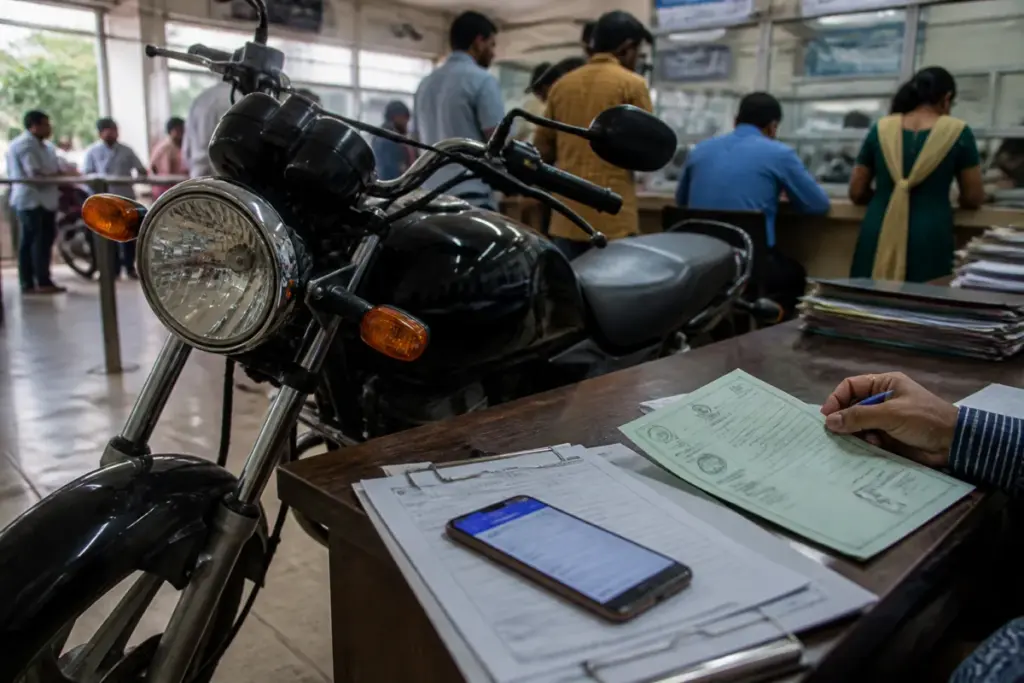
The Western India Automobiles Association’s proposed reforms for used vehicle ownership transfers point to a problem that is larger than delayed paperwork: a vehicle can change hands on the street while official records continue to identify the previous owner. When that vehicle is later linked to traffic violations, an accident or a criminal investigation, the gap between possession and registration can become a legal and administrative liability.
WIAA plans to submit a representation to the Regional Transport Commissioner seeking time-bound online transfers, stronger buyer verification, digital tracking and improved coordination between the Regional Transport Office and the police. The association’s intervention follows concerns that sellers remain exposed when applications are pending or buyers fail to complete the transfer process.
The issue is especially relevant in India’s large second-hand vehicle market, where transactions may involve private individuals, roadside dealers and informal payment arrangements. The supplied report does not establish the scale of delayed transfers, but it shows how the existing process can leave several institutions working with different versions of ownership. The buyer may have possession, the seller may have a sale receipt, the insurer may have a separate record, while the Registration Certificate continues to display the previous owner’s name.
That administrative mismatch matters because the RC is the first record investigators and enforcement agencies are likely to consult. The report cites the example of a second-hand bike allegedly used in the firing at actor Tiger Shroff’s vehicle in Juhu. It also notes that vehicles involved in accidents or suspected crimes can initially be traced to the person whose name remains on the RC. In such cases, the former owner may have to establish when possession changed hands and whether the required transfer steps were completed.
The legal framework already assigns duties to both parties. Advocate Rajdeep Lahiri, who practises criminal law, said Section 50 of the Motor Vehicles Act, 1988, requires the seller and buyer to report a sale and complete the transfer. For transfers within the same state, the seller generally has 14 days to report the transaction, while the buyer has 30 days to apply for registration in the buyer’s name. The report also refers to the seller’s requirement to report a transfer through the Parivahan portal within 24 hours, while noting that statutory requirements apply independently to the recommendations made by WIAA.
The distinction between reporting a sale and completing a transfer is central to the problem. A seller may submit documents, hand over the vehicle and retain acknowledgements, but still remain visible as the registered owner until the RTO updates its records. WIAA wants the process to acknowledge applications immediately, provide a prescribed completion deadline and allow sellers to track progress. It also wants a mechanism to address cases in which documents have been submitted but the record remains unchanged.
This is not only a customer-service problem. It is a question of how public agencies establish responsibility. WIAA’s proposal for an integrated RTO and police system would allow authorities to see the registered owner, the recorded buyer and the documented date of transfer in one place. Such coordination could reduce the need to reconstruct ownership through scattered receipts, payment records, insurance documents and personal explanations after an incident has occurred.
Buyer verification is another part of the proposed reform. WIAA has urged sellers to verify the buyer’s identity and address, retain copies of relevant documents and prepare a written record containing the sale price, payment details and date and time of delivery. It has particularly cautioned against transactions involving buyers who cannot provide verifiable identification, including arrangements made through roadside second-hand vehicle dealers.
The recommendation shifts some responsibility back to the transaction itself. A vehicle sale is often treated as complete when money is paid and keys are handed over. The association and the legal guidance cited in the report indicate that this is not enough. The transaction must create a traceable chain linking the seller, buyer, vehicle identification numbers, payment, delivery and official reporting. Without that chain, the former owner may have difficulty showing that the vehicle was no longer under their control.
The checklist for buyers reflects the same principle. Before completing a purchase, buyers are advised to match the seller’s identity with the RC, verify the chassis and engine numbers, check pending challans, outstanding loans or hypothecation, and look for known police cases. They should obtain the RC, insurance certificate, pollution-under-control certificate and transfer documents, retain payment records and arrange for insurance to be transferred into their name.
For sellers, the recommended safeguards include verifying the buyer through Aadhaar, PAN or other applicable identification, preparing a written sale receipt, using traceable payment methods, completing Form 29 and retaining acknowledgements and copies of submitted documents. Sellers are also advised to notify the insurer, check outstanding dues and continue tracking the application until the RTO reflects the new owner. These steps do not replace statutory duties, but they can create documentary evidence of what happened and when.
The risks described by Lahiri extend beyond traffic challans. He said vehicles involved in investigations concerning narcotics, vehicle-assisted dacoity and rape may have been exchanged rapidly, used temporarily or abandoned after an offence. In those circumstances, police may begin with the last known legal owner. A cash transaction, an informal understanding or the claim that a vehicle was purchased only for temporary use may not, by itself, establish that ownership responsibilities ended.
The report also raises a record-cleaning question. Lahiri suggested an exercise similar to the Special Intensive Revision of electoral rolls for vehicles, aimed at verifying ownership records and identifying untraceable owners, abandoned vehicles and unclaimed vehicles. The proposal is not presented as an existing government programme. Its significance lies in identifying a possible administrative response to records that may remain active even when the vehicle’s ownership, location or use is unclear.
However, the available material does not establish whether Maharashtra will adopt WIAA’s recommendations, what technology or funding an integrated system would require, or how responsibility would be divided between the RTO, police, insurers and vehicle owners. Attempts to contact Maharashtra State Transport Commissioner Rajesh Narvekar did not yield a response, according to the report. WIAA’s proposed representation is therefore a call for policy change, not confirmation that new rules have been approved.
The immediate institutional challenge is to make the ownership record follow the transaction quickly enough to remain useful. A system that records only the final updated RC may not adequately protect a seller who reported the sale but is waiting for processing. Conversely, a system that treats every private sale as complete without buyer verification could create a different accountability gap. The reform question is how to record both the legal status of the vehicle and the documented progress of the transfer.
Used vehicle ownership transfers therefore sit at the intersection of mobility, policing and digital governance. The central evidence in the report confirms that the present process can expose citizens when possession changes before official records do. It also shows that the proposed solution depends on more than an online form: it requires deadlines, acknowledgements, identity checks, interdepartmental data-sharing and enforcement of duties already set out in law. The next developments to watch are WIAA’s representation to the Regional Transport Commissioner and any formal response from Maharashtra’s transport authorities.


