

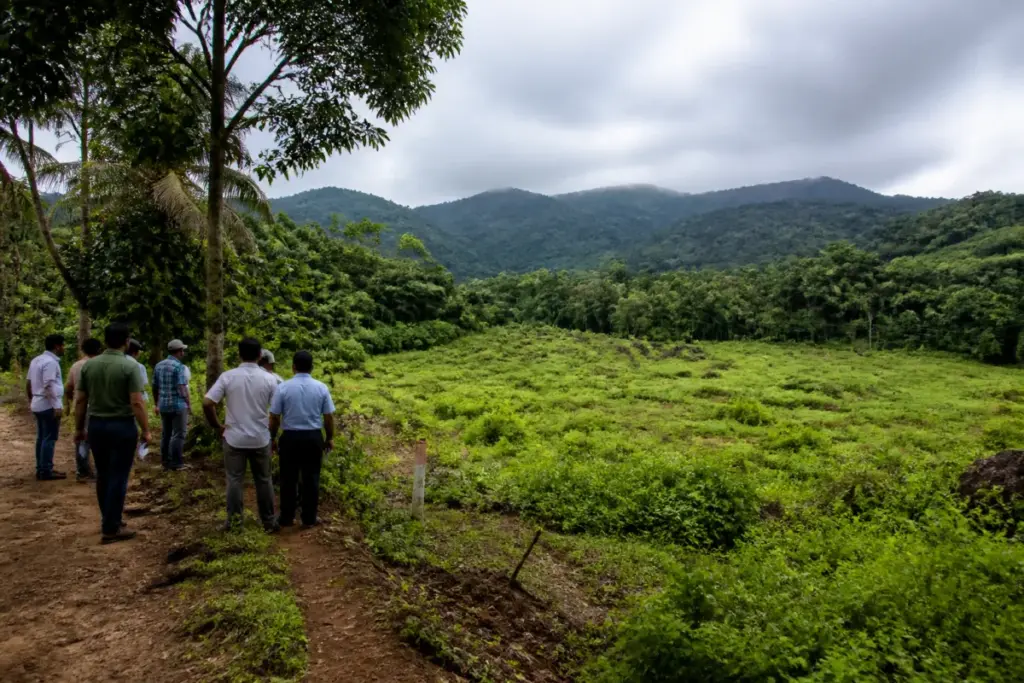
The proposed Thiruvananthapuram Zoo relocation has entered a more competitive phase, with Peringammala grama panchayat identifying two large sites at Ponmudi after Madavoor proposed another location at Ilamprocode. The competing proposals have moved the debate beyond whether the zoo should leave its current central-city premises to a more consequential question: what kind of land, landscape and infrastructure should support a modern zoological park in the capital district?
Peringammala submitted a representation on October 5 seeking the establishment of the zoological park and a college in the region. The panchayat had passed a resolution on September 30 proposing the acquisition of 415 acres of revenue land belonging to Invercauld Estate at Ponmudi. It also identified another potential site of 147 acres at Merchiston Estate.
A delegation from the panchayat met V D Satheesan and presented the proposal. According to panchayat president Arun Kumar PN, the two locations are suitable for relocating the zoo and could also increase the tourism potential of Ponmudi and surrounding areas. The representation is now part of a wider set of options that the state government is expected to examine before taking a final decision.
Madavoor had earlier entered the discussion by proposing Ilamprocode. Its panchayat passed a resolution identifying around 424 acres spread across two or three local-body areas. The competing bids indicate that the relocation question is being shaped not only by the requirements of the zoo but also by the development aspirations of local governments located in the eastern and forest-fringed parts of Thiruvananthapuram district.
That shift in geography is important. The existing zoo is located in the heart of the state capital and has a history of around 170 years. Its present location makes it a major heritage institution within the city, but the relocation proposal rests on the argument that a larger site near a natural habitat could provide better facilities for animals. The proposal also envisages a different future for the existing premises, with the site potentially being developed into a major public space.
This creates two linked planning decisions rather than one. The state must first identify a location capable of supporting a modern zoological park. It must then determine how an important central urban property, currently associated with the zoo’s heritage and public identity, can be used if the animals and facilities are moved elsewhere. The available information does not establish what future land-use plan, financial model or implementation agency would govern either site.
The size of the parcels being proposed is one of the most visible features of the debate. Peringammala has put forward 415 acres at Invercauld Estate and 147 acres at Merchiston Estate, while Madavoor has cited approximately 424 acres across multiple local-body areas. These figures suggest that land availability is central to the argument for relocation. They do not, however, establish whether the land is contiguous, legally transferable, accessible, environmentally suitable or capable of accommodating the full infrastructure required for a zoological park.
A zoo is not defined only by its animal enclosures. A viable facility would require visitor access, internal circulation, staff and veterinary facilities, utilities, waste management, safety systems and connections to the wider transport network. The source report does not provide a project design, cost estimate, traffic assessment or construction timeline. Those gaps matter because a large land parcel by itself cannot demonstrate that a site is suitable for a public institution with daily visitors and specialised operational requirements.
The environmental question is equally central. The relocation proposal has been associated with a site near a natural habitat, including references to Neyyar or Palode in the earlier discussion. Peringammala lies in the eastern part of the district and has a substantial forest landscape. This setting may support the argument for a more spacious facility, but it also makes environmental assessment unavoidable. The government will need to examine the ecological sensitivity of each site, the effect of construction and visitor movement, and the infrastructure needed to operate the zoo without compromising the surrounding landscape.
The current contest also shows how major urban institutions can become instruments of local development strategy. Peringammala’s president has linked the proposed zoo to the tourism potential of Ponmudi and nearby areas. Madavoor’s proposal similarly places the possible relocation within the administrative geography of local bodies. For these panchayats, hosting the zoo would not simply mean receiving a public facility; it could influence visitor movement, land demand and the region’s position within the district’s tourism network. The supplied material does not establish the likely scale of those effects, but it clearly shows that local governments view the project as a development opportunity.
At the state level, the decision will involve coordination across land administration, local government, tourism, urban planning and the management of the zoo itself. The proposal to acquire revenue land means that ownership and transfer procedures will be significant. The involvement of more than one local-body area in the Madavoor proposal adds another layer of administrative coordination. The state government is yet to announce a final location, so the institutional structure for evaluating and implementing the project remains unsettled.
The competing acreage figures also underline why a transparent assessment framework will be necessary. A comparison based only on available land could overlook access, environmental constraints and the cost of extending infrastructure to a peripheral location. Conversely, a site with stronger ecological or operational advantages could face limitations related to connectivity or acquisition. The report identifies land availability, connectivity, environmental impact and the infrastructure needed for a modern zoological park as issues requiring careful assessment, but it does not record the government’s detailed criteria or any completed technical study.
The debate over the existing zoo’s future adds an urban-design dimension. A centrally located, 170-year-old institution occupies a rare public position in the capital. If the zoo is relocated, the existing premises could become a major public space, according to the proposal. That possibility would require its own planning process, including decisions on heritage protection, public access, landscape design and long-term management. No final reuse plan has been announced, and it remains unclear whether the existing site would be retained wholly as open space or combine public, cultural and institutional functions.
The data currently available is therefore preliminary but significant. Three broad land options have entered public discussion: 415 acres at Invercauld Estate, 147 acres at Merchiston Estate and approximately 424 acres at Ilamprocode across two or three local-body areas. The numbers show the scale of the land being considered, while the zoo’s approximately 170-year history establishes the institutional importance of the facility being moved. They do not yet provide a basis for ranking the proposals because information on access, site configuration, environmental conditions, costs and visitor capacity has not been made public in the supplied material.
This is why the next stage should be understood as site evaluation rather than site selection. The chief minister’s office or the state government has not announced a final location, and the response to the Peringammala delegation only indicates that the sites would be considered among the options. The government’s eventual decision will determine whether the project is treated primarily as a zoo expansion, a conservation-linked institution, a tourism project or a broader regional development intervention.
For Thiruvananthapuram, the relocation proposal is ultimately a test of how the city manages the relationship between central urban land and peripheral natural landscapes. Moving the zoo could create an opportunity to rethink a significant public property in the capital while providing more space for animal facilities. It could also produce new demands on forest-edge land, roads, utilities and local administrations. The evidence presently confirms that the search has widened and that local governments are actively competing to host the institution. It does not yet establish which site is technically or environmentally preferable.
The immediate milestones are the state government’s assessment of the proposed locations and its decision on whether to proceed with a specific site. Until that process produces technical findings, the competing proposals remain claims of suitability rather than an approved relocation plan.


