

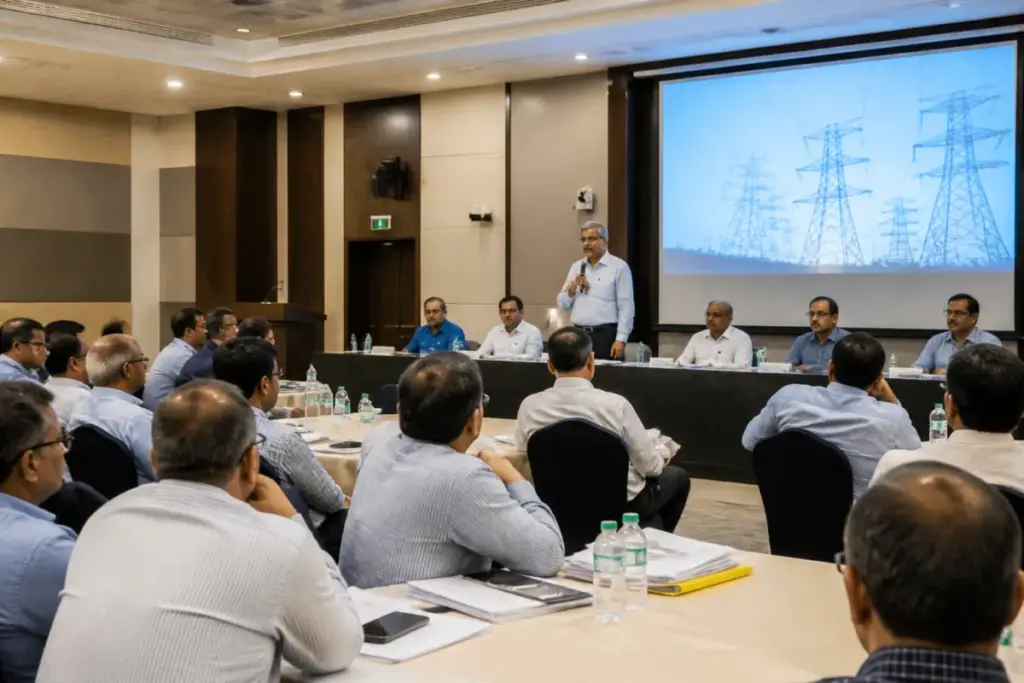
The Telangana Southern Power Distribution Company Limited (TGSPDCL) has assured industrial consumers in Hyderabad that concerns over electricity supply and related operational issues will receive priority attention and prompt action. The assurance was given by CMD Jitesh V Patil at the utility’s sixth stakeholders’ meeting with industry representatives in the city.
The meeting was held at the FTCCI Surana Auditorium at Federation House, where Patil interacted with representatives of industrial associations and individual units. More than 35 representatives attended the discussion, which focused on issues affecting high-tension industrial consumers and the reliability of electricity services required for industrial operations.
Patil said TGSPDCL would work to understand the requirements and operational needs of industries before taking measures to resolve their electricity-related concerns. “All your concerns will be reviewed and necessary steps will be taken to resolve them,” he told the representatives, according to Telangana Today.
The discussions covered several areas of concern for industrial consumers, including power supply reliability, electricity tariffs and the reduction of delayed payment surcharges. Participants also raised issues linked to solar power generation and net metering, which determine how electricity generated by consumers can be integrated with the distribution system.
The appointment of dedicated relationship managers for high-tension industrial consumers was also discussed. Such an arrangement would provide industrial units with a designated point of contact within the utility for service-related concerns, although the meeting report did not specify the number of managers proposed or an implementation date.
The stakeholders’ meeting also reviewed the progress of issues raised during the previous meeting. TGSPDCL and industry representatives discussed further action plans and timelines for pending matters, but the utility did not publicly specify individual deadlines or confirm which issues had already been resolved.
Patil emphasised that continuous dialogue and coordination between the utility and industrial consumers could help identify problems at an early stage and support their timely resolution. The meeting places industry-facing electricity administration within a regular consultation process, rather than treating supply and billing concerns only as individual complaints.
For Hyderabad’s industrial units, the issues discussed extend beyond electricity availability to the cost and administrative predictability of power services. Tariffs, delayed payment surcharges, solar generation, net metering and dedicated utility coordination can influence how industrial consumers manage operations and payments. The meeting, however, concluded with assurances and proposed follow-up action; the supplied report does not establish any immediate tariff change, surcharge reduction or new net-metering policy.


