

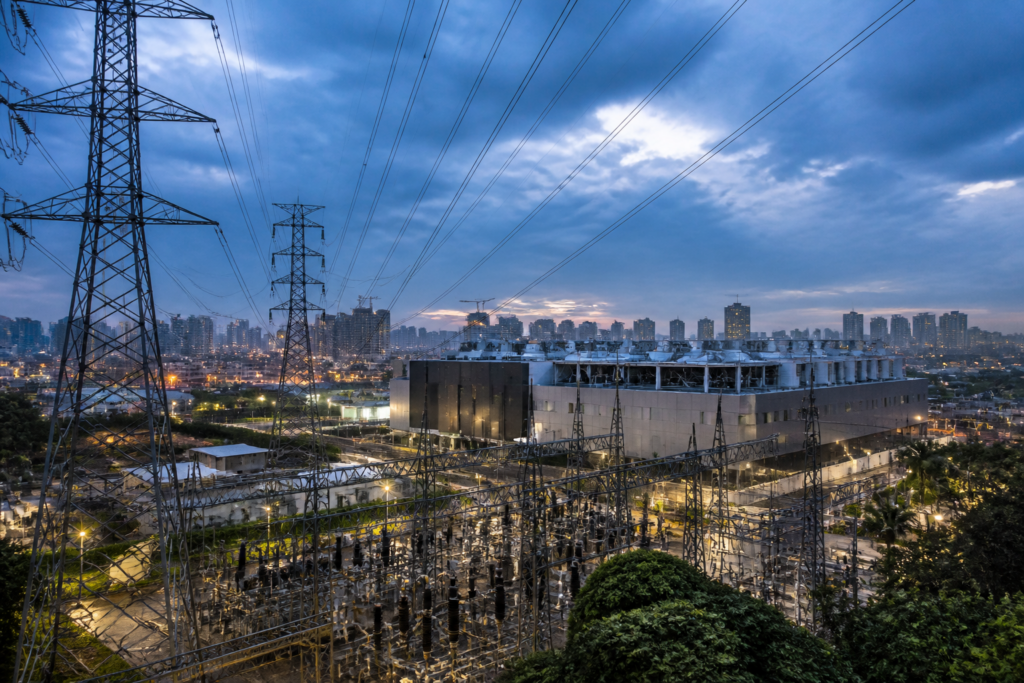
Tata Power’s expanding data-centre pipeline is placing Mumbai’s electricity network at the centre of India’s digital infrastructure build-out. The company says it is pursuing more than 2.8 GW of opportunities across renewable energy, transmission and distribution, while upgrading the Mumbai Metropolitan Region’s grid to serve the growing power requirements of hyperscale facilities and artificial intelligence-led computing.
The announcement is significant because a data centre is not simply another large electricity consumer. Its operations depend on uninterrupted supply, reliable grid connectivity and enough redundancy to prevent a failure in one part of the network from disrupting digital services. Tata Power’s stated approach combines powered land, transmission and grid connectivity, renewable energy, storage, cooling and utility infrastructure. That broadening of the supply proposition shows how electricity infrastructure is becoming part of the location and operating model for large digital facilities.
According to a company statement reported by The Hindu BusinessLine, Tata Power’s opportunity pipeline includes approximately 430 MW of upcoming load under its distribution network, 1,236 MW of transmission-linked opportunities and 1,150 MW of green energy capacity under active engagement. The company said it has 29 active workstreams involving 18 leading global and domestic data-centre operators.
These figures describe an opportunity pipeline rather than commissioned capacity. That distinction matters for cities and utilities. The stated numbers represent potential demand and active engagements across different parts of the electricity system, not a single project coming online at one location. They nevertheless indicate the scale at which digital infrastructure is beginning to shape investment decisions in transmission, distribution and generation.
The Mumbai Metropolitan Region is the clearest test in the announcement. Tata Power said it is upgrading its 110 kV and 220 kV networks to meet the rapidly growing power requirements of hyperscale data centres in the region. It is also augmenting transformation and transmission capacity, developing new receiving stations and advancing a 400 kV transmission ring network.
In practical terms, these projects point to a shift from treating data-centre demand as an isolated connection request to planning a more resilient network around it. A new receiving station can add a connection point, while higher-voltage transmission infrastructure can increase the system’s ability to move power. Network redundancy is intended to ensure that a disruption in one part of the system does not leave a large digital facility without supply. The company describes the proposed network as resilient, secure and future-ready, although the supplied material does not establish the implementation schedule or commissioning status of each component.
The grid work forms part of Tata Power’s Rs 15,000 crore Mumbai Grid Upgradation and Expansion Plan, according to the company. The announcement does not provide a project-wise breakdown of this amount, nor does it specify how much of the plan is directly attributable to data-centre requirements. That information will be important in assessing how the investment is divided between general network strengthening, new customer connections and infrastructure dedicated to large digital loads.
The institutional challenge is broader than the capacity of a single utility. Data centres require coordination between distribution companies, transmission planners, generation companies, land and planning authorities, and the operators seeking connectivity. The company’s description of a combined package—powered land, grid access, renewable energy, storage, cooling and utility infrastructure—suggests that the development process increasingly depends on aligning several systems before a facility can operate at scale.
This has consequences for the way urban expansion is planned. Conventional commercial or industrial development often focuses on land availability, road access and construction permissions. For large data centres, electricity availability and the reliability of the surrounding network become equally important. Cooling and utility infrastructure also form part of the requirement. The result is a stronger link between digital land use and physical infrastructure planning, even though the users of a data centre may be located far beyond the city where its servers are housed.
The demand outlook cited in the announcement reinforces that connection. The Ministry of Power, based on estimates by the Central Electricity Authority, projects that AI-led data centres could add approximately 26.3 GW of electricity demand by financial year 2031-32. This is a projection, not present consumption, but it provides an indication of why utilities are beginning to plan for large and potentially concentrated loads associated with cloud computing, artificial intelligence and digital platforms.
For the power system, the challenge is not only the volume of electricity but also the quality and timing of supply. Tata Power’s stated interest in renewable energy, storage and network redundancy suggests that the data-centre ecosystem is being approached as a combined generation-and-grid problem. The supplied material does not provide details of the proposed storage technologies, renewable procurement arrangements or the operating profile of the facilities, so the exact contribution of these measures to reliability cannot yet be assessed.
The 2.8 GW pipeline also reveals how infrastructure demand is being distributed across the electricity value chain. The 430 MW distribution-linked component concerns the network that ultimately serves customers. The 1,236 MW transmission-linked component points to the higher-capacity systems required to move electricity towards major loads. The 1,150 MW green-energy component indicates that the company is also engaging on the supply side. These categories should not be added together as if they represented three independent blocks of final demand; they describe different opportunity areas connected to the same ecosystem.
That distinction is important for public scrutiny. A large pipeline can signal commercial momentum, but it does not by itself confirm how much capacity will be built, when it will be used or how costs will be allocated. Future assessments will need project-level information on approvals, land, grid-connection milestones, construction progress, renewable supply and the extent to which network upgrades serve data centres as well as other consumers.
For Mumbai, the central urban question is whether the region’s electricity network can become more resilient while accommodating new high-demand facilities. Tata Power’s proposed 400 kV transmission ring and receiving stations are presented as part of that response. The company’s announcement establishes the direction of investment, but not the final performance of the system. Reliability will ultimately depend on completed infrastructure, operating practices, redundancy levels and coordination across the institutions responsible for the grid.
The announcement also places data centres within a wider national infrastructure transition. India’s digital economy is increasing demand for physical facilities that are largely invisible to everyday users but dependent on land, electricity, cooling, telecommunications and utility services. As AI-led applications expand, the Ministry of Power’s projected 26.3 GW additional demand makes energy planning a direct condition of digital growth.
What the available evidence confirms is that Tata Power is positioning itself as more than a conventional electricity supplier for data-centre operators. Its stated pipeline spans distribution, transmission, renewable energy and supporting infrastructure, with Mumbai identified as a major focus for grid enhancement. What remains unclear is how much of the pipeline will become operational capacity, the timetable for the Mumbai upgrades and the precise allocation of the Rs 15,000 crore expansion plan. Those milestones will determine whether the proposed infrastructure can match the speed and reliability requirements of India’s next generation of digital facilities.


