

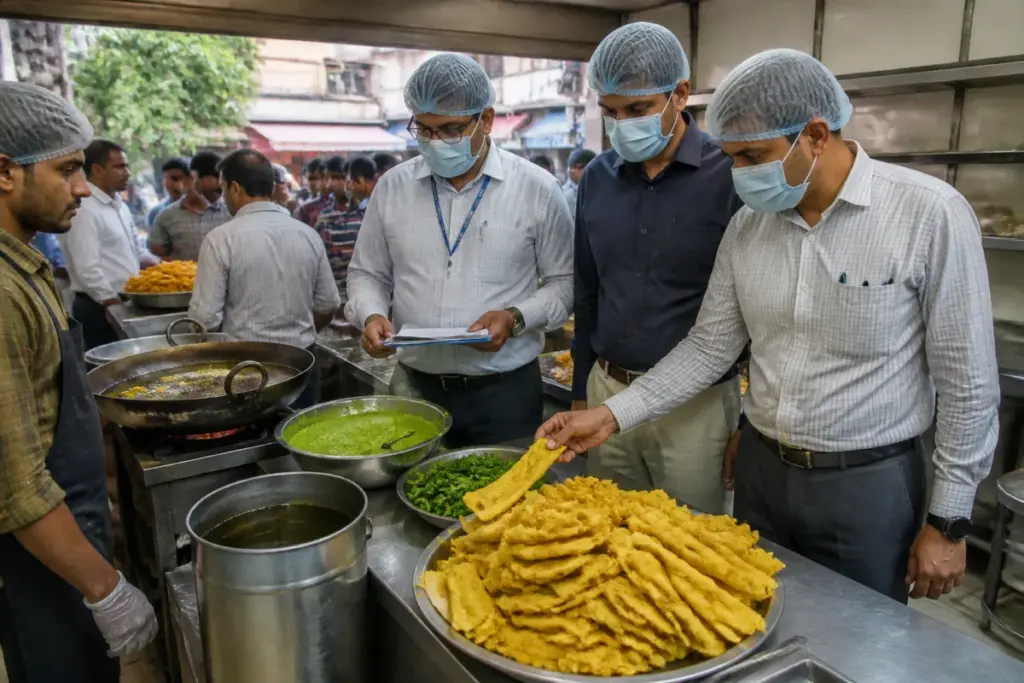
Surat’s food safety department inspected 27 snack shops and collected 50 samples of fafda, chutney and frying oil ahead of Dussehra, with laboratory findings expected to determine whether further action is required against any outlet.
The inspection drive was conducted by the Surat Municipal Corporation (SMC) as demand rises for fafda, ganthiya and jalebi after the nine-day Navratri fasting period. The traditional food combination is especially popular in Gujarat during Dussehra, leading to a sharp increase in production and sales at snack outlets.
Officials collected samples of the prepared food, accompanying chutneys and the oil used for frying. All 50 samples have been sent to the public health laboratory for analysis. The municipal food safety department said action would be taken against establishments found using adulterated or substandard ingredients, with the nature of the action depending on the laboratory results.
The inspection comes at a time when several outlets increase production to manage the festival rush. According to a food safety department official cited in the report, some shops begin preparing fafda one or two days before Dussehra to meet last-minute demand.
The practice creates additional food-safety requirements for outlets operating with limited space and staff. Officials highlighted the importance of hygiene, safe storage and ingredient quality when food is prepared or packed in advance. These conditions can affect how prepared products are handled before they reach consumers.
The municipal checks therefore cover more than the quality of the final product. Testing the frying oil and chutney alongside fafda allows authorities to examine multiple parts of the preparation process, including the ingredients and materials used by shops during the peak sales period.
The drive also shows how municipal food-safety enforcement is structured around sampling and laboratory confirmation. Field inspections allow officials to identify outlets and collect material for testing, while the laboratory reports provide the basis for deciding whether a violation has occurred and what action should follow.
For consumers, the immediate outcome of the exercise will depend on the test results rather than the inspections alone. The samples are expected to be analysed within the next couple of days. The food safety department will then decide on further action against outlets found violating food-safety standards.
The inspection is part of the SMC’s preparations for managing food quality during a period of concentrated demand. Authorities have asked shops to take extra care while preparing food products during the festive rush, particularly where products are made ahead of sale and stored before distribution.


