

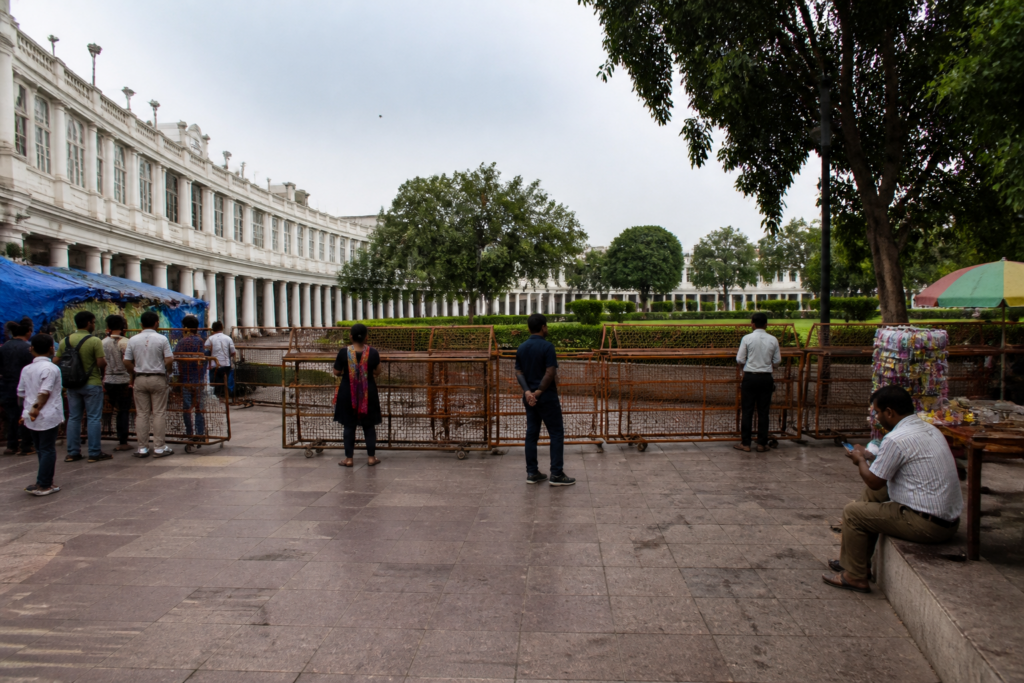
The Supreme Court on Friday declined to urgently hear a plea challenging the New Delhi Municipal Council’s decision to shut Central Park in Connaught Place for two days around a proposed protest, while warning that it could intervene if the closure caused disproportionate business losses.
A bench comprising Chief Justice of India Surya Kant and Justice Joymalya Bagchi said the issues involved the right to protest, the livelihood of small shopkeepers and vendors, and law-and-order concerns. The court indicated that these questions were interconnected and hoped that “better sense will prevail on everyone”.
The plea was filed after the NDMC issued directions late on Thursday night to close Central Park, effectively restricting trade in the surrounding commercial area. The proposed gathering was called by Cockroach Janta Party leader Abhijeet Dipke, who asked supporters to assemble with the national flag for a “Tiranga” march on Friday.
During the hearing, the petitioner’s counsel argued that traders and vendors would face significant hardship if another weekend was lost because of a protest-related closure. The court referred specifically to the impact on small shopkeepers and their families, noting that their income depended on business during the affected days.
Justice Bagchi said the court could exercise its constitutional jurisdiction if the measures resulted in business losses. “If there’s loss of business, we will exercise our powers under Constitutional jurisdiction. Let’s cross that bridge when it comes,” he said. The bench also indicated that it could consider whether the administrative measures were disproportionate and referred to its powers under public and compensation law.
The court did not grant an urgent hearing on Friday. The bench indicated that the plea could be listed on October 26 or 27, leaving the immediate NDMC closure in place unless another judicial or administrative decision changes the arrangement.
The dispute places Central Park at the intersection of public-space management, protest regulation and commercial activity in Connaught Place. The area is both a prominent civic gathering point and one of Delhi’s major business districts, meaning decisions taken for security or administrative reasons can affect access, movement and daily earnings around the park.
The NDMC has cited “administrative reasons” for the closure. The court’s observations, however, brought the economic effects of such restrictions into the hearing, particularly for informal sellers and small businesses that depend on pedestrian activity. The judges did not rule on the merits of the closure at Friday’s hearing.
The proposed protest followed the judicial custody of CJP members Saurav Das and Ashutosh Ranka. They were sent to five-day judicial custody and lodged in Tihar Jail for allegedly violating peace bonds and entering Jantar Mantar, which has been denotified as a protest area. The party said its gathering was linked to allegations that the two men had been jailed for unfurling the Tricolour.
The Delhi High Court had earlier refused to restrain the October 16 protest at Connaught Place. Delhi Police have said that a small gathering may be allowed at another location. The Supreme Court’s next indicated listing, on October 26 or 27, is expected to determine whether the challenge to the closure proceeds and whether any question of business losses requires further judicial consideration.


