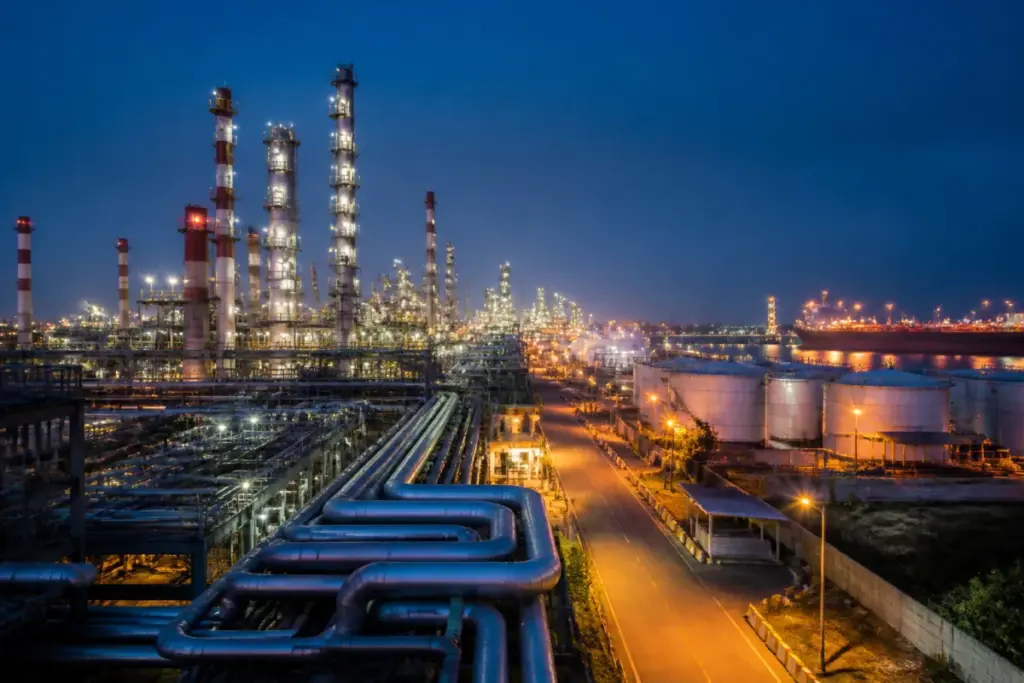
Russian crude imports are increasingly being transformed by Indian refineries into fuel shipped to Western markets, exposing a gap between the geographical origin of crude and the way sanctions regulate finished petroleum products. The pattern places India’s refining infrastructure at the centre of a wider dispute over how energy trade rules operate when oil crosses several jurisdictions before reaching consumers.
According to the Centre for Research on Energy and Clean Air (CREA), countries including India, Turkiye and Brunei exported oil products worth 1 billion euros, or about $1.2 billion, to sanctioned Western markets in September. The value of these shipments rose 43% from August. CREA estimated that 295 million euros of the exported products had been refined from Russian crude.
The European Union was the largest buyer, importing oil products worth 667 million euros from the three countries. Australia followed with 168 million euros, while the United States bought products worth 154 million euros and New Zealand imported 19 million euros’ worth. These figures do not mean that every shipment to those markets was made from Russian crude, but they show the scale of the trade route through refineries located outside the sanctions regime.
India’s role is concentrated in a small number of large refining facilities. Reliance Industries’ Jamnagar refinery in Gujarat supplied six of the seven cargoes unloaded at European Union ports in September, according to CREA. Jamnagar also accounted for the largest share of the group’s exports to the United States, with shipments valued at 122 million euros.
Russian crude represented 32% of Jamnagar’s crude imports between July and September. Of the seven shipments unloaded at EU ports in September, three were received by Italy, two by Romania, and one each by Spain and Cyprus. The value of exports reported as destined for EU ports from refineries processing Russian crude rose 80% during the month. One cargo of 104,000 tonnes of gasoil from Jamnagar was still travelling to Rotterdam when the data was reported.
The trade highlights the importance of refinery-level infrastructure in global energy markets. Crude oil is a relatively identifiable commodity at the point of export, but refining changes its physical form and commercial classification. Once crude is converted into diesel, gasoil or other products, tracing the original source becomes more complicated, particularly when the product is exported from a country that has not itself been targeted by the same restrictions.
The European Union banned imports of oil products refined from Russian crude in January 2026. However, the restrictions exempt net crude exporters. CREA argues that this creates a loophole because a country can export more crude than it imports while still processing Russian-origin oil in its refineries. In practice, the rule focuses on the country from which the finished product is exported rather than consistently applying the restriction to the refinery that processed the crude.
CREA has recommended that the ban be applied at refinery level. Under its proposal, oil products from any refinery that had processed Russian crude during the previous six months would be prohibited, regardless of the declared origin of the finished product. That recommendation is not existing policy. It represents the research group’s proposed change to the sanctions framework.
The distinction matters because refinery-level restrictions would shift the compliance burden from national trade statistics to facility-level supply chains. Authorities and companies would need to establish whether a refinery had processed Russian crude during the relevant period, maintain records of feedstock sources and connect those records to later product exports. The input material supplied does not establish whether the European Union is considering such a change or how it would be implemented.
For India, the September data also shows that exports of Russian-crude-derived products rose even as imports of Russian crude declined. CREA said India’s Russian crude imports fell 13% in September, the second consecutive monthly decline and the lowest level since April. Imports fell at all three of India’s largest importing refineries, although the scale of the decline differed among facilities.
Jamnagar’s intake fell 27% from August. Indian Oil Corporation’s Paradip refinery recorded a 21% decline, while Nayara Energy’s Vadinar refinery saw imports fall 8%. Vadinar nevertheless overtook Jamnagar as India’s largest importer of Russian crude during the month. Smaller facilities also recorded lower imports: the HMEL Mundra Oil Terminal reduced its intake by 74%, while the Kochi refinery recorded a 32% month-on-month decline.
The Indian Oil Corporation’s Mundra Oil Terminal moved in the opposite direction. It received 570,000 tonnes of Russian crude in September after importing none in August. This divergence shows that monthly national totals can conceal substantial changes at individual facilities. Refinery location, storage capacity, shipping schedules and procurement decisions can all alter the pattern of imports from one month to the next, although the supplied report does not quantify the contribution of each factor.
India remained Russia’s second-largest buyer of fossil fuels in September, spending 4.1 billion euros on Russian hydrocarbons, CREA said. China was the largest buyer. Crude oil accounted for 88% of India’s purchases, at 3.6 billion euros, while coal accounted for 309 million euros and oil products for 161 million euros.
Since December 2022, India has accounted for 37% of Russia’s crude exports, compared with China’s 50%, according to CREA. The figures place Indian ports, storage terminals, pipelines and refineries within one of the most important energy trade corridors created after Western buyers reduced direct purchases of Russian oil.
India was a marginal buyer of Russian oil before Russia’s 2022 invasion of Ukraine. Its purchases increased after Western buyers pulled back and Russia began selling crude at steep discounts. Urals crude averaged $90.7 a barrel in September and continued to trade $23 below Brent crude, with the discount unchanged from August.
The commercial incentive is therefore linked to both market access and refinery flexibility. Indian refiners can process imported crude and sell refined products into different markets, subject to the rules governing those destinations. The value of that flexibility depends on the discount available on the feedstock, the refinery’s ability to process it and the restrictions imposed by importing jurisdictions.
The September decline in India’s Russian crude imports was not attributed to US pressure alone. Analysts at Kpler said tighter supplies and stronger competition from China for Russian oil also contributed to the fall in volumes. Kpler expects India’s Russian crude imports to remain between 1.8 million and 1.9 million barrels per day in October. That is an estimate, not a confirmed outcome, and the supplied report does not provide the underlying methodology.
The larger policy question is whether sanctions can remain effective when they are designed around national borders but energy supply chains operate through globally connected industrial infrastructure. A country may import crude, refine it and export the resulting products under rules that treat the finished fuel differently from the original feedstock. This creates a regulatory distinction between where a commodity begins its journey and where it is transformed.
For India’s refinery network, the issue is not only about trade volume. It concerns how facilities are integrated into international supply chains, how ports and terminals manage competing cargoes, and how a change in destination-country rules could affect the eligibility of refined products. The supplied evidence does not establish any operational disruption to Indian refineries or any proposed change in India’s policy.
What the data confirms is a simultaneous movement: India’s Russian crude imports declined in September, while exports of oil products from refineries processing Russian crude to sanctioning countries increased. Jamnagar was the dominant Indian facility in the reported European shipments, while Vadinar became the largest importer of Russian crude in India during the month. The next significant indicators will be October import volumes, refinery-level sourcing patterns and whether the European Union changes its rules to address the loophole identified by CREA.