

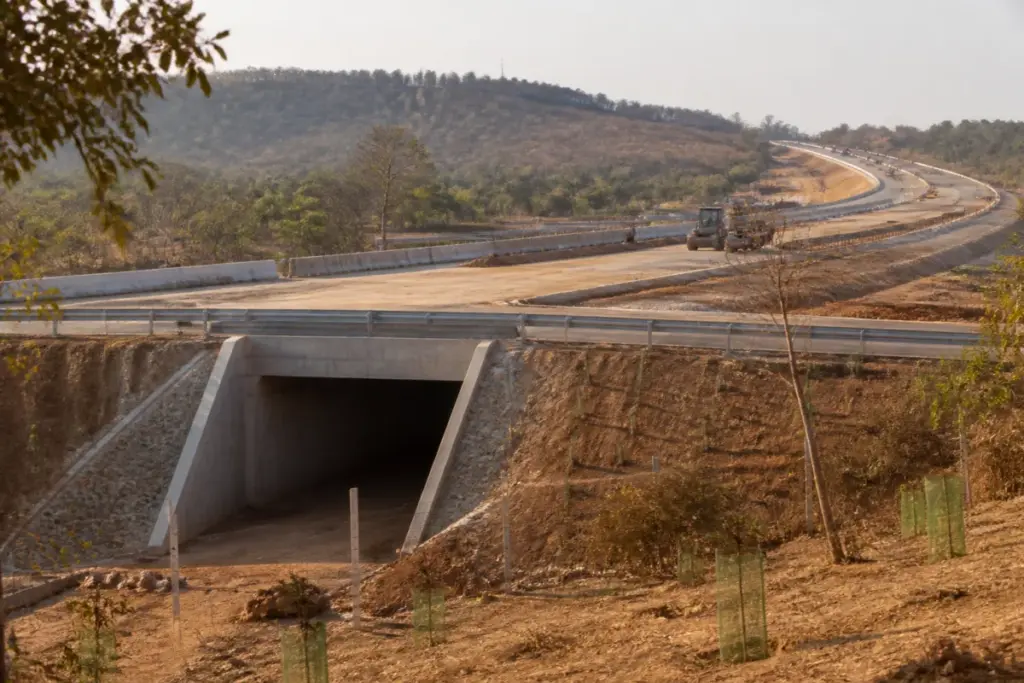
The National Highways Authority of India has allocated around Rs 50 crore for wildlife conservation and mitigation measures along the Varanasi-Ranchi-Kolkata Expressway, including animal underpasses, overpasses, habitat improvement and the planting of 45,000 saplings in Bihar.
The plan is being implemented by the Bihar environment, forest and climate change department along the expressway corridor. It aims to protect wildlife habitats, conserve selected Schedule I species, reduce risks to animals and passengers, and support road connectivity to destinations such as Bodh Gaya in Gaya district and the Sun temple at Deo in neighbouring Aurangabad district.
The details were presented during a media tour organised by NHAI’s regional office in Patna to showcase the project’s progress, engineering features and regional significance. The conservation plan covers habitat improvement, soil and water conservation, forest fire management, monitoring and evaluation, as well as plantation activity along the corridor.
Devendra Kumar Bansal, project director for the relevant section, said Package VII of the expressway in Gaya district had achieved around 36% physical progress. The 33-km package is being constructed at a cost of Rs 1,248 crore and runs from village Anarban Saleya to Sangrampur, covering the section between kilometre 151 and kilometre 184.
The package is being executed under the Hybrid Annuity Mode, a public infrastructure financing model in which the government and the concessionaire share project costs and responsibilities. According to Bansal, the conservation and wildlife mitigation plan was prepared in coordination with the state forest department and the Zoological Survey of India.
The Gaya package includes two elephant underpasses and two animal overpasses intended to allow wildlife to cross the expressway safely. These structures are being combined with other measures under the conservation plan to minimise disruption to animal movement and improve road safety on the high-speed corridor.
The expressway will also include cameras at one-kilometre intervals and trauma centres every 30 kilometres, according to the project details presented by NHAI. The surveillance and emergency medical infrastructure is intended to support passenger safety and enable faster assistance after incidents on the route.
The Varanasi-Ranchi-Kolkata Expressway will begin at Rivasa in Uttar Pradesh’s Varanasi district and pass through Chandauli before entering Bihar. Within Bihar, it will cross Kaimur, Rohtas, Aurangabad and Gaya districts before continuing through Jharkhand and West Bengal to Kolkata.
The route will cover Chatra, Hazaribag, Ranchi, Bokaro, Dhanbad and Ramgarh in Jharkhand, followed by Purulia and Bankura in West Bengal. The wildlife measures and safety facilities are being incorporated as construction progresses, with Package VII currently at 36% physical progress.


