

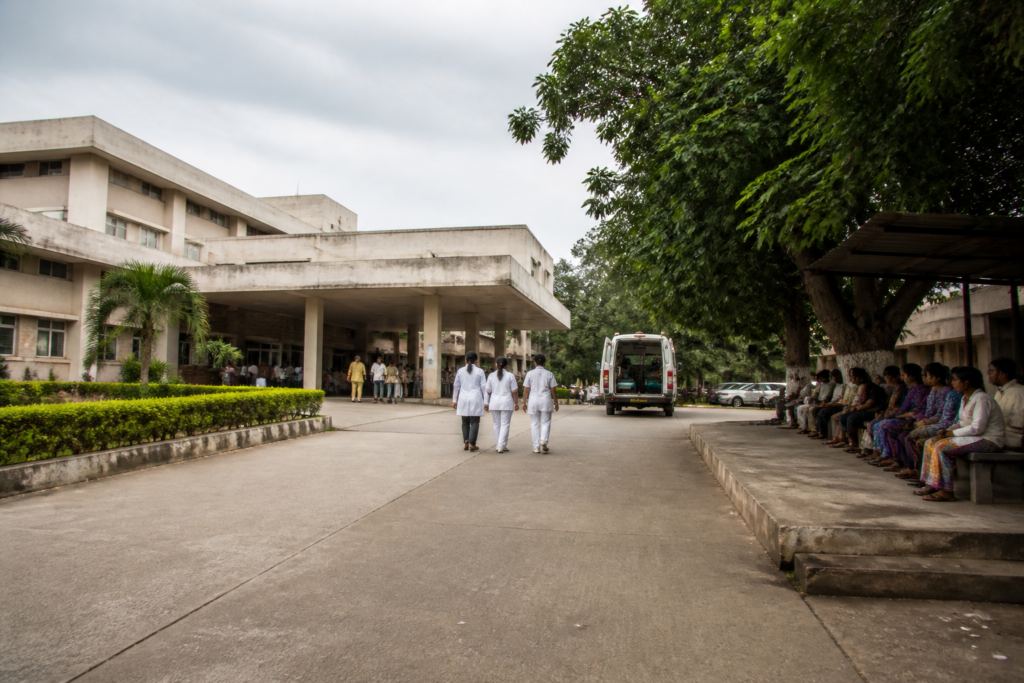
The Telangana High Court’s direction to the state health secretary after five infants died at the Special Newborn Care Unit (SNCU) of RIMS Adilabad has shifted attention from the incident itself to a larger institutional question: whether the hospital had the critical-care infrastructure and operational capacity required to treat vulnerable newborns, and whether the state can demonstrate that those deficiencies have been addressed.
A bench comprising Acting Chief Justice P Sam Koshy and Justice Narsing Rao Nandikonda directed the health department secretary to personally file an affidavit detailing the measures taken to strengthen medical facilities and infrastructure at the hospital. The matter is scheduled to be heard again on November 5.
The court’s order, as reported during the proceedings, does not determine the cause of the five deaths. Instead, it requires the government to place on record what has been done after the deaths and how the hospital is expected to prevent similar incidents. That distinction is important. The immediate legal question is not only what happened inside the SNCU on September 21, but whether the authorities can provide a documented account of the facility’s condition, its response and the changes undertaken since then.
The case arose from a public interest litigation in which senior counsel Chikkudu Prabhakar told the court that five infants had died at the hospital on September 21. He submitted that the facility lacked adequate critical-care infrastructure, including proper intensive care support, and sought urgent judicial intervention. These submissions remain the petitioner’s claims as recorded in the report; the government’s full response is expected through the affidavit ordered by the court.
That affidavit could become the central administrative document in the next stage of the case. The court has asked for comprehensive details covering basic infrastructure, medical facilities and operational improvements. It has also specified that the health secretary should file the response personally, rather than leaving the matter to officials at the hospital or medical college level.
This direction places responsibility at the level of the department that controls policy, funding and oversight. A hospital-level explanation may describe individual events or immediate responses, but the court’s demand for a secretary-level affidavit indicates that the issue extends beyond a single clinical episode. It concerns whether the wider health system has assessed the hospital’s requirements, acted on them and established a mechanism to monitor implementation.
The infrastructure question is particularly important in a Special Newborn Care Unit. Newborn care depends not only on the availability of beds, but also on the supporting systems around them: intensive care capacity, trained personnel, monitoring equipment, reliable power and oxygen supply, infection-control arrangements, referral protocols and the ability to transfer critically ill patients when a facility cannot provide the required level of care. The supplied report specifically refers to concerns about critical-care infrastructure and ICU support. It does not provide a detailed inventory of equipment, staffing, bed strength, occupancy, referral patterns or funding released after the deaths. Those details will determine how fully the government’s response addresses the court’s concern.
The case also illustrates how infrastructure failures in public hospitals are often evaluated through administrative documents only after a serious incident occurs. The court has asked the health department to describe the steps taken in the aftermath. That makes the implementation record as important as the announcement of any upgrade. The relevant questions include what work was sanctioned, which authority is responsible, whether equipment has been installed, whether it is functional, and how staffing and operating procedures have changed. None of these points has been established in the supplied report, and the next affidavit is expected to clarify them.
RIMS Adilabad occupies a significant position in the public healthcare system of the region because the case concerns a government hospital serving patients who depend on institutional care. When a public facility lacks adequate critical-care capacity, the effect is not confined to the hospital campus. Families may face emergency referrals, longer journeys and delays in reaching a facility equipped to manage high-risk newborns. The report does not provide information on the infants’ clinical conditions, referral arrangements or the families’ experiences, so the direct citizen impact cannot yet be quantified. The court’s focus on infrastructure nevertheless places service reliability at the centre of the proceedings.
The legal history mentioned in the hearing adds another layer. The petitioner informed the bench that a public interest litigation filed in 2024 on related healthcare-facility issues remained pending. He also referred to earlier High Court directions concerning the implementation of Supreme Court guidelines and sought to have the issues arising from the recent deaths considered alongside the pending petition.
If the matters are tagged, the court could examine the Adilabad incident within a broader record of healthcare infrastructure and compliance. That would move the proceedings beyond a one-time response. It would allow the court to consider whether directions issued in earlier cases were implemented consistently, whether hospitals were assessed against the required standards and whether administrative responsibility was clearly assigned. The report, however, does not specify the Supreme Court guidelines involved or the precise subject of the 2024 petition. Those details remain to be established through the court record.
The choice to seek an affidavit from the health secretary also highlights the importance of vertical accountability in public health administration. Hospitals operate through multiple layers: the facility, the medical college or hospital administration, the state health department and, in some cases, specialised procurement and engineering agencies. Infrastructure upgrades can therefore fail through gaps in procurement, delayed installation, vacant posts, inadequate maintenance or unclear ownership of operational decisions. The High Court’s direction requires the state to present a consolidated account rather than leaving the responsibility dispersed among different institutions.
For the court, a useful response will need to distinguish between measures announced and measures completed. A proposal to improve ICU support is not equivalent to a functioning critical-care service. Similarly, the purchase of equipment does not establish that it has been installed, staffed, maintained and used according to protocol. The supplied report does not say whether the state has already completed any specific upgrade. The affidavit due before the next hearing should therefore provide the factual basis for assessing progress.
The available evidence also shows the limits of incident-based oversight. The court’s intervention followed five deaths, but the underlying concern is the capacity of the facility before and after the event. A system that reports only the immediate incident may not reveal whether similar weaknesses exist in other hospitals or whether RIMS Adilabad had previously been identified for improvement. The pending 2024 PIL and references to earlier directions suggest that healthcare infrastructure has already been the subject of judicial attention in Telangana, although the supplied report does not establish the extent of compliance across the state.
The November 5 hearing is consequently an important administrative milestone, not because it will necessarily resolve every question about the deaths, but because it is expected to put the government’s account on record. The court will be able to examine the steps taken, the operational changes introduced and the infrastructure improvements claimed by the health department.
At this stage, the confirmed facts are limited. Five infants died at the RIMS Adilabad SNCU on September 21, the issue was raised in a public interest litigation, and the Telangana High Court ordered the health secretary to file an affidavit on the hospital’s upgrades and preventive measures. The causes of death, the facility’s precise deficiencies and the status of corrective action remain matters for the government’s response and subsequent judicial examination. The next hearing will show whether the state can convert a general assurance of improvement into a documented account of functioning infrastructure, medical capacity and accountability.


