

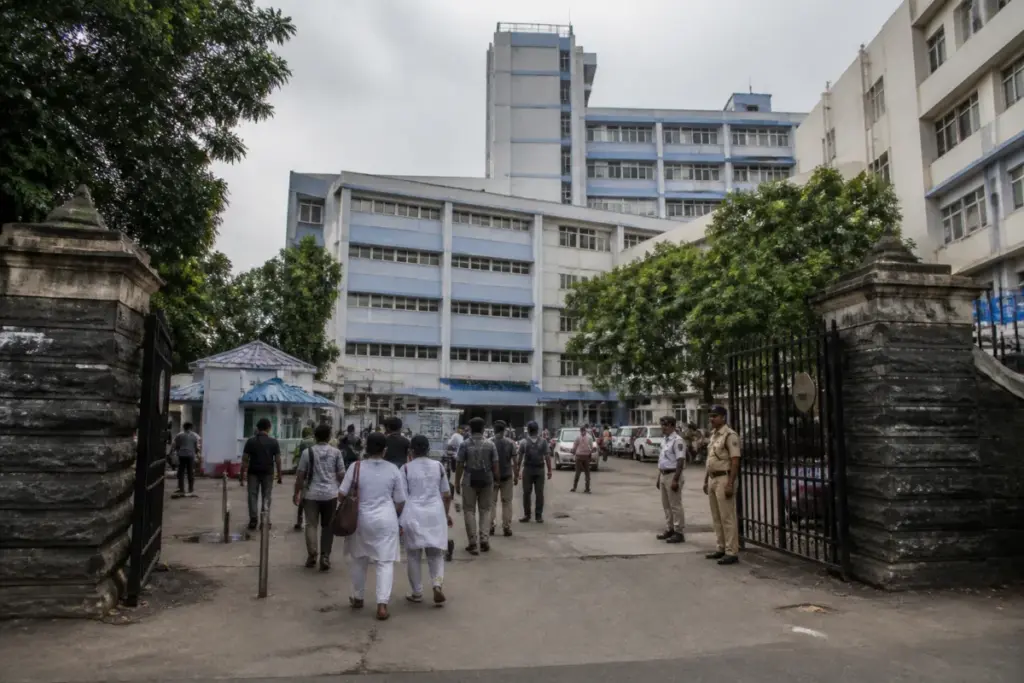
The Supreme Court has granted bail to former RG Kar Medical College and Hospital principal Sandip Ghosh in the hospital corruption case, citing the slow progress of the trial after more than two years of imprisonment. The order has renewed criticism from the father of the woman whose rape and murder at the hospital in August 2024 triggered wider scrutiny of the institution and its administration.
A division bench of Justices MM Sundresh and Prasanna B Varale granted Ghosh bail after noting that only seven of the 147 listed witnesses had completed their testimony. The court’s observation focused on the pace of the proceedings, with the bench taking into account the length of Ghosh’s detention and the limited progress in recording evidence.
Ghosh was arrested after allegations of financial irregularities at RG Kar Medical College emerged following the rape and murder of a postgraduate trainee at the hospital. He had resigned as principal after questions were raised about hospital security and the handling of the incident. The Central Bureau of Investigation later arrested Ghosh and the then officer-in-charge of Tala police station, Abhijit Mondal, in connection with allegations of evidence tampering in the rape and murder case.
A separate financial corruption case was subsequently brought against Ghosh. The Calcutta High Court had earlier refused him bail, citing the interests of the trial. Ghosh challenged that decision in the Supreme Court, where the court has now allowed his release on bail while pointing to the slow movement of the proceedings.
The bail order drew a sharp response from the victim’s father, Shekhar Debnath, who criticised the investigating agency and questioned why the case had progressed so slowly. He said he had spoken to Manish Upadhyay, who reportedly told him that the process would take time and that there was little more the agency could do at present.
Debnath also said that the family had sought a chargesheet against Ghosh in the rape and murder case, in addition to pursuing the corruption allegations. He argued that public confidence in an investigating agency depends on timely and effective action. The family has previously alleged that influential people were connected with their daughter’s death, although those allegations remain part of the broader legal and investigative process.
The development also highlights the operational consequences of prolonged trials in cases involving public hospitals. The Supreme Court’s observation indicates that the prosecution must now contend with the gap between the number of listed witnesses and the small number whose testimony has been completed. The immediate next stage will depend on the continued progress of the trial and the investigating agency’s further action in the corruption and related cases.


