

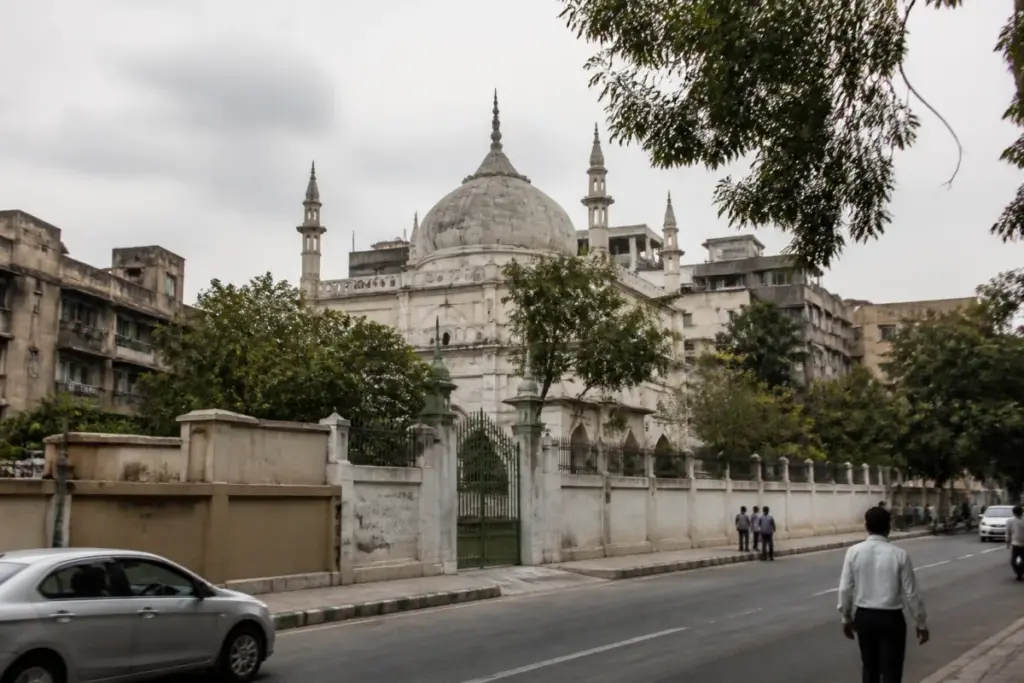
A reported eviction notice involving Delhi’s historic Race Course Mosque has triggered a demand for intervention from AIMIM president Asaduddin Owaisi, who has asked Union Minority Affairs Minister Kiren Rijiju to address the matter. The central claim remains based on Owaisi’s account, as the supplied report does not include the notice, identify the authority that issued it or record an official response from the Union ministry, Delhi Waqf Board or any other agency.
Owaisi said the matter required urgent intervention because the Delhi Waqf Board has not been constituted since 2023. He argued that the board’s chief executive officer could have intervened but did not do so. These assertions were made in a post on X and are attributed to Owaisi in the report.
The dispute concerns the legal and administrative status of the mosque. Owaisi said the property has been a gazetted waqf property since 1977. He also claimed that the Delhi Waqf Board neither challenged the demolition order nor made efforts to resolve the issue. The supplied report does not reproduce the alleged demolition order or establish when it was issued.
Owaisi further contended that the Waqf Amendment Act protects the mosque because it qualifies as a “waqf by user”. He said properties registered in the past under that category continue to receive protection. The report does not cite the relevant statutory provision, provide the property’s registration documents or include a response from the authority responsible for the reported eviction or demolition action.
The case highlights an administrative question that extends beyond the immediate dispute: how properties recorded as waqf are represented and defended when the relevant statutory board is not functioning. Owaisi’s statement places responsibility on the Union Minority Affairs Ministry, while also alleging that the board’s executive machinery did not act. The material supplied does not establish the precise division of responsibility between these institutions in this case.
The report also does not state whether the notice concerns the mosque structure, the land on which it stands, an alleged encroachment, redevelopment activity or another land-use issue. Without the original notice and the underlying demolition order, the legal basis and scope of the action cannot be independently assessed.
The reported claims therefore require confirmation from the issuing authority and the concerned waqf administration. The next verifiable steps would include publication or examination of the eviction notice, clarification of the alleged demolition order, and responses from the Union Minority Affairs Ministry, the Delhi Waqf Board or its designated officials, and the agency responsible for the property action.


