

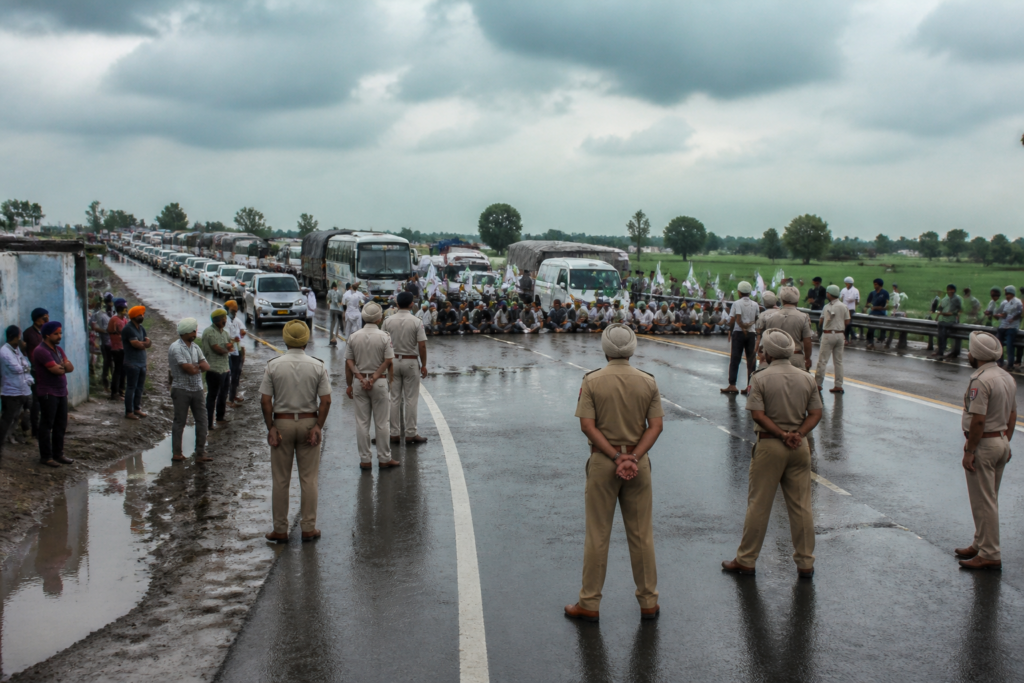
Punjab bandh protests over the murder of anti-drug activist Parminder Singh Jhota disrupted markets, academic institutions, highways and public transport across the state on Thursday, while emergency services continued to operate and police intervened at several locations to manage traffic and prevent forced closures.
Shops remained shut in Mansa, Bathinda, Sangrur, Barnala, Moga, Patiala, Amritsar, Gurdaspur, Tarn Taran, Jalandhar, Hoshiarpur and Ferozepur, among other towns, according to a report by The Times of India. Many private schools declared holidays, while toll plazas in parts of Ludhiana and Patiala suspended collections in support of the bandh.
The shutdown was called by the Anti-Parminder Singh Murder Action Committee. Its impact extended beyond commercial areas, with road blockades forcing traffic diversions and leaving passengers stranded at multiple locations. Police intervened at several points to clear traffic and prevent establishments from being closed by force.
A protest at an intersection on the Barnala-Mansa-Sirsa highway continued for a third day. Although heavy rain inundated the protest site overnight, demonstrators reassembled after the accumulated water was drained. Protesters also blocked the Bathinda-Zirakpur highway at Rampura Phool and roads at several other locations.
The disruptions underlined the dependence of Punjab’s towns and districts on a small number of major inter-city road corridors. When those routes are blocked, the effects extend beyond the immediate protest site, affecting bus and private vehicle movement, passenger journeys, commercial deliveries and access between districts. The report did not provide an estimate of the number of stranded passengers or the duration of individual traffic diversions.
Emergency services remained operational during the bandh. The report did not indicate any shutdown of hospitals or emergency response networks, but it recorded police intervention to keep traffic moving in areas affected by blockades. The operational distinction between emergency movement and routine public transport became particularly significant as roads remained obstructed at several points.
The bandh received support from the Congress, BJP, Shiromani Akali Dal, Akali Dal Waris Punjab De, Akali Dal Punar Surjit and SAD (Amritsar), as well as farmer and youth associations. The cross-party backing added to the scale of the shutdown, with support extending across political and community organisations.
The protest action followed the murder of Jhota, who was identified in the report as an anti-drug activist. The committee’s demand for action over the killing brought commercial closures, institutional holidays and road protests together in a statewide mobilisation. Further developments will depend on the committee’s next steps, police management of remaining blockades and the restoration of normal movement on affected highways.


