

Pune’s 253,554 National Pension System subscribers and ₹12,171 crore in assets under management are more than a regional milestone. The figures show how retirement planning is increasingly being extended beyond government employees and large formal workplaces to include gig workers, self-employed people, entrepreneurs, small businesses and families saving for children. They also expose the administrative challenge behind that expansion: pension access must now be made understandable, portable and usable across a fragmented urban workforce.
The Pension Fund Regulatory and Development Authority used a media interaction in Pune to outline a wider set of measures aimed at increasing enrolment in the Corporate and All Citizen models of the National Pension System. The initiatives include digital onboarding, community outreach, tools for comparing pension-fund performance, new retirement-income products and assistance for people who do not receive an employer-linked pension benefit.
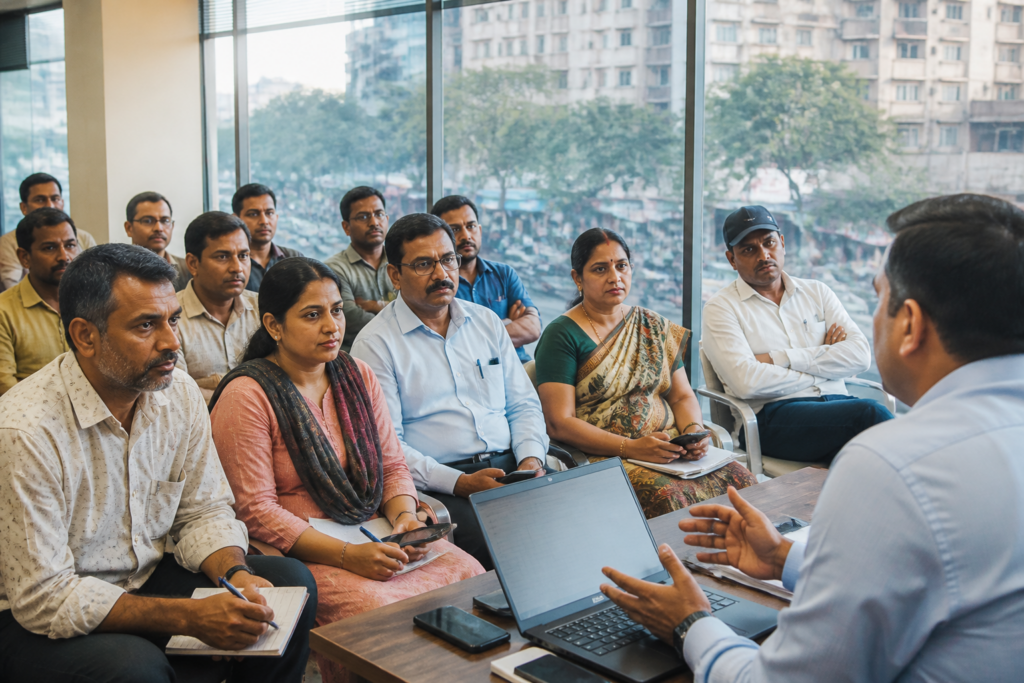
PFRDA Whole-Time Member (Finance) Sanjay Pandey discussed the initiatives ahead of an outreach programme on NPS and StAR NPS for mutual fund distributors. According to the authority, Pune’s two models together account for 253,554 subscribers and ₹12,171 crore in assets under management. Across Pune, Mumbai, Thane, Nagpur and Raigad, the same models have 798,776 subscribers and ₹46,457 crore in assets under management.
These numbers place Pune within a larger regional pension market, but they also point to the uneven nature of retirement security in cities. A salaried employee in a large organisation may have payroll systems, human-resource support and regular financial communication. A platform worker, small trader, consultant or self-employed professional may have irregular income, no employer contribution and limited access to trusted financial guidance. The policy problem is therefore not simply the availability of a pension product. It is the creation of an enrolment and contribution system that can function despite unstable employment and income.
PFRDA said more than 22% of all NPS accounts opened in the non-government sector since 2009 were added during the past year. It attributed the increase to product features, easier onboarding and improvements to the subscriber experience. The source material does not provide the absolute number represented by that share, but the figure indicates a recent acceleration in non-government enrolment and a stronger institutional focus on customers outside traditional public-sector employment.
The proposed access architecture is designed around digital simplicity. NPS Sanchay is aimed at gig and platform workers, self-employed people, entrepreneurs and micro, small and medium enterprise owners who may not have employer-linked retirement benefits. The framework includes a three-click digital enrolment process, an entry contribution of ₹250, UPI top-ups from ₹10 and a stated 25% allocation to equity. PFRDA is also working with UPI agents to widen access.
That design reflects a basic shift in how pension systems must reach urban residents. Traditional workplace-based models depend on stable employment, regular deductions and an institution that can explain the product. Digital payments and UPI-based contributions can reduce some of those barriers, particularly for people whose earnings arrive through multiple employers, platforms or clients. However, the source material establishes the proposed access features, not how widely they are being used or whether they have resolved the problems of irregular contributions, account continuity or financial literacy.
PFRDA has also signed a memorandum of understanding with the Ministry of Rural Development to promote enrolment through Pension Sakhis. The stated aim is to strengthen pension awareness among rural households and women. Although the programme has a rural focus, its institutional significance extends to cities because urban labour markets depend on movement between rural areas, small towns and metropolitan economies. Workers may migrate, change occupations or combine agricultural, informal and urban work over their lifetimes. A pension account that remains accessible across those transitions is consequently a question of labour mobility as well as financial planning.
The authority is developing products for different stages of life. Under NPS Vatsalya, parents and guardians can open accounts for minors to encourage early, long-term financial planning. The account transitions to the regular NPS framework when the subscriber reaches adulthood, subject to scheme provisions. Across Pune, Mumbai, Thane, Nagpur and Nashik, the scheme has 23,558 subscribers and approximately ₹50 crore in assets under management. Pune leads those centres in subscriber numbers, with 7,679.
The NPS Vatsalya figures remain small compared with the combined Corporate and All Citizen subscriber base, but they show how pension policy is being extended from workplace savings to household financial planning. The policy is no longer limited to the period when a person is earning. It is also being presented as a product that can begin during childhood and continue into adulthood. The available information does not establish the income profile of these accounts or the regularity of contributions, so the numbers should be read as enrolment and asset figures rather than proof of long-term retirement adequacy.
The most important institutional gap addressed in the announced initiatives is the period after employment ends. PFRDA is developing a Retirement Income Scheme that would allow eligible subscribers to remain invested after they stop working, moving from accumulation to decumulation without further contributions. The proposed payout approaches include a Systematic Payout Rate, based on a defined rate, and Systematic Unit Redemption, involving the redemption of a specified number of units.
This transition matters because building a retirement corpus and converting it into a dependable income are different administrative and financial tasks. The source does not state when the Retirement Income Scheme will be launched or what its final eligibility and payout rules will be. It does, however, show that PFRDA is working to address a stage of retirement planning that begins after contributions stop and the subscriber needs a structured income mechanism.
PFRDA has also outlined revised exit provisions under which eligible non-government subscribers may withdraw up to 80% of their corpus as a lump sum, subject to applicable rules. Government subscribers remain under the relevant 60:40 framework. These distinctions make the regulatory framework important to ordinary subscribers: the value of an account is not determined only by contributions and investment performance, but also by the rules governing exit, withdrawal and post-retirement payouts.
The authority is simultaneously developing tools intended to improve decision-making. The PRIDE-DISHA platform allows subscribers to compare historical net asset values across pension funds and schemes, while risk meters are intended to help users understand investment risk. PFRDA has cautioned that historical returns do not guarantee future performance. That warning is significant because a comparison tool can make information more accessible, but it cannot remove the uncertainty inherent in market-linked retirement savings.
Other products mentioned at the Pune interaction include Pension Sahayak, an artificial-intelligence assistant being designed to answer queries by text or voice in 22 languages; NPS Swasthya, an add-on health-cover offering; and NPS Central, a centralised onboarding platform under development. Together, the initiatives suggest that PFRDA is treating the subscriber journey as a connected digital service rather than a single account-opening transaction.
For cities, the underlying issue is the relationship between employment and social protection. Urban economies increasingly combine permanent jobs with contract work, platform activity, self-employment and small enterprises. A pension system built mainly around a single employer has limited reach in such an environment. The measures described by PFRDA attempt to use digital identity, UPI payments, assisted outreach and simpler product interfaces to bridge that gap.
The scale of the challenge is also linked to demography. PFRDA cited projections that the share of India’s population aged 60 and above will rise from about 10% to 19.5% by 2050. The source does not provide further detail on the projection methodology, but the direction of change underlines why retirement planning is being treated as a long-term public policy issue. More older residents will increase the importance of reliable income, accessible financial services and systems that can support people after their working lives.
Pune’s subscriber count therefore offers two readings. It is evidence of growing participation in the NPS, with a substantial asset base across the Corporate and All Citizen models. It is also a measure of how much work remains if pension access is to match the complexity of urban livelihoods. The next developments to watch are the implementation of the Retirement Income Scheme, the rollout of NPS Central, the use of Pension Sahayak and the extent to which low-value digital contributions become sustained retirement savings rather than one-time enrolments.


