

Pune’s water audit has found hundreds of defects, including contamination points, damaged joints, blockages, pipeline bursts and illegal connections, as the city begins weekly water cuts. The findings have intensified scrutiny of the Pune Municipal Corporation’s ageing underground network and the estimated 6 TMC of treated water lost annually through leaks and theft.
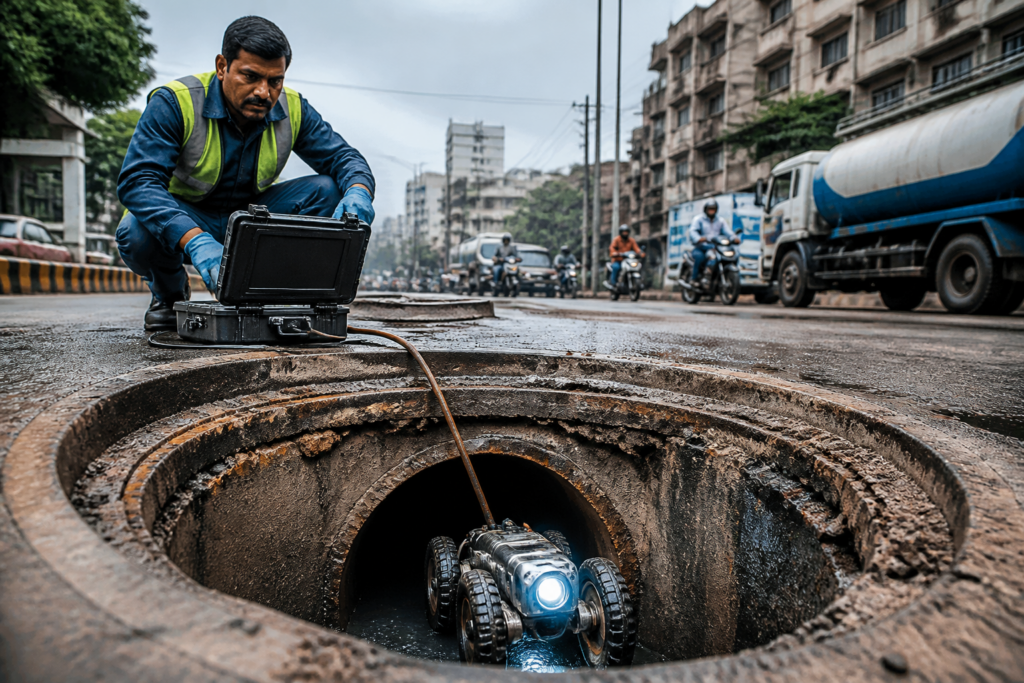
The PMC Water Supply Department conducted a robotic diagnostic drive between April 6 and July 23, inspecting 322 locations on primary distribution pipelines ranging from 75 mm to 1,200 mm in diameter. High-resolution cameras were used to examine sections of the underground network that are difficult to access through conventional inspections.
The listed findings included 84 blockages caused by debris, silt and solid obstructions; 67 points where sewage or other non-potable contamination could enter drinking-water lines; and 99 defective or degraded pipe joints. The inspection also identified four active illegal tap connections, four major pipeline bursts and six locations with heavy mineral or mud scaling. Together, the categories account for 264 recorded findings, while the report described the overall discovery as nearly 300 severe defects.
PMC officials said repairs to identified leaks had already saved an estimated 7,42,365 litres of potable water a day. A senior official from the Water Supply Department described the robotic inspection as a proactive trial intended to identify hidden defects in old pipelines and said the civic body planned to expand the survey to other parts of Pune.
“Many of our underground pipelines are decades old, rusted, and heavily deteriorated,” the official said. The proposed expansion is expected to map underground vulnerabilities, support repairs and reduce the loss of treated water from the distribution system.
The findings come as residents face weekly supply shutdowns and renewed restrictions on water use. Historical estimates cited by the PMC indicate that approximately 32% of the city’s total water supply is lost as non-revenue water through leaks, bursts and theft. This is equivalent to nearly 6 TMC a year, according to the report.
The PMC receives an annual allocation of 16.36 TMC from the Khadakwasla, Pawana and Bhama Askhed dams. The Maharashtra Water Resources Regulatory Authority’s urban supply benchmark is 135 litres per person per day. Despite the allocation, residents in several parts of the city continue to face shortages and rationing.
The gap between the city’s allocated supply and water reaching consumers has led activists to demand a city-wide robotic audit rather than isolated repairs. They have also questioned why maintenance failures and illegal connections have not resulted in stronger accountability, particularly as the PMC continues to collect water taxes and issue notices to consumers over water use.
The civic administration has announced enforcement drives targeting swimming pools, gardens, commercial establishments and vehicle-washing centres. Residents have been asked to report leakages and seepages in distribution pipelines. Vehicle-washing centres have been directed to suspend operations, while housing societies without operational sewage-treatment plants may face notices and further action.
The PMC’s next stated step is to extend robotic inspections across more sections of the underground network, repair vulnerable pipelines and continue enforcement against unauthorised use of potable water.


