

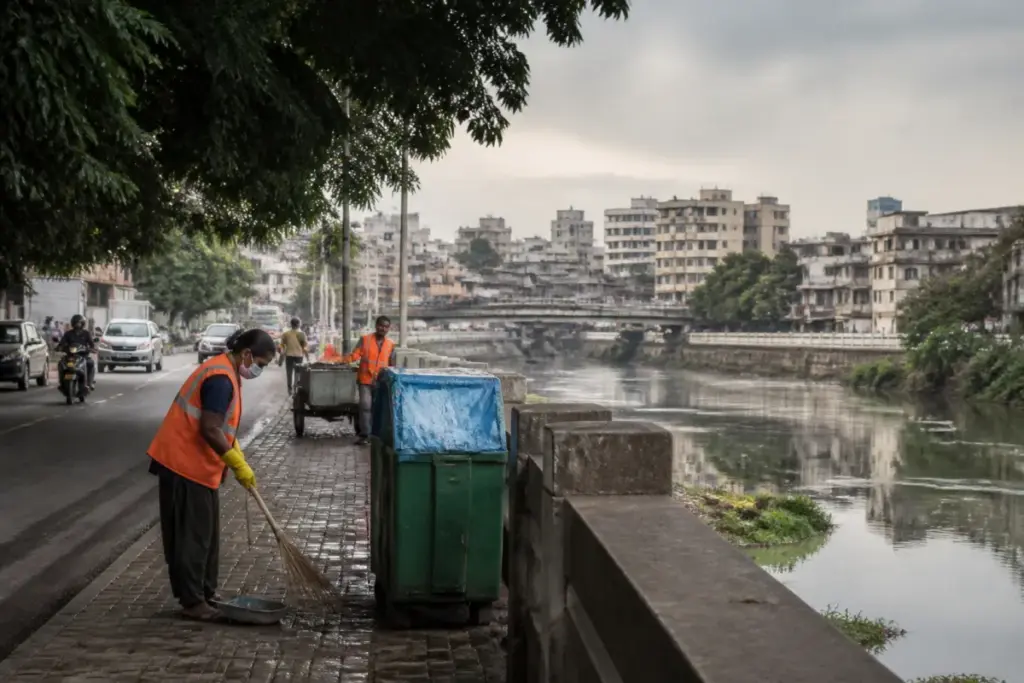
Pune Municipal Commissioner Naval Kishore Ram has called for a larger and more systematically planned sanitation drive, saying the city continues to face plastic use, polluted river water, sanitation facility deficiencies and uneven staff performance despite ongoing municipal efforts.
Ram made the remarks during the Pune Municipal Corporation’s ‘Swachh Samvad’ initiative organised by its solid waste management department. He said the civic body had faced criticism over its cleanliness work and had not yet fully earned the confidence of Pune’s residents.
The commissioner pointed to the continued use of plastic despite rules prohibiting or restricting it in the city. He also said that although work was being undertaken to reduce river pollution, the river water continued to appear black. The observations place enforcement, waste management and water quality together within the civic body’s sanitation responsibilities.
Ram said Pune has a strong historical and educational legacy, as well as the facilities and capacity required for urban development. However, he questioned why the city still had to look to Indore to learn lessons on cleanliness. He also asked how many more years the city would continue discussing the need to make Pune clean instead of delivering the required results.
The commissioner told municipal staff not to give in to pressure from anyone seeking improper action. He assured employees who worked honestly that the administration would support them. His remarks also addressed internal accountability, with a warning that the negligence of some employees affected those who performed their duties sincerely.
Ram asked staff members to discharge their assigned responsibilities honestly during working hours and to plan their work. Rather than taking on unnecessary additional tasks, he urged employees to complete the duties assigned to them properly. He said no one was small or big in sanitation work and that every person’s contribution was equally important.
The commissioner also said Pune’s sanitation budget was among the lowest in the country, although the report did not provide a comparative figure or identify the cities used for comparison. He drew attention to shortcomings in the management of public and municipal toilets and called for stronger coordination between different departments of the civic body.
He further stressed the need for effective punitive action against violations and for sustained efforts to explain the importance of cleanliness to citizens. The remarks indicate that the municipal administration intends to combine enforcement, staff accountability, inter-departmental coordination and public participation in its sanitation work.
The next steps outlined in the remarks are improved planning of sanitation operations, stronger action against violations, correction of toilet-management deficiencies and closer coordination among municipal departments.


