

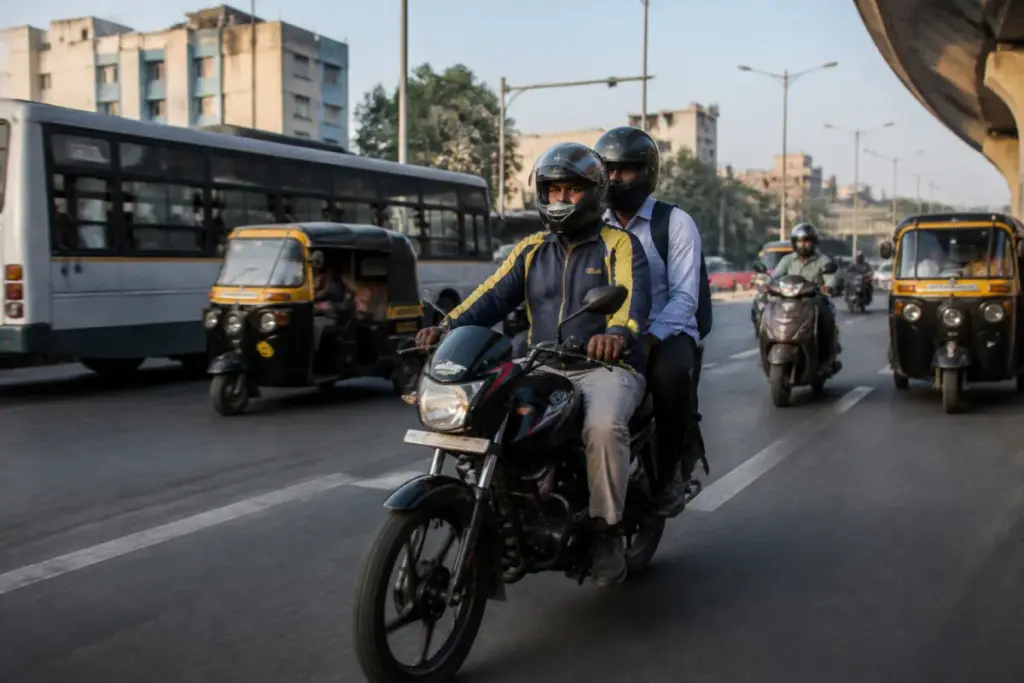
Pune police have registered a case against Ropen Transport Private Limited, which operates the Rapido platform, over alleged unauthorised passenger transport through petrol-powered bike taxis. The case was registered by the Vishrantwadi police following a complaint from Prasad Surwase, a motor vehicle inspector with the Regional Transport Office.
According to the police, the case invokes Section 318(3) of the Bharatiya Nyaya Sanhita, provisions of the Motor Vehicles Act and the Information Technology Act. Police Sub-Inspector Raut is investigating the matter.
The complaint followed an inspection and review by the Regional Transport Office after officials found that Rapido had developed an application through which passengers could register online for transport services. The RTO then approached the police, alleging that passenger services were being provided despite the absence of permission from the Regional Transport Authority.
The issue centres on the regulatory status of petrol-engine two-wheelers being used as bike taxis. According to the police information cited in the complaint, the Regional Transport Authority has not permitted such vehicles to carry passengers as bike taxis in the area. The complaint alleges that the company’s application enabled online bookings for the service despite that regulatory position.
The motor vehicle inspector has alleged that the company conducted unauthorised passenger transport and thereby defrauded the government. These allegations form the basis of the police case and have not been established by a court. The registration of a First Information Report marks the beginning of the investigation, not a finding of guilt.
The case highlights the enforcement challenge created when app-based transport platforms connect passengers with vehicles whose operating permissions may not match the service offered through the application. In such cases, responsibility is shared across several parts of the urban transport system: the transport authority determines permissions, the RTO monitors compliance and the police investigate alleged violations under criminal and transport laws.
The complaint also places the digital layer of the service under scrutiny. The police case includes provisions of the Information Technology Act because the alleged passenger transport was facilitated through an online application. The available report does not specify the number of rides, vehicles or passengers involved, nor does it state whether any arrests have been made.
For commuters, the case puts the regulatory uncertainty around bike-taxi services in Pune back into focus. Unlike conventional taxis and autorickshaws, app-based two-wheeler services depend on both digital registration and vehicle-level compliance. The transport authority’s position on petrol-powered bike taxis will therefore be central to the investigation and to any future enforcement action.
The Vishrantwadi police are continuing their investigation based on the complaint submitted by the RTO motor vehicle inspector. Further details on the vehicles, bookings and actions taken against individuals or the company are expected to emerge as the investigation progresses.


