

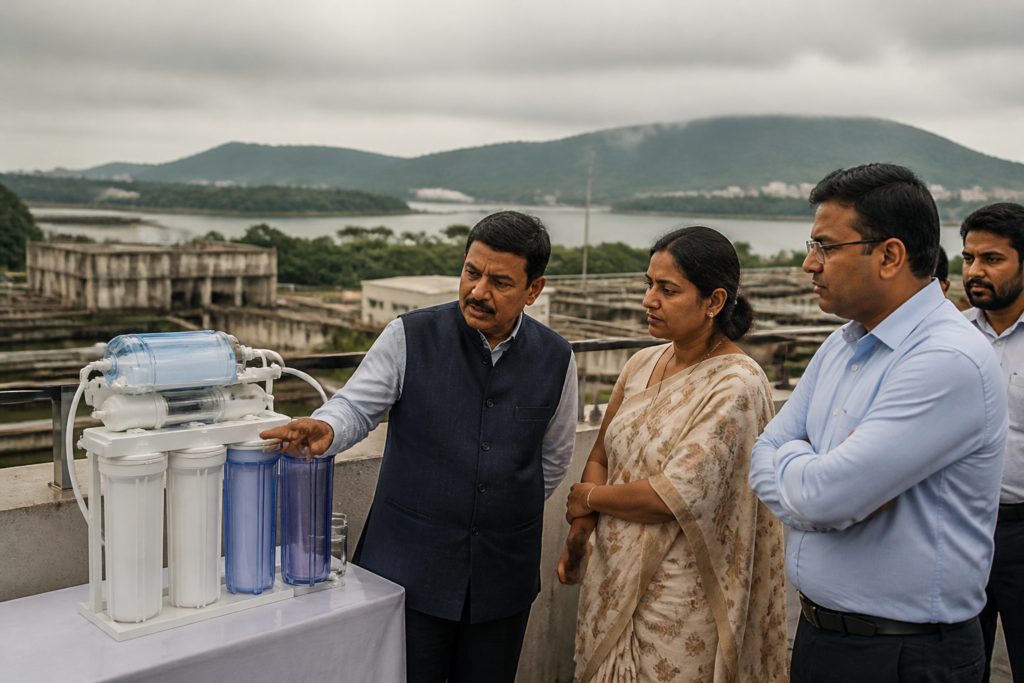
Pune’s drinking water quality came under scrutiny during a Pune Municipal Corporation general body meeting on October 16 after Nationalist Congress Party corporators presented water purifiers to Mayor Manjusha Nagpure and Municipal Commissioner Naval Kishore Ram in protest. The corporators alleged that some hotels, restaurants and other commercial establishments near the Khadakwasla dam catchment area were releasing contaminated wastewater into water sources.
According to a report by Punekar News, NCP corporators Amol Balwadkar and Nilesh Nikam used the symbolic presentation of water purifiers to demand action from the civic administration. Balwadkar called for an immediate investigation into the alleged discharge of polluted wastewater in the Khadakwasla area, which is linked to Pune’s drinking water supply.
The allegation places two urban pressures alongside each other: the protection of a critical water source and the management of commercial activity around a major reservoir catchment. However, the supplied report does not include an independent laboratory test, inspection finding, pollution-control notice or official confirmation establishing that contaminated wastewater entered the water sources.
The issue was raised during a wider and heated civic meeting in which drinking water concerns and drought conditions in Maharashtra became major subjects of debate. Members of the ruling party and the opposition exchanged allegations over their respective responses to the drought situation and the need to support farmers affected by inadequate rainfall.
The reported protest also highlights the administrative challenge involved in protecting urban water security. Responsibility for water quality can involve municipal departments, local enforcement agencies and environmental regulators, particularly when commercial establishments are alleged to be affecting a catchment area. The report, however, does not specify whether any joint inspection, sampling exercise or enforcement action has been ordered by the PMC or another authority.
The water-quality dispute unfolded alongside a proposal by BJP Pune city president Dheeraj Ghate that BJP corporators contribute their honorarium for one year towards assistance for farmers in drought-affected regions. Congress corporators said they would take a decision based on instructions from their group leader. The exchange led to an argument between ruling-party and opposition members before speakers appealed for support to affected farming communities.
The two issues are connected by the wider pressure on water resources, but they involve different administrative responses. Drought relief concerns financial and institutional assistance to affected farming communities, while the Khadakwasla allegation concerns source protection, wastewater control and verification of water quality.
For Pune residents, the immediate public-interest question is whether the alleged pollution has occurred and, if so, whether the responsible agencies have identified the source and taken corrective action. The supplied report records a demand for investigation but does not confirm that such an investigation has been completed or that contamination has been established. Further clarity would require an official response, inspection findings or test results from the concerned authorities.


