

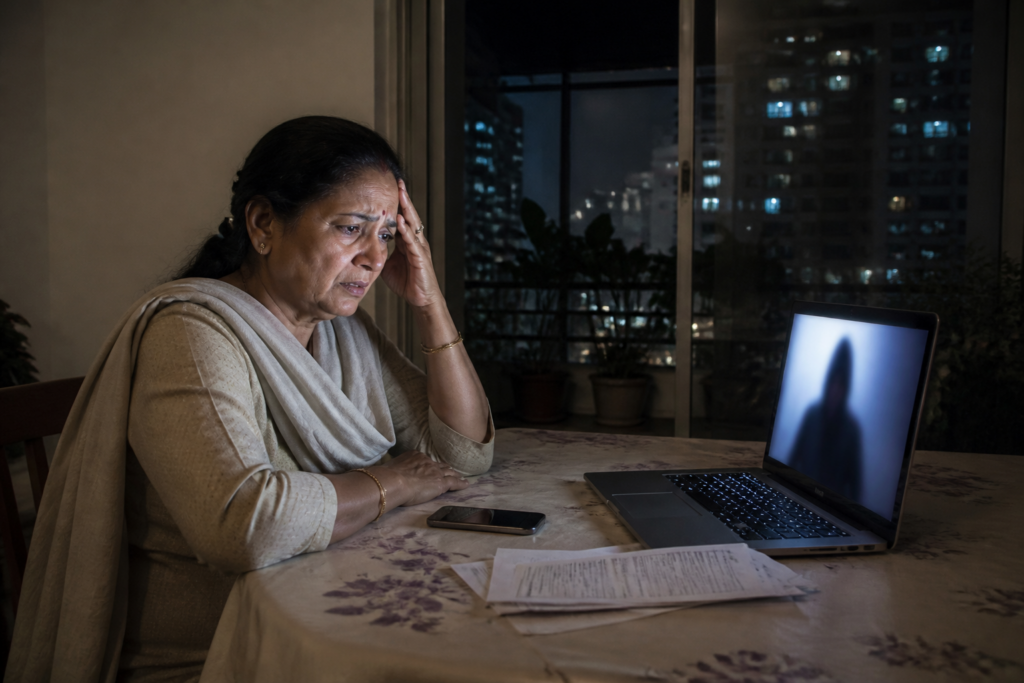
A senior citizen from Pune’s Kothrud area allegedly lost Rs 68 lakh after cyber fraudsters posing as government officials and police officers kept her under a so-called “digital arrest” for eight months, according to cyber police. The fraud took place between March and the first week of October, police said.
The woman, who lives alone while her children are settled abroad, was initially contacted by phone by people accusing her of uploading obscene photographs and videos online. The callers claimed that the Data Protection Board of India was investigating the matter, inspector Sangeeta Deokate said.
After the woman denied the allegations, the fraudsters told her to obtain a police clearance certificate. Soon afterwards, a man posing as an officer from the Mumbai Crime Branch contacted her through a video call and questioned her about her assets and bank accounts.
The callers then alleged that one of her bank accounts had been used to launder money for a banned terrorist outfit in Kerala. They further claimed that she had received Rs 20 lakh as commission for circulating obscene content and had used the money to fund terrorist activities, police said.
Using threats of arrest and legal action, the accused pressured the woman into transferring money to avoid prosecution. The fraudsters allegedly maintained control over her through the prolonged digital interaction, leading to the description of the incident as a “digital arrest”.
The woman eventually emptied her savings and transferred a total of Rs 68 lakh to six bank accounts, according to the police account reported by Punekar News. The report did not identify the account holders or state whether any arrests had been made.
The incident highlights how cyber fraudsters are using video calls, fabricated legal proceedings and impersonation of public authorities to target residents remotely. The alleged involvement of an elderly person living alone also shows how isolation can become a factor in prolonged financial coercion, although the supplied police account does not provide further details about the communications or the identities of the accused.
In this case, the fraudsters combined several claims involving alleged pornography, money laundering, terrorism and police action. The pressure to transfer money to avoid arrest was central to the alleged deception. The transfers were made to six bank accounts over the period described by police as running from March to early October.
The account was attributed to cyber police inspector Sangeeta Deokate. Further details about the investigation, the status of the bank accounts and any action against the accused were not available in the supplied report.


