

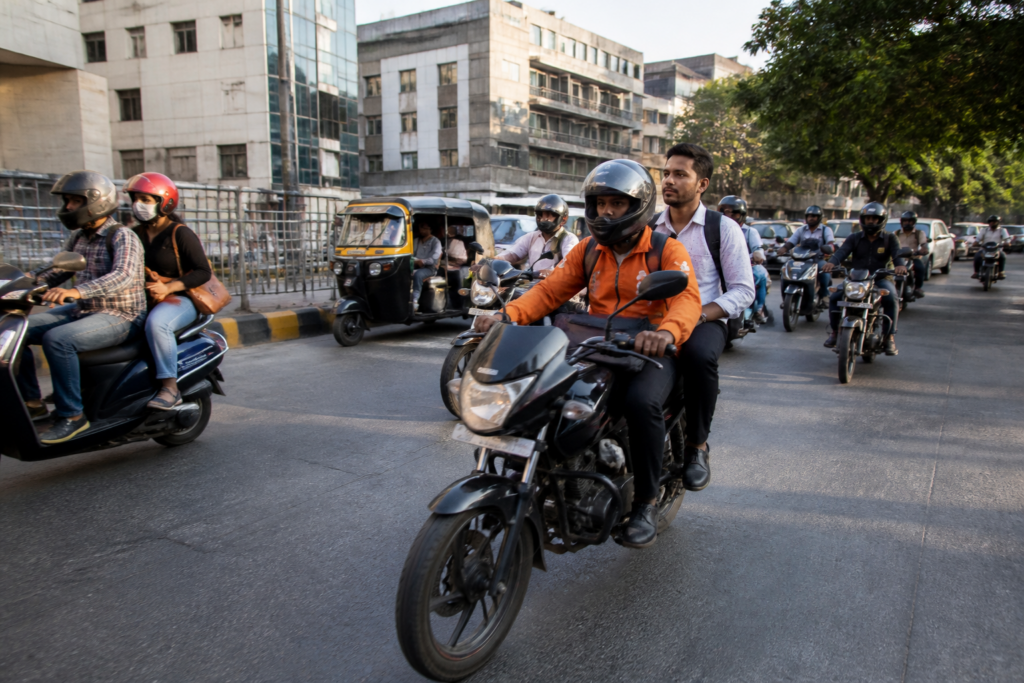
Pune District Collector Jitendra Dudi has directed aggregators operating unlicensed two-wheeler taxi services, including Rapido, to immediately suspend operations until they obtain valid government licences, warning that non-compliance could lead to legal action.
The direction followed a meeting held by the district administration on 15 October to discuss demands and grievances raised by cab and auto-rickshaw drivers in Pune district. Speaking to the media after the meeting, Dudi said aggregator companies must comply with government rules and guidelines before continuing services.
The administration’s position is that two-wheeler taxi services cannot operate without the required legal permission. Aggregators running such services on a pilot basis have also been instructed to stop operations until they secure valid licences from the government.
The directive places the licensing status of app-based bike taxis at the centre of Pune’s urban mobility debate. Unlike conventional taxis and auto-rickshaws, whose operations are governed through established transport permissions and fare frameworks, bike-taxi services have expanded through digital platforms while regulatory approval remains a key issue for the district administration.
The directions issued after the meeting also cover the way fares are divided between aggregators and drivers. Companies have been instructed to ensure that drivers receive at least 80% of the total fare collected from passengers.
The administration has further stated that fares charged by aggregators must remain within a prescribed range of minus 25% to plus 50% of the base fare fixed by the Regional Transport Authority. This creates a defined limit around the pricing of app-based rides and links platform fares to the rates approved by the transport authority.
To improve transparency, aggregators will be required to share fare-related data with the administration every month. The companies have also been directed to add a separate column in their mobile applications showing the fares prescribed by the Regional Transport Authority.
The proposed app-based fare display is intended to allow passengers to compare the applicable RTA rates with the fares charged by aggregators. It also gives the district administration a mechanism to review fare patterns and assess whether platforms are operating within the prescribed limits.
The measures follow complaints and demands raised by cab and auto-rickshaw drivers, although the supplied report does not specify the individual grievances discussed at the meeting. The administration’s directions address both the legality of bike-taxi operations and the financial terms governing platform-based rides.
For passengers, the immediate operational impact will depend on whether the affected aggregators comply with the suspension direction and whether they obtain the required government licences. For drivers, the 80% fare-share direction establishes a specific condition for aggregator operations, while monthly data reporting and fare disclosure place additional compliance requirements on the companies.
The Pune district administration has warned that companies failing to follow the directions could face legal action. The next formal milestone will be the suspension of unlicensed two-wheeler taxi services and the submission of fare-related data under the directions issued by the administration.


