

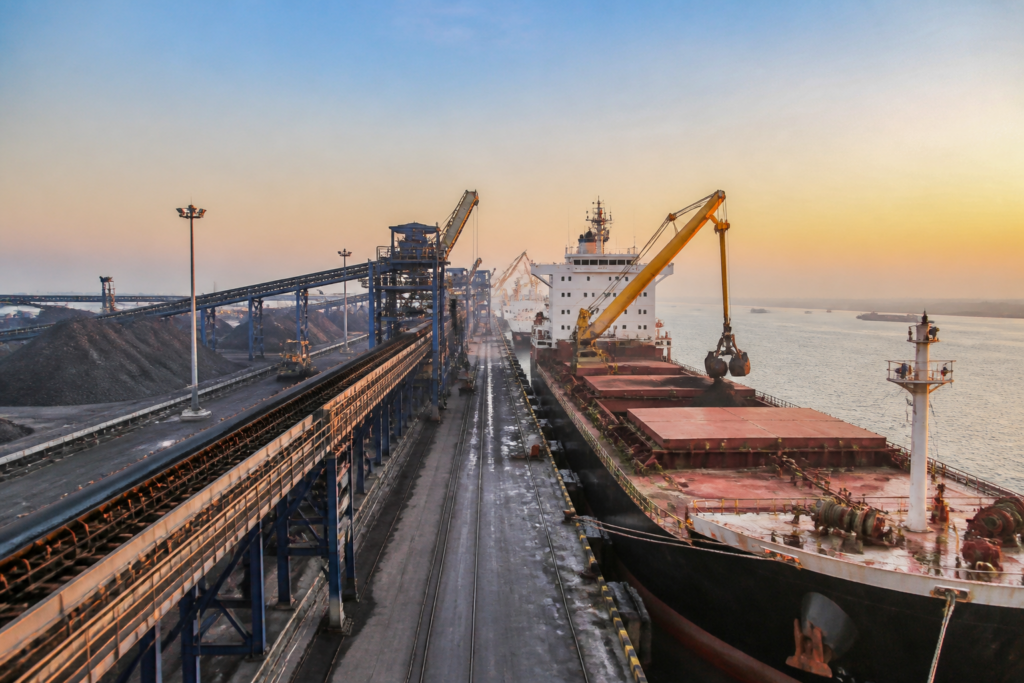
Jindal Paradip Port Ltd has commenced commercial operations at the 12.5 million tonne Phase-I capacity of its dry bulk cargo terminal at Paradip Port in Odisha, giving Jindal Steel dedicated long-term port access as it expands domestic steelmaking capacity.
The terminal began operations on October 15, according to an exchange filing by Jindal Steel. The project is being developed by Jindal Paradip Port Ltd (JPPL), a subsidiary in which Jindal Steel holds a controlling stake, at the Western Dock of Paradip Port.
The Phase-I facility forms part of a larger 25 million tonne per annum dry bulk cargo terminal being developed under a ₹3,393-crore project covering both phases. Jindal Steel had earlier described the overall investment as part of a ₹3,400-crore project. The facility is intended to support the movement of bulk cargo through one of India’s major ports while the company increases its domestic steelmaking capacity.
JPPL entered into a concession agreement with the Paradip Port Authority to develop the Western Dock on a build-operate-transfer basis. The agreement provides for the terminal to be developed in two phases, with each phase having a capacity of 12.5 million tonnes per annum.
The company said Phase-I was commissioned ahead of schedule. Under the concession agreement, the commercial operation date for the first phase was required to be achieved within 1,095 days of the award of the concession, or by October 16, 2026. JPPL obtained the completion certificate for Phase-I on October 12, four days before the scheduled completion date.
The project provides an example of how large industrial companies are building or securing dedicated logistics infrastructure alongside manufacturing expansion. For steel producers, access to port capacity is closely linked to the movement of raw materials and finished products, although the filing did not disclose the specific cargo volumes or commodities expected to move through the terminal.
The terminal’s development also adds capacity at Paradip’s Western Dock through a private concession arrangement with the port authority. Under the build-operate-transfer model, the private concessionaire develops and operates the facility for the agreed concession period before the asset is transferred in accordance with the terms of the agreement. The supplied filing did not provide details of the concession tenure, tariff structure or the expected annual traffic split between imported raw materials and outbound steel.
Both phases of the project are progressing simultaneously, Jindal Steel said. The company did not announce a separate commercial operation date for the remaining 12.5 million tonne capacity. The next project milestone will therefore be the completion and commissioning of Phase-II, which will take the terminal’s planned capacity to 25 million tonnes per annum.


