Ola Electric’s ₹999.74-crore rights issue is not simply a funding exercise for an electric two-wheeler company. Its offer document places the fundraising alongside a pending SEBI proceeding, questions over how sales and dealer networks were reported, gaps in mandatory internal audit systems and a qualified opinion on inventory-verification controls at a subsidiary. Together, these disclosures turn the issue into a test of how an urban mobility company measures growth, communicates performance and builds institutional confidence.
The company is seeking capital at a time when its public operating narrative is under scrutiny. Ola Electric has stated that its reported metrics are accurate, but its offer document also says that certain operational measures are tracked through internal systems and tools and are not independently verified. These measures include sales volumes, order fulfilment and after-sales service volumes. For a company whose expansion depends on vehicle deliveries, service capacity and dealer access, the distinction between internal reporting and independently verified performance is significant.
The regulatory questions concern several announcements made between December 2024 and February 2025. The offer document records a January 7, 2025, SEBI administrative warning after founder Bhavish Aggarwal announced a fourfold expansion of company-owned stores on social media before informing the stock exchanges. The latest dealer announcement cited in the filing was disclosed to the bourses, but it did not specify how many outlets were operational or what servicing capabilities they had.
The more substantial proceeding relates to an April 10 SEBI show-cause notice concerning Ola’s February 2025 announcement that it had sold more than 25,000 electric vehicles during the month. According to the offer document, SEBI alleged that the figure represented confirmed orders rather than completed sales involving registration and delivery. The regulator also questioned disclosures concerning payments, cancellations and fulfilment, alleging that only a portion of the reported number translated into registrations and recognised revenue. Ola later clarified that the figure referred to bookings rather than recorded sales.
That distinction is not a technical footnote in the electric-vehicle market. A booking indicates customer intent or an order captured by a company. A completed sale, by contrast, requires fulfilment and delivery, with the transaction reflected through the relevant registration and revenue processes. When the two measures are presented in ways that investors may read as equivalent, the reported scale of market demand can become difficult to assess. The supplied filing does not establish that the allegations have been proved; it records them as part of an ongoing regulatory process.
The same issue appears in the scrutiny of Ola’s December 2024 announcements concerning more than 3,200 stores co-located with service centres and an expansion to 4,000 stores. SEBI alleged that the disclosures contributed to an 8.45 per cent increase in Ola’s share price on December 2, 2024. The filing also says the regulator questioned statements about Roadster and Roadster X motorcycle prototype approvals and delivery timelines.
Ola and Aggarwal filed a settlement application on June 8, 2026. It remained pending as of October 7, according to the offer document. The allegations therefore remain unresolved through a final regulatory order. That status matters for how the company’s disclosures should be read: the regulatory concerns are material and documented, but they are not equivalent to a final finding of liability.
The governance concerns extend beyond the SEBI proceeding. Auditors reported that Ola Electric Mobility, Ola Cell Technologies and Ola Electric Technologies lacked mandatory internal audit systems during FY26. The consolidated internal financial controls report also contained a qualified opinion concerning inventory-verification controls at a subsidiary. The offer document does not establish that these gaps caused a particular misstatement, but it does show that the company’s control environment is an important part of the fundraising conversation.
Internal audit systems are not merely compliance machinery. In a manufacturing and mobility business, they can sit close to the processes that connect production, inventory, vehicle delivery, dealer operations and financial reporting. If those systems are absent or incomplete, the burden on management and external auditors to demonstrate the reliability of operational information becomes greater. The supplied material does not provide a complete assessment of the company’s control framework, but it identifies specific areas where auditors and regulators have raised questions.
The issue also raises a capital-allocation question. Ola’s latest fundraising follows its ₹5,500-crore initial public offering in 2024 and a ₹780.24-crore institutional placement in June 2026. The offer document acknowledges that proceeds from earlier issues remain partly unutilised, while the new rights issue covers overlapping purposes, including debt repayment, organic growth and general corporate expenditure. The filing does not, in the supplied material, quantify the unused funds or explain how the overlap will be resolved in operational detail.
The rights issue is priced at ₹27 a share. Its record date is October 13, and the issue runs from October 22 to 30. Aggarwal has pledged shares representing 4.32 per cent of Ola’s equity to finance his participation. These details show how the company is attempting to raise capital while its founder remains financially aligned with the offer, but they do not by themselves answer whether the capital will improve operating performance or strengthen controls.
The company’s distribution strategy adds another layer to the question of what growth means. Aggarwal recently announced that the first 150 dealers had been onboarded and described the interaction as a factory-hosted event. The communication, reproduced in Ola’s October 9 stock exchange filing, did not specify how many dealer outlets were operational or the servicing capabilities available through them. For electric two-wheelers, the size of a network is only one measure of accessibility. The ability to service vehicles, manage parts and support customers after purchase is equally relevant to whether a network functions as mobility infrastructure.
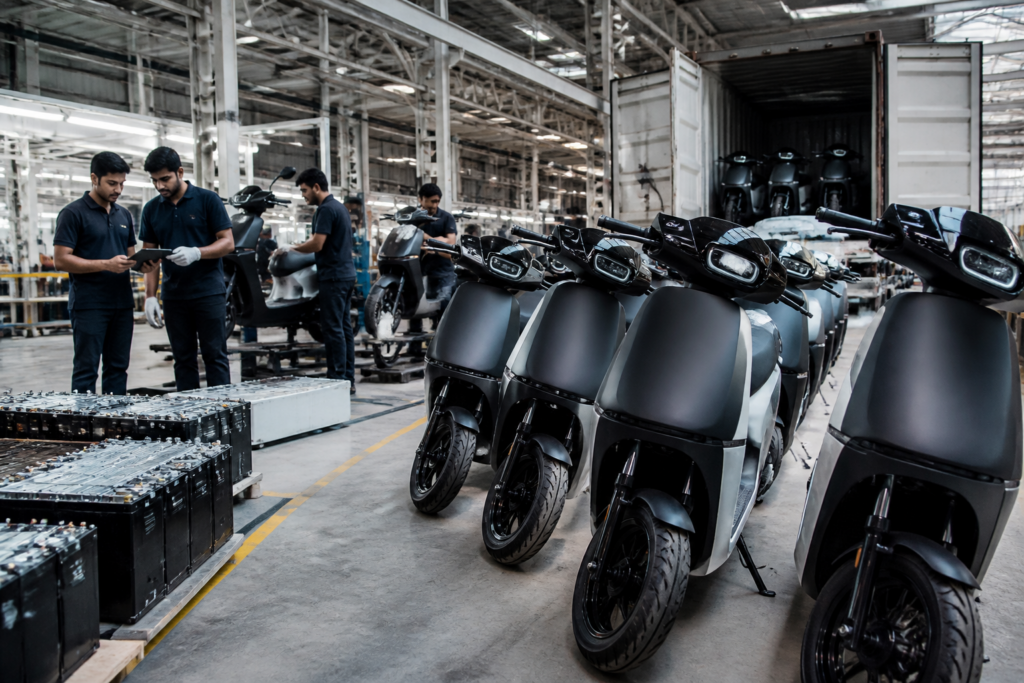
This is where the issue becomes relevant beyond investors. Electric two-wheelers are part of the transport systems used in Indian cities, but their usefulness depends on more than the sale of a vehicle. Customers require reliable delivery, maintenance, repairs and clarity about the company’s continuing ability to support the product. Dealers and service centres form a private layer of urban mobility infrastructure. When disclosures describe expansion without fully specifying operational capacity, it becomes harder for customers and market participants to judge the practical reach of that infrastructure.
The offer document’s treatment of operational metrics therefore has a direct connection to the built environment and urban mobility. Reported sales, order fulfilment and after-sales service volumes can shape perceptions of how quickly electric transport is scaling. Yet the document says these metrics are not independently verified, while the SEBI notice questions whether an earlier sales figure represented bookings rather than completed transactions. The central urban question is not only how many vehicles are announced, but how many enter daily use and can be supported over time.
The sequence of disclosures also shows the institutional problem created when announcements travel faster than verification. The January 2025 warning concerned a store-expansion announcement made on social media before stock-exchange disclosure. Later communications were disclosed to the bourses, but the regulatory scrutiny did not disappear because the channel changed. The issue is whether public claims are precise, comparable and supported by systems capable of confirming them.
For public companies operating in emerging urban sectors, credibility is part of infrastructure. Investors use company disclosures to assess capital needs and execution. Customers use network claims to decide whether a product can be supported in their city. Dealers use expansion plans to judge whether to commit resources. Regulators use reported information to evaluate whether public markets are receiving a fair account of performance. Weakness in any one of these relationships can make growth claims harder to interpret.
The evidence supplied with the rights issue confirms several facts but leaves others unresolved. It confirms the size, price and timetable of the fundraising; the existence of a pending SEBI proceeding and settlement application; the auditors’ observations about internal audit systems and inventory controls; and the company’s own warning about the independent verification of certain operational metrics. It does not establish the final outcome of the regulatory allegations, the eventual use of all earlier proceeds, the operational strength of the dealer network or the number of vehicles corresponding to disputed announcements.
Those unresolved points will shape how the rights issue is understood. The immediate transaction has a defined timetable, but the larger test concerns whether Ola can provide reliable evidence for its growth claims, strengthen internal controls and clearly distinguish bookings, deliveries, registrations and recognised revenue. Until the pending regulatory process and the company’s control questions are resolved, the fundraising remains as much a disclosure and governance test as a balance-sheet event.