

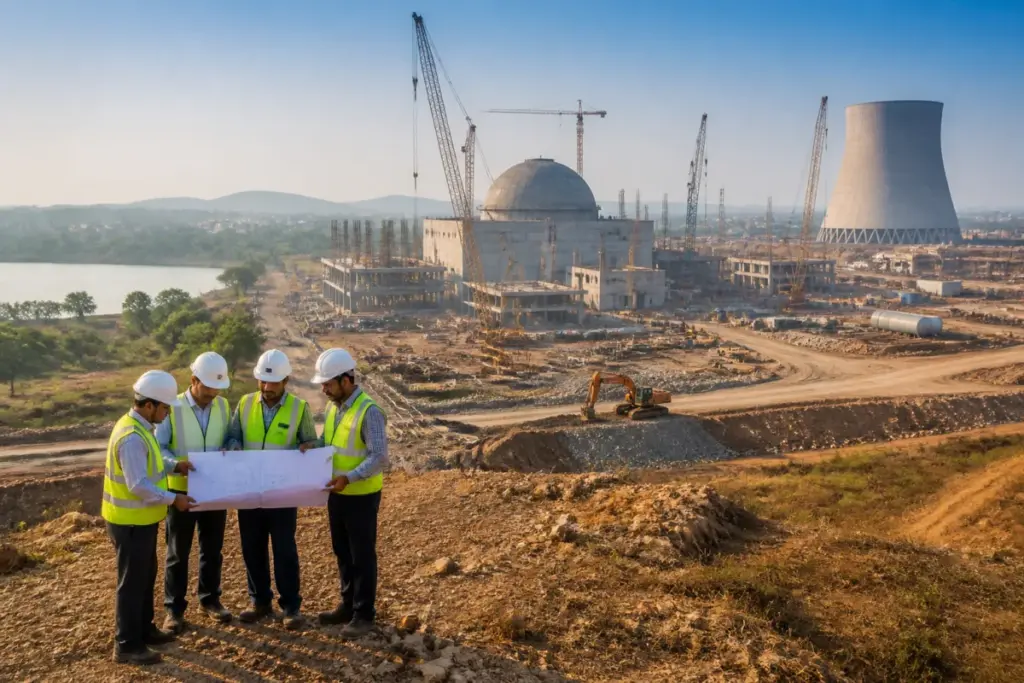
NTPC plans to extend feasibility studies for nuclear projects to more states, including Uttar Pradesh, as the state-owned power producer works towards a 30 GW nuclear capacity target by 2047 and supports the government’s broader goal of reaching 100 GW of nuclear capacity in India.
A senior official told PTI that NTPC has completed feasibility studies in Madhya Pradesh, Bihar and Odisha and will now begin examining potential locations in additional states. Banka in Bihar, Basai in Madhya Pradesh and Nabarangpur in Odisha have been identified as possible sites under the studies completed so far.
“More states will be explored as the vision is 30 GW nuclear capacity by 2047. Of course, Uttar Pradesh is on our list along with more states. We will conduct feasibility studies soon,” the official said, according to the report published by The Hindu BusinessLine.
NTPC’s plan is to develop projects with an average capacity of 1,400 megawatts, comprising two units of 700 MW each. The company’s stated near-term objective is to establish at least 2 GW of non-fossil fuel capacity by 2032, while nuclear power forms part of its longer-term diversification strategy.
The feasibility process will determine whether proposed sites can advance through India’s nuclear approval structure. A feasibility study is submitted to the Department of Atomic Energy, after which the Standing Site Selection Committee reviews the proposal. If a site is considered technically feasible, it is sent to the Atomic Energy Commission for further processing.
This process makes site selection a central infrastructure question rather than only a power-generation decision. The report said continuous water supply is a key requirement for a nuclear project, while land needs vary according to project size. It also cited a one-square-kilometre exclusion zone associated with a project. Industry estimates quoted in the report indicate that establishing 1 GW of nuclear capacity typically requires an investment of ₹15,000 crore to ₹20,000 crore and may take at least three years from concept to commissioning.
The scale of the proposed expansion is substantial. The Central Electricity Authority has estimated that adding around 91 GW to India’s existing 8.8 GW of nuclear capacity would require investment of approximately ₹15 lakh crore to reach the 100 GW target by 2047. The estimate highlights the financing and institutional requirements involved in expanding nuclear generation beyond the country’s current operating base.
NTPC is also exploring possible collaborations with international energy companies, including Westinghouse of the United States, Russia’s Rosatom and France’s EDF, for the deployment of large pressurised water reactor projects in India. The company has historically relied on thermal generation but has expanded into gas, liquid fuel, hydro and solar power as part of its wider energy portfolio.
With more than 91,000 MW of installed capacity, NTPC is India’s largest power-generating company and supplies about one-fourth of the country’s electricity demand, according to the report. The next steps will be the proposed feasibility studies in additional states and the submission of viable nuclear project sites to the Department of Atomic Energy for consideration.


