

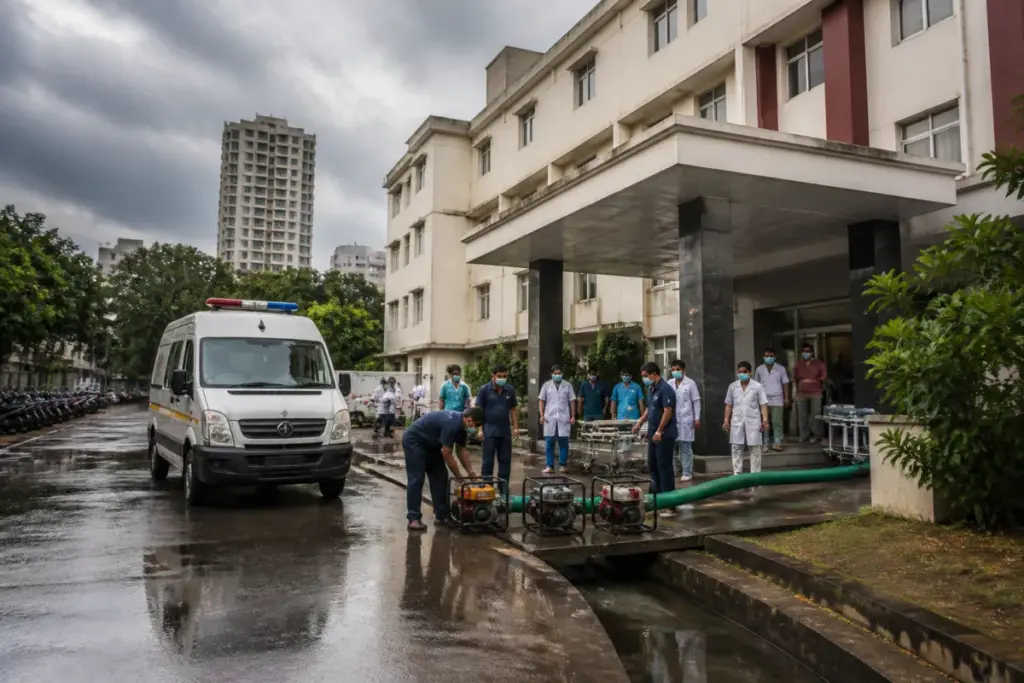
Tamil Nadu has placed government hospitals, emergency services and public health teams on preparedness for the northeast monsoon, with authorities focusing on uninterrupted power, oxygen, medicines, ambulance response and protection against rainwater entering medical facilities, Minister Arun Raj said in Chennai.
The minister said the state’s health department had been instructed to work towards three priorities: preventing disease spread, reducing deaths and ensuring uninterrupted medical services. Primary health centres, taluk hospitals, district hospitals and city hospitals have been kept ready, he said.
Special attention has been given to intensive care units, cardiac care units, neonatal wards and maternity departments. Medical staff working in these departments have been asked to remain prepared during the monsoon period, according to the minister’s remarks reported by Dinamalar.
Power continuity is a key part of the plan. The department is coordinating with the electricity utility to prevent outages at hospitals, while hospitals have been instructed to use generators if the power supply fails. Hospital administrations have also been directed to ensure uninterrupted oxygen availability and immediate ambulance services.
More than 70 emergency 108 ambulances are reportedly ready in Chennai. Hospitals have been told to maintain adequate stocks of medicines for diarrhoea, fever, dengue and snakebite treatment. Officials have also been instructed to prevent rainwater from entering hospital buildings by clearing drains and keeping required pumps available.
The preparedness measures extend to hospital food and water services. The minister said food prepared in hospitals must meet hygiene standards and that patients and attendants should receive clean drinking water. Officials at government hospitals in low-lying areas of coastal districts, including Chennai, have been asked to take precautionary measures before heavy rain affects access and operations.
The state has also arranged 1,000 medical camps across Tamil Nadu. The minister said these camps would provide services including nilavembu kashayam, while urging residents to avoid unnecessary travel during the monsoon. He also referred to rainfall of up to 30 centimetres in an earlier episode, saying normal conditions had returned by the morning after field-level precautionary measures.
The latest instructions place hospitals at the centre of the state’s monsoon response, linking public health readiness to electricity supply, drainage capacity, emergency mobility and water management. The health department’s immediate operational priorities are maintaining hospital services, keeping critical-care units functional and ensuring medical teams can respond during periods of intense rainfall.


