

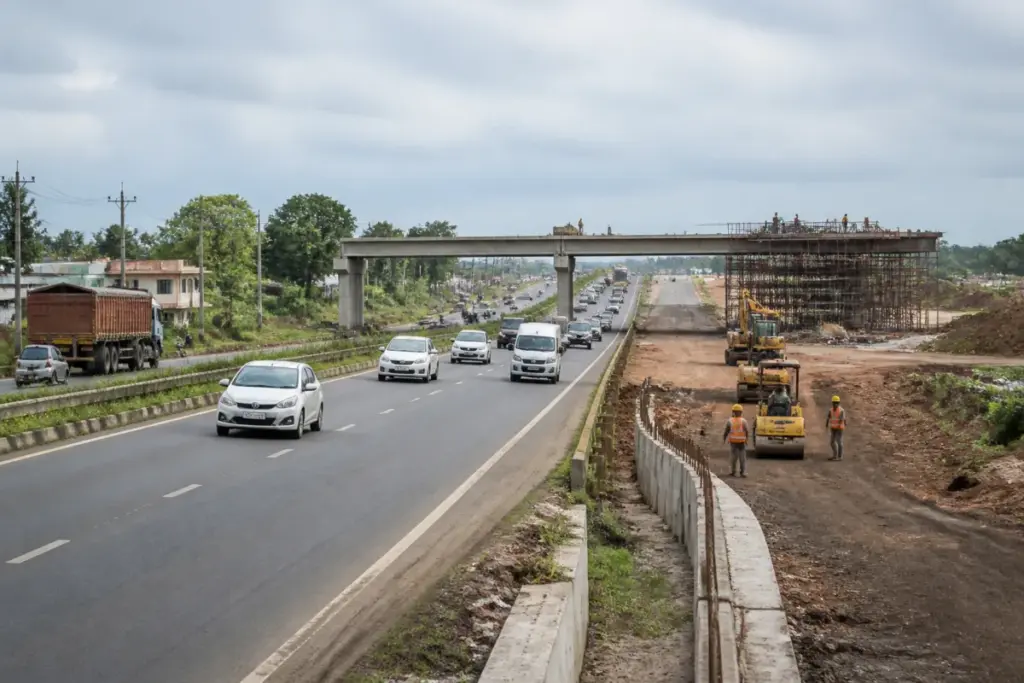
The National Highways Authority of India (NHAI) has floated a Rs2,553.84 crore tender to widen the remaining 42 km of NH-53 between Nagpur and Bhandara to six lanes, advancing a major upgrade on the road corridor connecting central India with the east.
The project will close a significant gap in the highway’s six-lane network. The Bhandara bypass and a section near Mauda have already been widened, while the remaining stretch between Nagpur and Bhandara will now be taken up through the new contract.
NHAI official Abhijit Jichkar told the Times of India that rising vehicular traffic on the highway had necessitated the widening project. “Land acquisition has already been completed. As soon as the tender is awarded, groundwork for the project will start,” he said.
The planned work will include flyovers, underpasses, service roads and a modern drainage system. Existing bridges along the route will also be widened or reconstructed wherever required as part of the upgrade.
Service roads are planned to separate local traffic from long-distance vehicles using the highway. Flyovers and underpasses are expected to reduce interruptions at busy intersections, where local movements and through traffic currently compete for road space. The drainage works are intended to form part of the new highway infrastructure, along with the improvements to bridges and junctions.
NHAI has estimated a construction period of 30 months. The actual timeline, however, will depend on the award of the contract and the start of construction. The immediate next step is the completion of the tendering process before work can begin on the ground.
The Nagpur-Bhandara route is an important transport corridor, extending beyond Bhandara towards Chhattisgarh, Odisha and West Bengal. It carries both local and longer-distance traffic, making the capacity and design of the highway relevant to movement between Maharashtra and eastern parts of the country.
The six-laning is expected to increase the highway’s carrying capacity and ease bottlenecks along the corridor. Its effect on traffic flow will depend not only on the additional lanes but also on how effectively the planned service roads, grade-separated crossings, bridges and drainage systems are delivered.
With land acquisition already completed, the project’s progress will now be linked primarily to contract award, mobilisation and construction execution. NHAI’s stated plan is to begin groundwork after the tender is awarded and complete the construction within the estimated 30-month period.


