

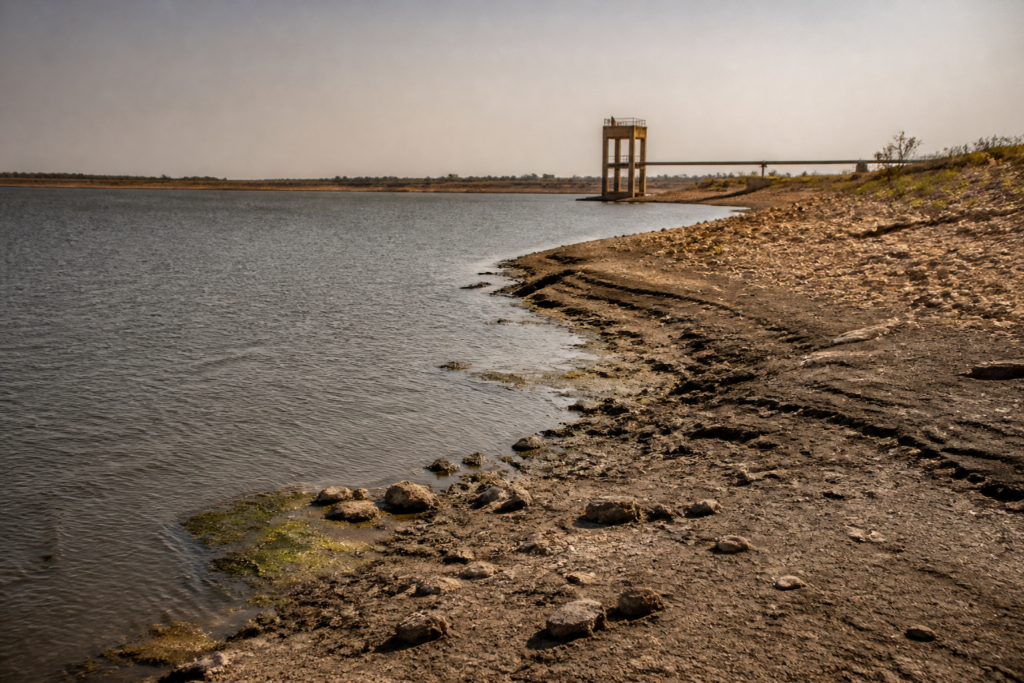
Nagpur’s water security has come under fresh pressure after Totladoh reservoir lost 65.63 million cubic metres (MCM) of live storage in 10 days, with the city’s main water source falling to 44.73% of its designed live capacity ahead of summer 2027.
Water Resources Department data cited by the Times of India shows that Totladoh’s live storage declined from 520.55 MCM on October 5 to 454.92 MCM on October 15. The fall represents an average depletion of 6.56 MCM a day. Storage as a share of the reservoir’s designed live capacity of 1,016.93 MCM dropped from 51.19% to 44.73% during the period.
The year-on-year comparison is particularly stark. On October 15 last year, Totladoh held 99.68% of its designed live storage, according to the report. The reservoir supplies approximately 520 million litres per day (MLD) to Nagpur through the Pench system, forming the largest component of the city’s treated water supply.
Nagpur currently receives around 740 MLD of treated water. Of this, about 220 MLD is drawn from the Kanhan river, while the remaining 520 MLD comes from Totladoh through the Pench system. With Totladoh contributing around 70% of the city’s daily water requirement, changes in its storage level have a direct bearing on municipal supply management.
A senior WRD official told the Times of India that 15 government agencies besides the Nagpur Municipal Corporation are also drawing water from Totladoh. These include power stations, municipal councils, nagar panchayats and gram panchayats. The multiple demands on the reservoir add to the challenge of managing available stocks until the next monsoon replenishes the system.
Storage has also declined in Kamthi Khairy reservoir, another source relevant to the region’s water position. Its live storage fell from 112.14 MCM on October 5 to 101.06 MCM on October 15, a reduction of 11.08 MCM. Its storage level declined from 78.98% to 71.18% of designed live capacity.
Other reservoirs in the Nagpur region recorded declines over the same 10-day period. Khindsi’s live storage fell from 71.04 MCM to 57.68 MCM, Nand’s from 45.61 MCM to 41.08 MCM, and Wadgaon’s from 80.48 MCM to 74.92 MCM.
The state has reserved water for drinking purposes until August 2027. However, the current storage position and depletion rates have raised concerns about how Nagpur’s water needs will be managed through the coming summer. At the recent rate of decline, Totladoh’s live storage would mathematically last around 69 days and Kamthi Khairy’s around 91 days.
The figures are not definitive forecasts. Actual reservoir levels will depend on planned releases, fresh inflows and irrigation requirements, according to a source cited in the report. The immediate task for the authorities is therefore to manage existing stocks across competing users until the reservoirs receive further monsoon replenishment.


