

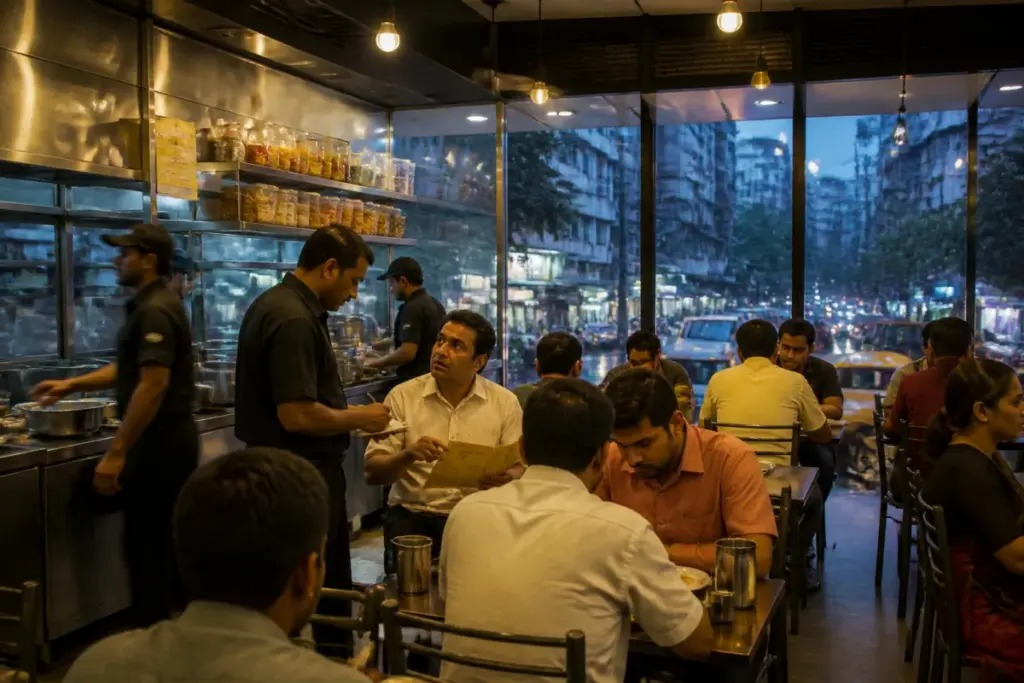
Mumbai restaurant prices are set to rise by 10-15% as eateries confront sustained increases in food, labour, rent, utilities and hygiene-compliance costs, according to the Indian Hotel and Restaurant Association. The expected increase comes during the peak festive season, when restaurants are also managing strong demand and pressure to retain customers through discounts.
AHAR president Vijay K Shetty attributed the proposed increase to the continuing rise in the cost of preparing and serving food. The association released a statement over the weekend indicating that restaurants across Mumbai were preparing to revise prices by 10-15%.
Restaurant operators in other cities are also taking steps to limit the effect of higher operating costs. These include pausing expensive menu items, reducing portion sizes, introducing smaller meals and raising prices by around 4-5% from October. Raymond Andrews, co-founder of quick-service restaurant chain Biryani Blues, said the company had paused some higher-priced biryani options that use costly ingredients.
Saurabh Khanijo, managing director of Asian cuisine chain Kylin, said restaurants had little choice but to share part of the inflation burden with customers while absorbing some of the costs themselves. Operators said the current inflationary pressure was having a longer-term effect than the increase in costs caused by LPG supply disruptions during March and April this year.
The pressure is not limited to food ingredients. Restaurant companies are facing higher expenses for gas, water, employee wages, aggregator commissions, rentals and utilities. Shashank Shetty, director of Peninsula Redpine, which operates Tattva Bar & Cafe, said competition from newer players offering aggressive prices was making it harder for established businesses to maintain profitability while continuing to provide discounts.
Food-safety enforcement has added another layer of expense. Increased scrutiny by the Maharashtra Food and Drug Administration and the Food Safety and Standards Authority of India covers sanitation, storage practices, licensing and food-safety procedures. Restaurant chains said compliance costs now include additional audit staff, higher-quality ingredients, external laboratory testing and sampling, as well as expanded legal support.
The chief of a prominent Delhi-based chain, who was not named, said the company was replacing deep-frying oil more frequently than the permissible standard because it did not want to risk regulatory action. The executive said some of that additional cost was being passed on to consumers.
India’s retail food inflation reached 7.74% in September, according to the report, with vegetables and staples such as edible oils, sugar, onions, ginger and garlic recording sharp price increases. These costs affect restaurants directly because they are incurred repeatedly across procurement, kitchen operations and delivery.
At ITC Grand Central in Mumbai, food and beverage manager Avanish Chaturvedi identified ingredient prices, manpower expenses, rentals and utility bills as the main contributors to rising operating costs. He said restaurants could manage some pressure through menu engineering, more efficient procurement, waste reduction and operational improvements.
For customers, the Mumbai price revision will mean higher bills at a time when restaurants are also adjusting portions and menus. For operators, the next step will be to balance regulatory compliance and service standards against consumer resistance to higher prices. The association’s proposed 10-15% increase remains the key upcoming change for Mumbai’s dining sector.


