

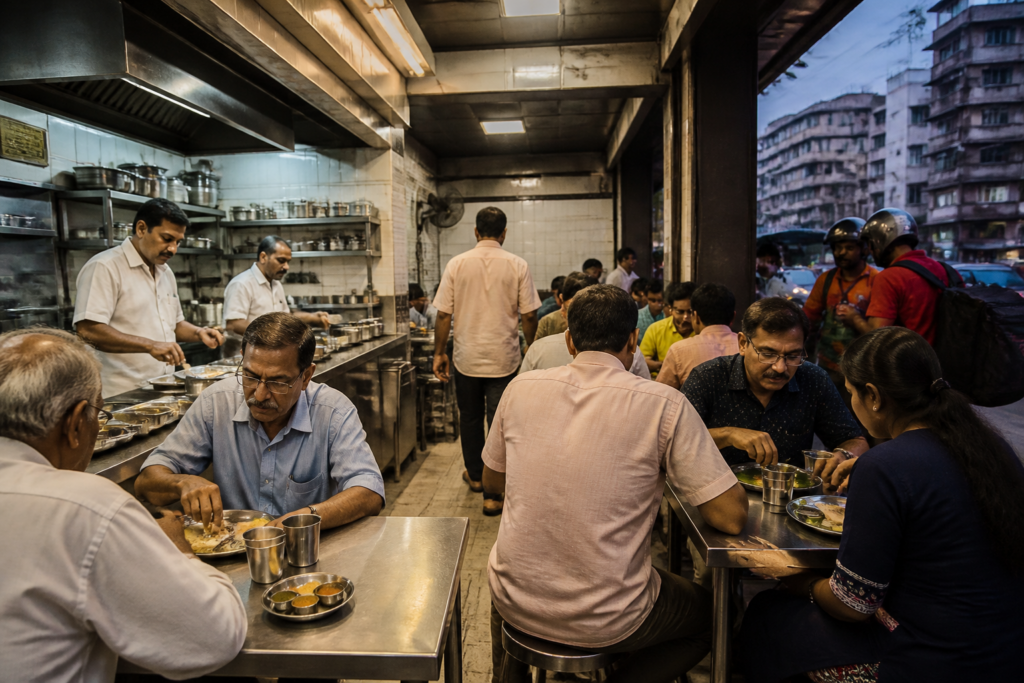
A Mumbai restaurant price hike of 10% to 15% is expected to take effect from next week, with the Indian Hotel & Restaurant Association (AHAR) saying rising cooking-gas, food, rental, labour and transportation costs are making it difficult for restaurants to absorb higher expenses.
AHAR president Vijay Shetty said the increase would apply individually across establishments and would be a minimum of Rs 10 on average for commonly ordered items such as idli, dosa and dal-rice meals. AHAR has more than 25,000 member restaurants and bars.
The association’s announcement does not mean that every restaurant will raise prices by the same amount or on the same date. The actual revision will depend on each outlet’s costs, business model and decision on whether to pass the increase to customers. It could affect dine-in restaurants, quick-service outlets and delivery businesses differently.
Current online menus illustrate the possible impact, although they are not a citywide average or a uniform tariff. Udupi Cafe in Powai lists idli at Rs 80, sada dosa at Rs 90 and dal khichdi at Rs 120. Udupi 2 Mumbai’s Dadar East outlet lists steamed idli at Rs 120, sada dosa at Rs 130 and masala dosa at Rs 165. A 10% to 15% increase on those prices would take an Rs 80 serving of idli to about Rs 88 to Rs 92, while a Rs 165 masala dosa would cost approximately Rs 182 to Rs 190.
Prices also vary considerably between outlets. Swiggy listings show dal-rice at Rs 140 at Jyoti Refreshment in Dadar East and Rs 175 at Neo Welcome Restaurant in Ghatkopar West. The difference means that the effect of any revision will depend on where customers eat, the meal they choose and whether the restaurant changes its menu at all.
For regular customers, even a modest increase could accumulate over a month. An office-goer spending Rs 150 a day on breakfast and lunch would spend about Rs 165 to Rs 172.50 if the full amount rose by 10% to 15%. Across 26 working days, that would add Rs 390 to Rs 585 to the monthly bill. For two working adults with similar eating-out habits, the additional cost could approach Rs 780 to Rs 1,170.
Shetty said restaurants had absorbed higher expenses for as long as possible, but simultaneous increases in several operating costs had made that increasingly difficult. Commercial LPG and piped gas, vegetables, pulses, milk, dairy products, edible oils, transport, rentals, wages, maintenance and utilities all contribute to the cost of running a kitchen. Commercial rents and real-estate costs are especially significant in Mumbai’s business districts and high-footfall neighbourhoods.
The pressure on pulses has also affected household shoppers. A Times of India report in October recorded retail dal prices rising by Rs 20 to Rs 30 per kg across the Mumbai Metropolitan Region after wholesale prices at Vashi APMC increased by Rs 10 to Rs 20 per kg. That report attributed the rise to supply shortages, deficient monsoon rainfall, drought conditions, logistics costs and festive-season demand.
The restaurant sector has faced similar cost pressure before. In April 2026, another media report said Udupi Shri Krishna in Lower Parel raised prices by 20% during a commercial LPG supply crunch, with a vegetable sandwich increasing from Rs 70 to Rs 90. The report also cited higher ingredient and packaging costs.
AHAR said the proposed revision was not intended as a blanket increase or as profiteering. Shetty said it was necessary for restaurants to maintain food quality, hygiene, service and employment. Customers should check the latest menu at their regular outlets before assuming that the increase has already taken effect.


