

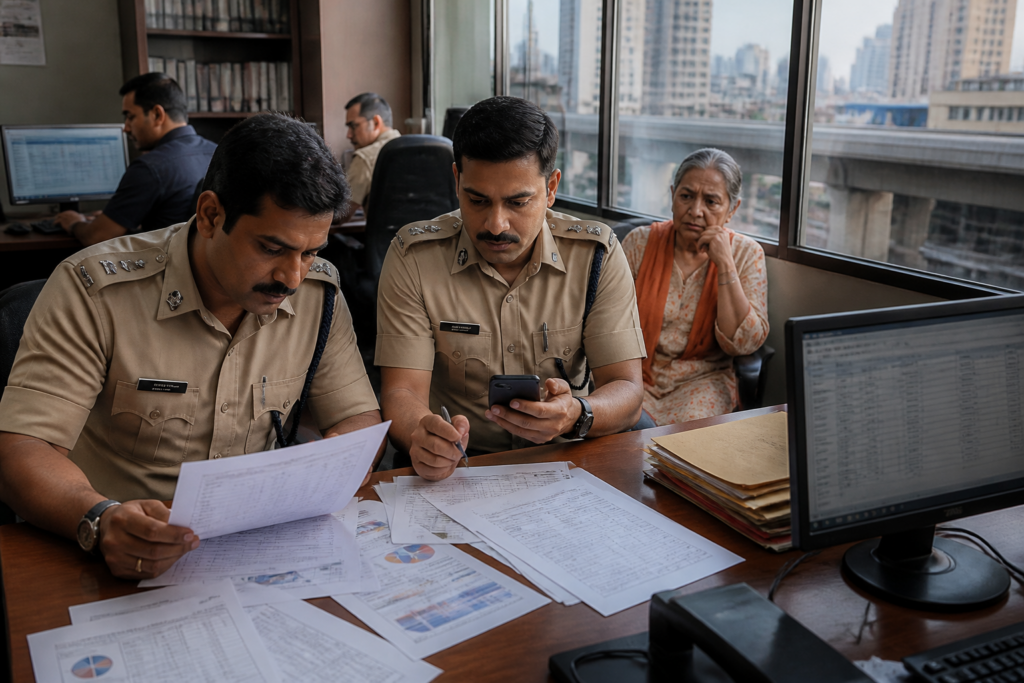
Mumbai cyber police have registered an FIR after a 68-year-old retired clerk from Kanjurmarg East alleged that fraudsters posing as police and data protection officials took Rs 60.5 lakh from her in a “digital arrest” scam involving her bank accounts and pledged gold.
According to her complaint, a caller identifying himself as Ajay Sharma contacted her on September 28 and claimed that 20 people had complained against her. He allegedly told her to contact Panchvati Police Station in Nashik over the purported misuse of her Aadhaar card. Another caller, who identified himself as sub-inspector Sandeep Rao, allegedly claimed that an arrest warrant had been issued against her and that 247 senior citizens had been arrested in similar cases.
The callers allegedly told the woman that they could secure a two-day court extension, while instructing her not to discuss the matter with anyone or retain their telephone numbers. On September 29, Rao allegedly sought details of her family, bank accounts and gold holdings. He then instructed her to remove gold from a bank locker, send photographs of it and pledge it with Muthoot Finance.
The woman approached a Muthoot Finance office in Vikhroli. Its personnel later visited her home, verified her documents and processed a loan against the gold, the complaint said. The gold weighed 52 tolas, but the woman received Rs 25 lakh because of the lender’s loan limit.
After the loan was credited, the callers allegedly directed her to obtain an RTGS form and transfer money to bank accounts provided by Rao’s purported superior. They allegedly kept her on video calls during visits to banks and instructed her to tell bank employees that the money was required for her son’s house construction. The callers also allegedly threatened her with “digital arrest” and harm to her life if she refused to comply.
The woman transferred money on October 1, October 3 and October 6 from her State Bank of India and Punjab National Bank accounts, including her lifetime savings, according to the complaint. The callers allegedly claimed that the money had been deposited with the Reserve Bank of India and would be returned.
The accused stopped contacting her after October 6. When she attempted to reach them on October 12 and October 13, they allegedly did not respond. She then contacted the 1930 Cyber Helpline on October 14 and submitted transaction details, payment slips and her statement.
East cyber police subsequently registered the FIR and initiated action to freeze the accounts into which the money was transferred. The case highlights how impersonation of law-enforcement and regulatory officials can be combined with banking instructions, video surveillance and gold-backed borrowing to pressure victims into rapidly moving their savings.


