

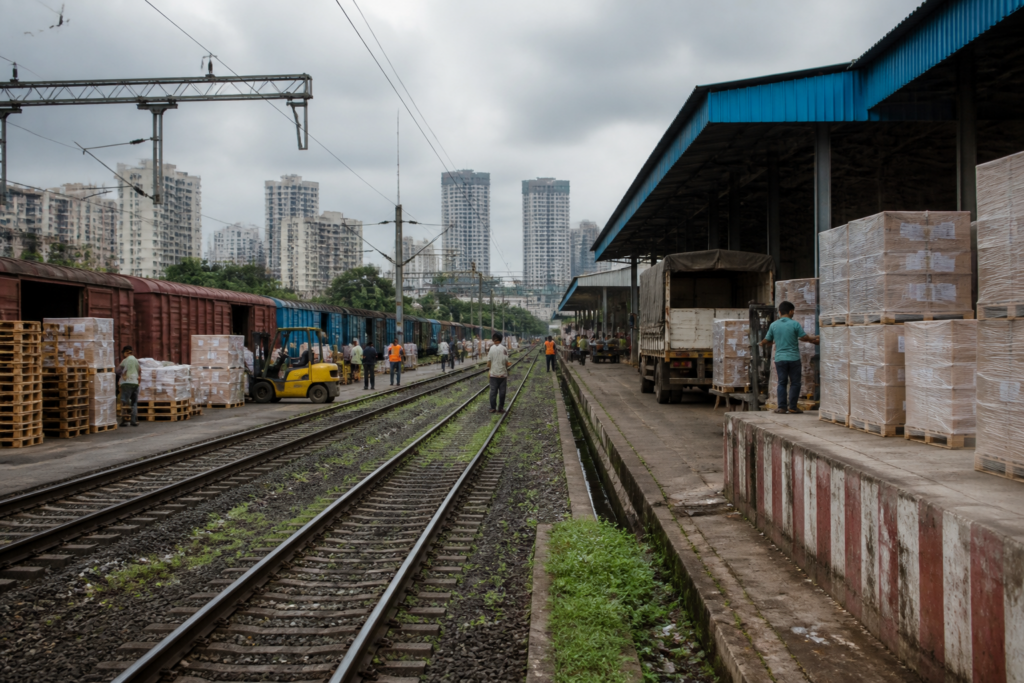
Central Railway is preparing to develop a Gati Shakti Multi-Modal Cargo Terminal at Mulund on railway land, with a proposed 35-year agreement for its construction and operation. The project is intended to strengthen rail freight infrastructure and reduce dependence on road transport for moving goods across Mumbai and its wider metropolitan region.
The terminal will bring cargo loading and unloading, along with warehousing facilities, together at one location. According to Central Railway officials cited in the report, this arrangement could simplify freight movement and reduce the overall cost of transporting goods from one destination to another.
The proposal is part of Central Railway’s broader use of vacant railway land for freight warehouses and passenger-related facilities. Unlike a conventional road-based logistics site, the Mulund terminal is planned entirely on railway property, allowing cargo handling infrastructure to be located alongside the rail network.
Under the proposed terms, the contractor would enter into a 35-year agreement covering the development and operation of the facility. Construction would have to begin within three months of receiving project approval and would be required to finish within 18 months. The divisional railway manager could grant an extension of up to six months if necessary.
The terminal is also expected to include digital systems for recording cargo and processing railway freight transactions. An electronic in-motion weighbridge will be installed to record the weight of goods being dispatched. The facility will also provide the Transportation Management System and Freight Operations Information System, or FOIS, for managing freight-related transactions and generating railway receipts.
For Mumbai, the proposed terminal addresses a basic logistics problem: goods moving through the region often depend on road transport for collection, transfer and delivery. A rail-linked cargo facility with warehousing and loading infrastructure in one place could provide an alternative for some freight movements, although the report does not specify the terminal’s planned cargo capacity, investment value, land area or the categories of goods it will handle.
The proposal also places emphasis on improving the administrative side of freight movement. Digital weighing, transaction processing and railway receipt generation are intended to make cargo handling more structured and easier to monitor. The operational benefits will depend on how the terminal is connected to local roads, warehouses, industrial users and last-mile delivery networks.
The immediate milestones are project approval, appointment of the contractor and commencement of construction within three months of approval. Once work begins, Central Railway’s stated completion requirement is 18 months, subject to a possible six-month extension authorised by the divisional railway manager.


