

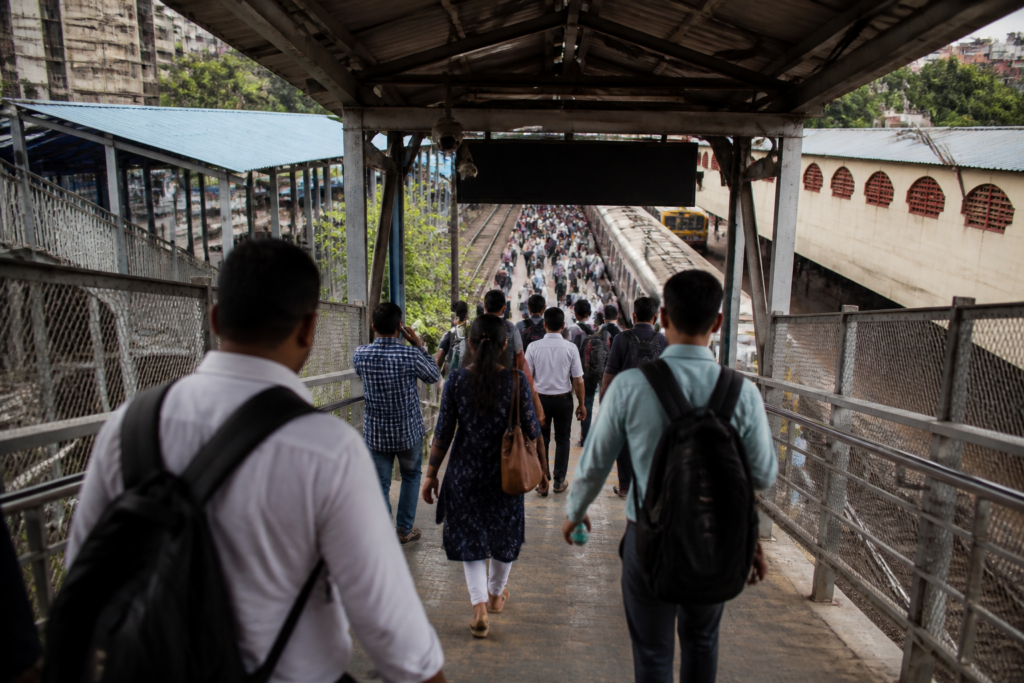
The Government Railway Police arrested a 34-year-old man within 24 hours of a case being registered after a 13-year-old schoolgirl was allegedly groped at Mumbai’s Masjid railway station while returning home from school, police said.
The incident took place around 10.45 am on October 12, when the girl was returning after appearing for an examination. According to the report, she was walking on the foot overbridge connecting platforms 1 and 2 on the Harbour line when the accused allegedly approached her, using the crowd as cover.
The man allegedly followed the girl from the station to her home in Pydhonie. Frightened by what had happened, she told her mother, after which the family approached Pydhonie police station. A case related to molestation was registered there and later transferred to the CSMT Government Railway Police for investigation.
Senior Inspector Sambhaji Katare formed investigation teams after the case was transferred. Officers examined CCTV footage from inside Masjid railway station and from areas outside railway premises to trace the suspect’s movements.
Police reportedly obtained video images showing the suspect walking towards Musafirkhana after the incident. Investigators then made enquiries in the surrounding neighbourhood and showed the CCTV images to local residents. The suspect was identified as Rakesh Gaud, who police said lives in Govandi.
Gaud was taken into custody and produced before a court, according to the report. The police action followed the registration of the case and relied on footage from the station as well as adjoining areas, highlighting the importance of surveillance coverage beyond the immediate railway premises in tracking incidents involving passengers.
Masjid station is part of Mumbai’s Harbour line network and serves commuters travelling through the densely populated south Mumbai area. The reported incident occurred on a foot overbridge, a high-footfall circulation space where crowd movement can make identification and intervention more difficult.
The case also involved coordination between the local police station where the family first complained and the railway police unit responsible for investigating incidents connected with the station. The accused’s production before the court is the next recorded step in the legal process.


