

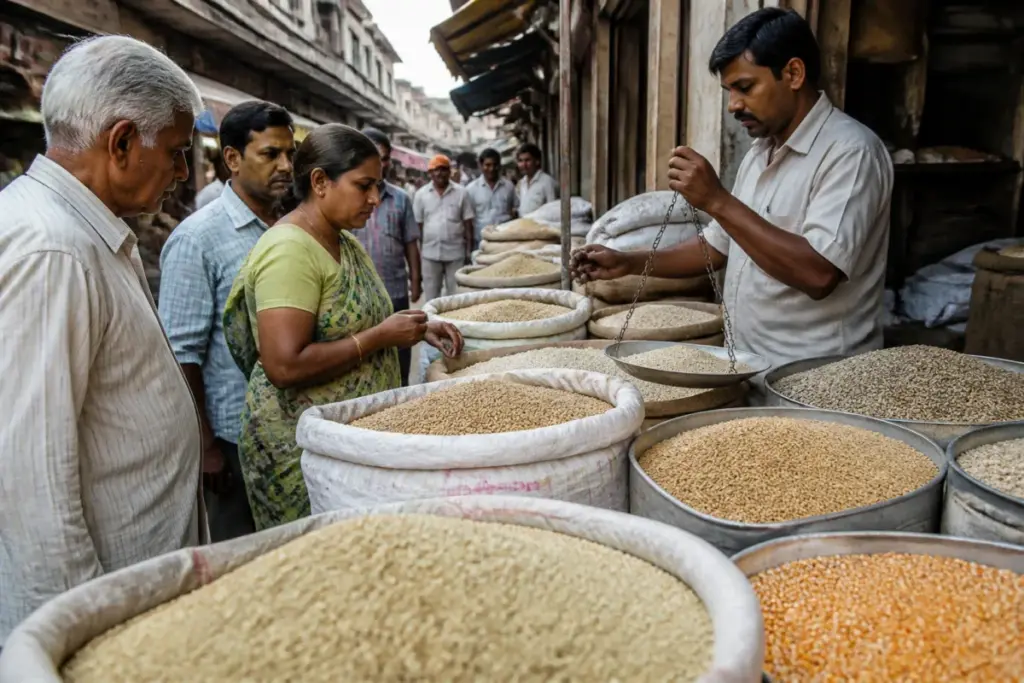
Maharashtra grain prices have risen sharply after irregular rainfall and drought conditions damaged crops and reduced market arrivals, increasing the cost of jowar, wheat, bajra and maize for households across the state. The increase is adding pressure to low-income and middle-class families, with traders expecting prices to remain elevated until the next crop arrives.
Indigenous jowar has seen the steepest increase. Local grain traders said its price, previously between Rs 45 and Rs 70 per kg, has risen by Rs 20 to Rs 25 per kg. Jowar is a regular staple for many families and is also commonly recommended as part of the diet for senior citizens, patients and people with diabetes.
The higher price of jowar is therefore affecting more than household food budgets. Families that depend on jowar bhakri and other grain-based meals may face difficult choices as the cost of a commonly consumed and nutritionally valued staple rises. The report did not provide official retail price data or details of any government intervention.
Hybrid jowar brought into Maharashtra from Karnataka has also become more expensive, although the increase is lower at Rs 5 to Rs 7 per kg. Traders attributed the rise to reduced local supplies following crop damage and weaker arrivals in the market.
Wheat, another widely used household staple, was earlier selling at Rs 36 to Rs 37 per kg and has become costlier by Rs 5 to Rs 7 per kg. Bajra prices have increased by Rs 3 to Rs 5 per kg from an earlier range of Rs 30 to Rs 32 per kg. Maize, which was selling at around Rs 30 per kg, has risen by Rs 5 to Rs 7 per kg.
The price increases are reaching households during the festive season, when many families already face higher spending. According to the report, traders expect monthly grocery expenditure to rise by 20% to 30% as a result of the increase in essential grain prices. Poorer households are expected to face the greatest pressure because food makes up a larger share of their monthly budgets.
For urban consumers, the impact of a drought in farming regions is transmitted through the supply chain into neighbourhood grocery shops and household kitchens. Reduced arrivals can raise prices even when the disruption begins outside cities, making food affordability dependent on both crop conditions and the availability of supplies from other regions such as Karnataka.
The report said prices could remain high until the next crop arrives, a period that may take at least eight months because of the damage caused by recent crop losses. The duration of the increase will depend on the next harvest and the availability of replacement supplies, but no official forecast was cited in the report.
The immediate concern for households is whether they can continue buying familiar staples at the same quantities. For older people and others whose diets include jowar or other grains for health reasons, the price rise also raises questions about the affordability of everyday nutrition. Traders’ assessment points to continued pressure until fresh crop arrivals improve supply.


