

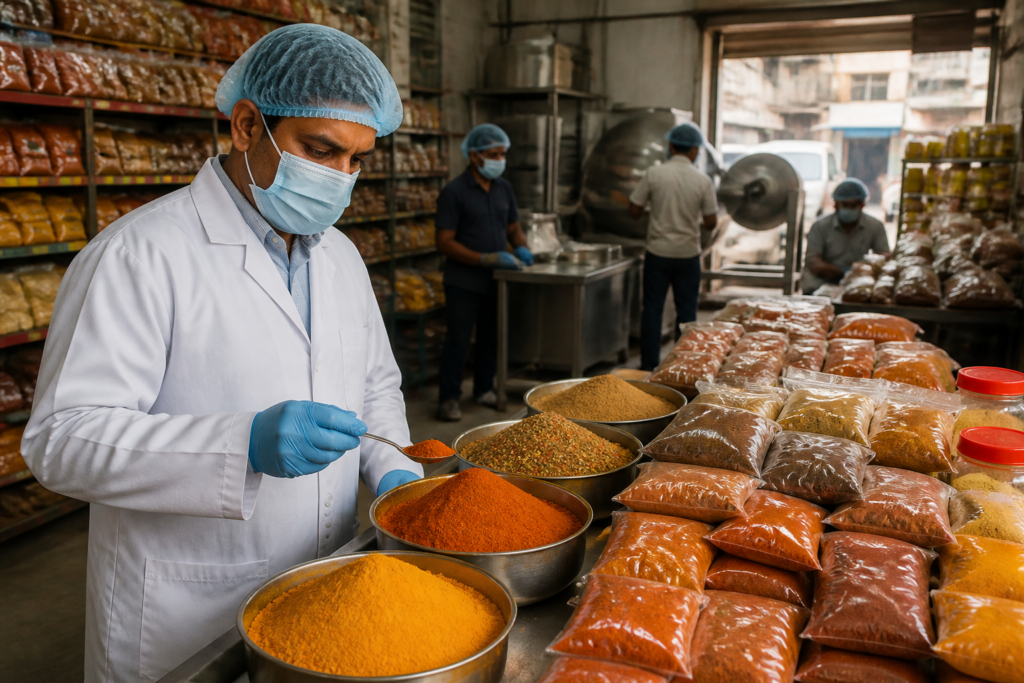
The Maharashtra FDA has ordered stricter monitoring of the state’s masala and spice trade, targeting adulteration, unsafe processing practices and misleading product claims across manufacturers, traders, retailers, e-commerce operators, hotels, eateries and commercial kitchens.
The compliance order, issued on Thursday, covers turmeric, chilli, coriander, cumin, black pepper, cinnamon, clove, cardamom, asafoetida, saffron, poppy seeds, mixed spices, garam masala, curry powder and other spice-based products. It applies to businesses involved in cleaning, drying, grinding, blending, packing, repacking, storing, transporting and selling spices.
The FDA said the order reiterates the prohibition on substances and colours considered harmful to health, including metanil yellow, rhodamine B, Sudan dyes and lead chromate. It also specifically prohibits the use of ethylene oxide to sterilise spices. According to the department, ethylene oxide is barred because of its potential carcinogenic effects.
The order sets requirements for how spices are processed and stored. Spices cannot be dried in unhygienic locations such as public roads, tarred surfaces, drains, areas near garbage bins or places close to cattle sheds. Production and storage premises must be clean, dry, pest-free and protected from contamination, while chemicals, pesticides, industrial colours and other harmful substances cannot be stored alongside spices.
The department will also act against the addition of brick powder, chalk, sawdust, foreign starch and other unauthorised substances used to increase the weight or quantity of spice products. The enforcement focus extends beyond factories and processing units to the wider supply chain and points of sale.
FDA commissioner Tukaram Mundhe said producers and advertisers cannot describe products as “natural”, “organic” or “healthy” unless those claims are scientifically valid. The order states that products sold with scientifically unsupported claims will be considered unsafe.
The FDA has also reiterated that the sale of loose spices is prohibited. Investigations will cover both production and sales, meaning enforcement can involve manufacturers, intermediaries, retailers and food businesses handling spice products.
According to Mundhe, violations can attract penalties of up to seven years’ imprisonment and a fine of Rs 10 lakh. In contamination cases, FDA officials will trace the original source of adulteration, examine the entire supply chain and take legal action against those found responsible.
The order places responsibility on multiple layers of Maharashtra’s food supply network, from processing premises and storage facilities to markets, restaurants and online sellers. The department’s next steps will involve inspections and investigations under the requirements set out in the compliance order.


