

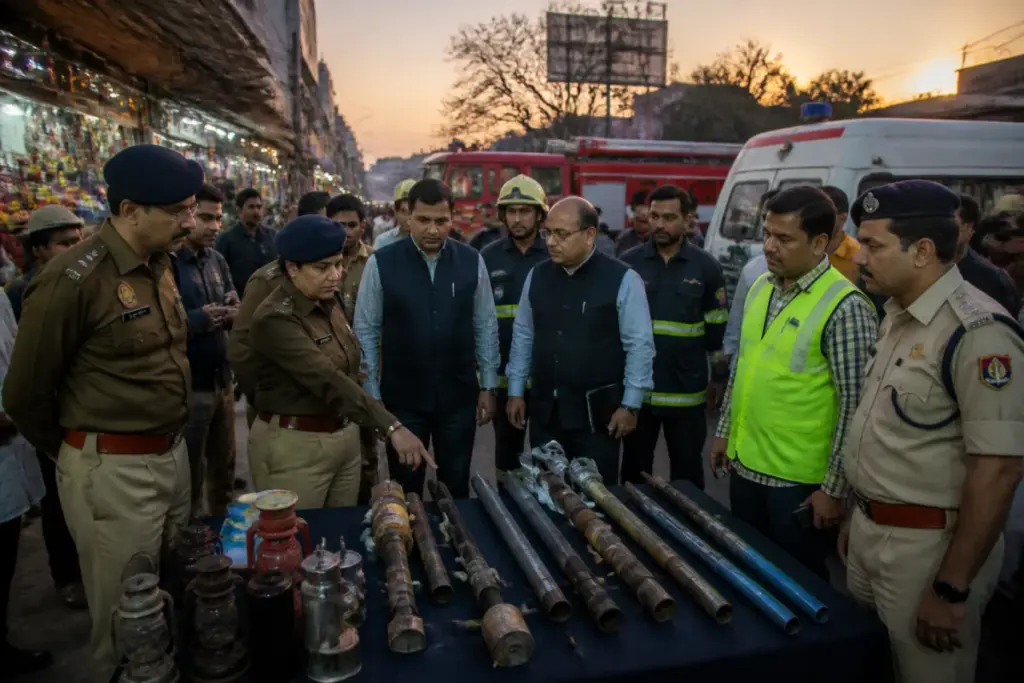
Madhya Pradesh Chief Minister Mohan Yadav has ordered district administrations and police to stop the use of carbide guns and carbide lamps during the festive season, following accidents in which hundreds of people, including children, suffered eye injuries during last Diwali.
Yadav issued the directive during a video-conferenced review meeting with collectors, divisional commissioners, superintendents of police and inspector generals from the state secretariat. He warned that collectors and SPs would be held responsible for any untoward incident in their jurisdictions.
“Ensure that carbide guns and carbide lamps are not used during festivals. These locally manufactured devices are extremely dangerous. If any untoward situation arises in a district, the collector and SP concerned will be held responsible,” Yadav said, according to the report.
The devices use calcium carbide, which releases highly inflammable acetylene gas when it comes into contact with water. The gas can explode when exposed to a spark, sending plastic and metal fragments towards users and bystanders. Such blasts can cause serious injuries to the eyes, face and skin.
The accidents reported during last Diwali had raised concerns about the sale and use of locally manufactured carbide devices across Madhya Pradesh. In response, the state health department issued a safety advisory in 2025. The latest order places responsibility on district-level administrative and police leadership to prevent the devices from being used during festivals.
Yadav also directed district authorities to intensify action against illegal firecracker sales and strengthen emergency arrangements at festivals and religious gatherings. Fire tenders, firefighting equipment and trained personnel are to be deployed at sensitive locations, while ambulances must be stationed at key points to enable faster responses to emergencies.
The instructions expand the issue beyond the regulation of a single hazardous device. They require local administrations to coordinate enforcement, fire services, medical response and crowd-safety arrangements before large public gatherings. The chief minister’s warning also creates a clear administrative accountability chain, with district collectors and police chiefs identified as responsible officials.
The meeting included separate instructions on food safety during the festive season. Officials told the chief minister that 17 licences had been suspended and first information reports registered in 42 cases involving food adulteration. Yadav ordered intensified inspections to prevent the sale of adulterated or counterfeit mawa, ghee, paneer and sweets.
The broader review also covered public grievance disposal and rainfall conditions. Yadav said he would make surprise visits to districts to assess the Jan Vishwas Abhiyan and the handling of complaints pending on the CM Helpline. He directed collectors to reduce the backlog of grievances.
Officials reported that Madhya Pradesh had received 908.4 mm of rainfall against a normal 949 mm, a shortfall of about 4%. Twelve districts, including Indore, Ujjain, Dhar, Ratlam, Jhabua, Alirajpur, Betul and Chhindwara, were identified as having deficient rainfall, while 34 districts recorded normal rainfall.
The immediate festival-safety measures are to be implemented by district administrations and police, with fire, ambulance and inspection arrangements planned for sensitive locations.


