

The death of B Madhusoodana Kurup, founding vice-chancellor of the Kerala University of Fisheries and Ocean Studies (Kufos), closes the career of a scientist whose work connected fisheries education with the wider management of wetlands, inland waters and the sea. His contribution was not limited to building a university. It extended across biodiversity research, water-balance studies, aquaculture, coastal regulation and public-policy committees.
Kurup, 71, died in a private hospital in Kochi on Sunday while undergoing treatment, according to the Times of India report. He had more than four decades of research experience, guided 22 doctoral scholars, published more than 250 research papers and edited 11 books. Those figures describe academic output, but they also indicate the breadth of an institutional role in a field where scientific knowledge is closely tied to livelihoods, ecological management and public administration.
Kufos was established as India’s first university dedicated to fisheries and ocean studies. As its founding vice-chancellor, Kurup was responsible for laying its academic and administrative foundations. That task matters because a specialised university is not only a teaching institution. It can also become a bridge between field-based knowledge, government agencies, coastal communities and the systems that regulate aquatic resources. The report identifies Kurup’s career as an example of that wider function.
His research moved across ecological scales. His taxonomic work led to the discovery of eight new freshwater fish species from the Western Ghats. His investigations also documented aquatic biodiversity in Kerala’s inland waters, including Vembanad Lake, and in marine areas reaching approximately 1,000 metres within India’s exclusive economic zone. The range is important: it places freshwater ecosystems, wetlands and offshore waters within one connected scientific frame rather than treating them as separate subjects.
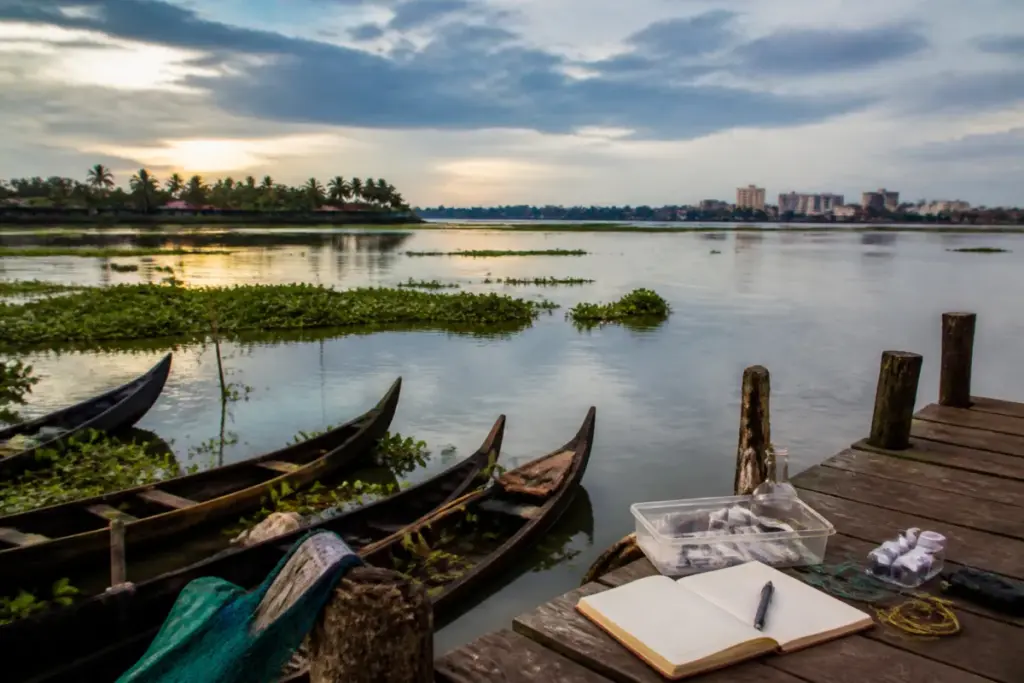
That connection is particularly visible in the work associated with Vembanad Lake. The lake remained close to Kurup’s research and conservation interests, and his latest book, Exploring the Legacy of Fishing and Farming Below Sea Level: Vembanad–Kole Wetlands of Southern India, was scheduled for release on October 30. The book was co-authored with Dr Sileesh Mullasseri. Its timing gives added significance to a body of work focused on a wetland landscape where fishing and farming have developed in conditions shaped by water levels and below-sea-level cultivation.
The supplied account does not provide a new assessment of Vembanad’s present ecological condition, nor does it quantify changes in biodiversity, water quality or livelihoods. What it does establish is that the wetland was central to Kurup’s scholarship and that his work covered both ecological documentation and management questions. This distinction matters. An obituary can record a scientist’s achievements, but the institutional record also shows how research becomes relevant to decisions about water, fisheries and land use.
Kurup served as principal investigator for 22 externally funded research projects supported by national and international agencies. His work included the Kuttanad water balance study under the Indo-Dutch cooperation programme, the Indo-Vietnam South-South cooperation programme, the Ashtamudi management plan, an NZAID-supported cage-culture project on Asian sea bass for poverty alleviation in Kerala and the World Bank-supported India Eco-Development Project.
These projects point to several different policy functions. A water-balance study concerns the movement and distribution of water in a landscape. An ecosystem management plan concerns the organisation of conservation and use. Cage culture connects aquaculture technology with livelihoods. The projects associated with Kurup therefore show a movement between research, planning and implementation rather than a single academic specialisation. The supplied report does not state the outcomes of each project, but it documents the range of problems that his work addressed.
That range also helps explain the relevance of fisheries science to urban and regional governance. Kerala’s aquatic systems do not stop at municipal boundaries. Wetlands, rivers, coastal waters and estuaries are part of larger systems that influence settlements, farming, transport, food production and livelihoods. The report does not claim that Kurup’s work resolved these pressures. It shows instead that public decisions in such landscapes require expertise that can move between ecology, production systems and administration.
Kurup’s role in public policy was formal as well as academic. He served two terms on the Kerala Coastal Zone Management Authority and chaired expert committees dealing with seasonal trawling bans, Pokkali-based aquaculture, fishing-boat registration, ornamental fish farming and a proposed Oceanarium project. These assignments placed him within the administrative process through which technical evidence is brought into regulatory and development decisions.
The subjects of those committees reveal the competing pressures in coastal governance. Seasonal trawling bans concern the regulation of fishing activity. Boat registration concerns oversight of the fishing fleet. Pokkali-based aquaculture involves the relationship between farming and aquatic production. Ornamental fish farming represents a different commercial use of aquatic resources, while an Oceanarium project raises questions about how marine knowledge and public infrastructure are presented and developed. The source does not provide the committees’ recommendations or final decisions, so their outcomes cannot be assessed here. Their subject matter, however, demonstrates the breadth of the governance questions in which Kurup participated.
His academic engagements with more than 15 universities and research institutions abroad further strengthened international partnerships, according to the report. That international dimension was also visible in the projects connected to Indo-Dutch, Indo-Vietnamese, NZAID and World Bank-supported programmes. For a specialised university, these links can expand access to research networks and funding. The available material does not establish how those partnerships changed institutional capacity, but it records a career built through both domestic public work and international academic cooperation.
The most important institutional question raised by Kurup’s death is how specialised knowledge is retained after an individual scholar leaves the system. The report identifies his role in founding Kufos, guiding doctoral researchers and leading externally funded projects. Those are forms of institution-building, not only personal achievement. Universities preserve such work through research groups, archives, doctoral networks, field programmes and continuing partnerships. The source does not provide information on succession arrangements at Kufos or on the future of the programmes he helped establish. Those developments remain matters for the university and relevant public authorities.
The evidence available also underlines the importance of linking freshwater, wetland and marine research. Kurup’s work covered new freshwater species in the Western Ghats, biodiversity in Vembanad Lake, the Ashtamudi management plan and marine biodiversity in India’s exclusive economic zone. It also included Kuttanad’s water balance and aquaculture projects. This is not evidence of a single integrated state policy, but it is a clear record of a scientist working across systems that are often administered separately.
For cities and settlements in Kerala, that institutional link is relevant even when the immediate subject is not a municipal project. Water systems shape the environmental conditions around urban areas, while decisions on fisheries, wetlands and coastal zones affect the communities and economies connected to them. The supplied report does not quantify those urban effects, and it would be inaccurate to assign Kurup claims that it does not record. The defensible conclusion is narrower: his career placed aquatic science within the policy discussions that govern shared ecological and livelihood systems.
Kurup’s scheduled book release on October 30 will provide a further record of his work on the Vembanad–Kole wetlands. Until then, the available account confirms three dimensions of his legacy: the creation of an institution dedicated to fisheries and ocean studies, a research record spanning freshwater to offshore biodiversity, and sustained participation in committees and projects linking scientific evidence with public policy. What remains to be established is how Kufos, research institutions and government agencies will carry that work forward after the loss of its founding vice-chancellor.


