

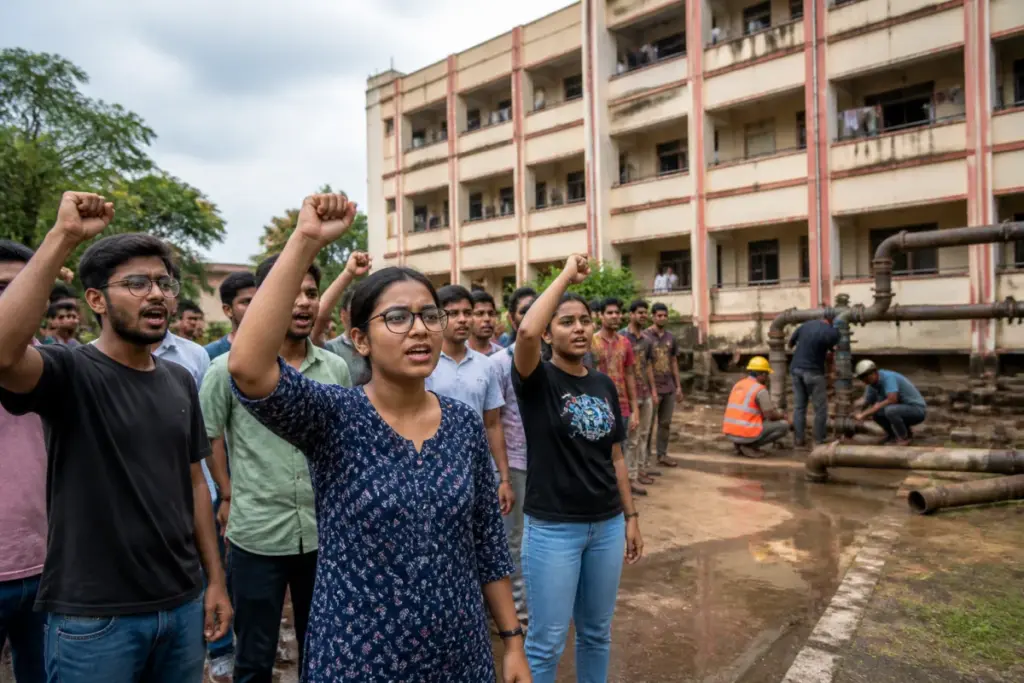
A Lucknow University hostel protest over alleged irregularities in room allotment, poor-quality food and drinking water problems escalated on Dussehra, with students burning effigies of senior university officials after a month of complaints and seven days of continuous sit-in action.
The students burned effigies representing vice-chancellor Prof JP Saini, dean students’ welfare Prof Amita Kanaujia and chief provost Prof Aashees Awasthi. Their demands include a transparent hostel allotment process and action from the university administration over conditions in the residential facilities.
The protest has brought together three issues that directly shape students’ everyday experience on campus: access to accommodation, the quality of meals and the reliability of drinking water. The complaints follow what students described as a month-long period of unresolved concerns among hostel residents.
University officials said the vice-chancellor inspected hostels on both the university’s campuses after the complaints. The administration has also formed a 10-member committee to monitor food quality in the hostels. The committee’s stated role is to oversee the meals being served to students as the protest continues.
The university administration attributed the water problem to issues with its boring system and said repairs are underway. The explanation links the disruption to the infrastructure used to draw and supply groundwater, although the supplied report does not specify the affected hostels, the extent of the disruption or the expected completion date for the repairs.
The hostel allotment dispute remains focused on the students’ demand for transparency. The report does not provide details of the allotment process, the number of students affected or the specific irregularities alleged by the protesters. It also does not state whether the university has announced a review of individual allotments or published revised criteria.
For students living on campus, these matters are tied to basic residential services rather than a single administrative decision. Hostel allocation determines access to university accommodation, while food and water systems affect daily living inside the campus. The seven-day sit-in indicates that the complaints have continued despite earlier representations to the administration.
The university’s immediate response has involved inspection, food monitoring and infrastructure repairs. However, the next steps on the allotment issue, including any formal clarification of the criteria or action on the students’ allegations, have not been detailed in the supplied report. The administration’s handling of those demands will determine how the current protest develops.


