

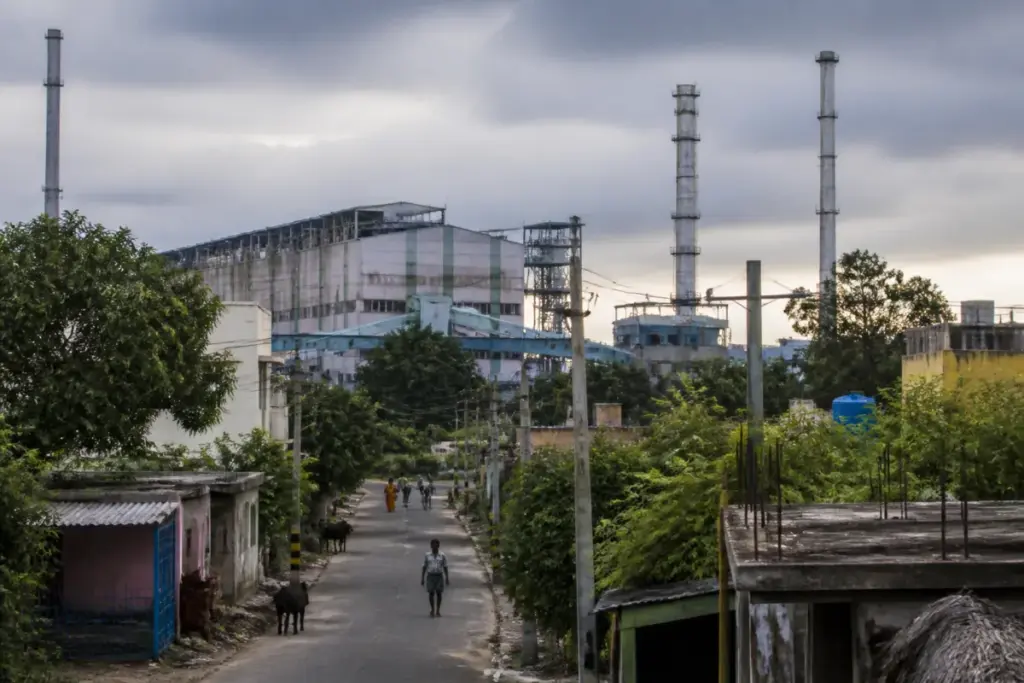
The National Human Rights Commission’s registration of a complaint over the Kodungaiyur waste incinerator has moved a local dispute into a formal rights and governance process. The complaint, based on a field study covering 415 families in eight residential areas of North Chennai, alleges that the 50-metric-tonne plant has created environmental and health risks and that the city’s dependence on waste-to-energy infrastructure is imposing unequal costs on nearby communities.
The complaint was submitted by the Federation of North Chennai Residents’ Welfare Associations (FNCRWA), which has asked the NHRC to examine the alleged health and human rights impacts of the facility. The federation also submitted the study, titled ‘Burning Human Rights: Hidden Costs of Human Lives by Waste-to-Energy Incinerators’, to the United Nations Human Rights Council and the Tamil Nadu government in June. According to the report, the UNHRC has published the complete study on its official portal, while the NHRC has now registered the findings as a complaint and initiated proceedings.
That procedural step matters because it changes the nature of the issue. The Kodungaiyur plant is no longer being discussed only as a neighbourhood pollution complaint or as a dispute over the operation of a municipal waste facility. The complaint asks whether decisions on waste treatment have adequately accounted for health, environmental and socio-economic consequences for communities located around the infrastructure. It also asks whether residents’ constitutional protections were considered before and during the plant’s operation.
The federation has sought recognition of waste-to-energy incineration as a possible violation of rights guaranteed under Articles 14, 15, 19 and 21 of the Constitution. The complaint does not establish that these violations have occurred; those are allegations that will require examination by the relevant authorities. Its significance lies in the attempt to place waste infrastructure within a rights-based framework rather than treating it only as a technical or administrative question.
The field study gives the complaint a defined local base. It covered 415 families across eight residential areas in the Perambur and Radhakrishnan Nagar constituencies. The supplied report does not provide the study’s detailed methodology, medical findings or emissions data, so the extent of the alleged health impact cannot be independently assessed from the available material. However, the scale and location of the survey indicate that the dispute concerns a group of established residential communities rather than a single individual complaint.
The issue also exposes the institutional complexity of urban waste management. The federation has identified the Tamil Nadu Pollution Control Board, the Greater Chennai Corporation and other departments as authorities expected to respond to the allegations. The TNPCB has regulatory responsibilities connected to pollution control, while the corporation is the city’s municipal authority. Any decision to continue, suspend or expand an incineration facility therefore involves more than the plant operator: it requires coordination between municipal administration, pollution regulators, revenue officials and the state government.
A joint inspection by TNPCB officials, the District Revenue Officer and the Greater Chennai Corporation reportedly found serious environmental and regulatory violations. The inspection led to the temporary closure of the 50-tonne incinerator in February 2026, according to the report. FNCRWA president TK Shanmugan told DT Next that the plant resumed operations within a few months. The federation has since filed a Right to Information application seeking details of the basis on which permission was granted for the restart.
That sequence creates a central accountability question: what corrective measures were required before operations resumed, and which authority certified that the conditions for reopening had been met? The available report does not provide the inspection document, the closure order, the restart permission or the response of the authorities named by the federation. The NHRC proceedings and the RTI application may therefore become important channels for establishing the administrative record behind the plant’s closure and return to operation.
The dispute is not limited to the existing plant. The federation has demanded that the proposed 2,100-tonne waste incineration facility in the region be abandoned. If pursued, such a facility would represent a major expansion of the city’s reliance on centralised incineration compared with the existing 50-tonne plant. The report does not state the proposed project’s current approval stage, location, financing structure or construction timeline. Those details remain necessary for assessing how far the proposal has progressed and what decisions have already been taken.
The size difference between the operating plant and the proposed facility is nevertheless important to the public debate. The current complaint is being used by the residents’ federation to challenge not only the alleged consequences of one plant but also the broader direction of waste policy in North Chennai. Its argument is that a larger incineration system should not proceed without human rights, health, environmental and socio-economic impact assessments being made mandatory before pollution-control approvals are granted.
This demand highlights a gap between infrastructure approval and lived experience. A waste facility can be assessed through technical permissions, land requirements and pollution-control conditions, but those processes may not capture how residents experience odour, traffic, emissions concerns, uncertainty over health effects or the distribution of environmental burdens. The supplied report does not establish which of these impacts have been medically or scientifically confirmed at Kodungaiyur. It does show that residents are seeking a process in which these questions are formally examined rather than left to periodic administrative responses.
The federation has also asked for medical camps for affected residents and monetary compensation. Such demands indicate that the dispute is being framed as an existing public-health concern, not only as an objection to future construction. Whether compensation or medical intervention is warranted would depend on findings by competent authorities. The NHRC’s registration of the complaint creates a forum in which those demands can be considered alongside the allegations of regulatory and rights violations.
Another part of the submission concerns the classification of waste incinerators. The federation has urged the Union Ministry of Environment, Forest and Climate Change to reverse the Central Pollution Control Board’s reclassification of waste incinerators from the ‘Red’ category to the ‘Blue’ category. The report does not explain the technical or legal basis of that reclassification, when it took effect or how it changes the compliance obligations of individual facilities. Those details will be essential to understanding whether the classification affects monitoring, consent procedures or public disclosure requirements.
The classification dispute reflects a wider administrative issue: the category assigned to an industrial activity can influence how regulators evaluate its environmental risk and how the public understands the safeguards attached to it. For residents near Kodungaiyur, the question is not merely what a facility is called but what operational standards, inspections and enforcement actions follow from that designation. The complaint’s demand for a reversal suggests that the federation believes the present classification understates the risks associated with incineration.
The alternative proposed by the federation is not simply the closure of one facility. It has called for sustained support for informal waste pickers and decentralised recycling systems. This introduces a competing model of urban waste management: instead of concentrating treatment capacity in large facilities, the city could give greater institutional support to collection, segregation and recycling systems that already involve informal workers. The supplied material does not provide figures comparing recycling rates, costs, employment or environmental performance between the two models, so it cannot establish which approach is more effective. It does, however, show that the residents’ opposition is linked to a broader policy argument about how cities value different forms of waste work.
For Chennai, the institutional test now lies in whether the complaint produces a transparent record. The NHRC will have to consider the submissions placed before it, while the TNPCB, Greater Chennai Corporation and other departments are expected to respond to the allegations. The RTI application may clarify how the plant was allowed to restart after the reported inspection and temporary closure. Any future decision on the proposed 2,100-tonne facility will also need to be understood in relation to the findings and responses emerging from the current proceedings.
The evidence presently confirms three things: the NHRC has registered the complaint; the complaint is based on a study covering 415 families across eight North Chennai residential areas; and the existing 50-tonne plant was reportedly closed temporarily in February 2026 after a joint inspection found serious violations before resuming operations months later. The available material does not establish the alleged health impacts, the reasons for the restart or the status of the larger proposed facility. Those unresolved facts are precisely why the administrative documents, regulatory responses and findings from the proceedings will matter. The Kodungaiyur case has made Chennai’s waste infrastructure a question not only of disposal capacity, but also of who bears the risks and how those risks are officially assessed.


