

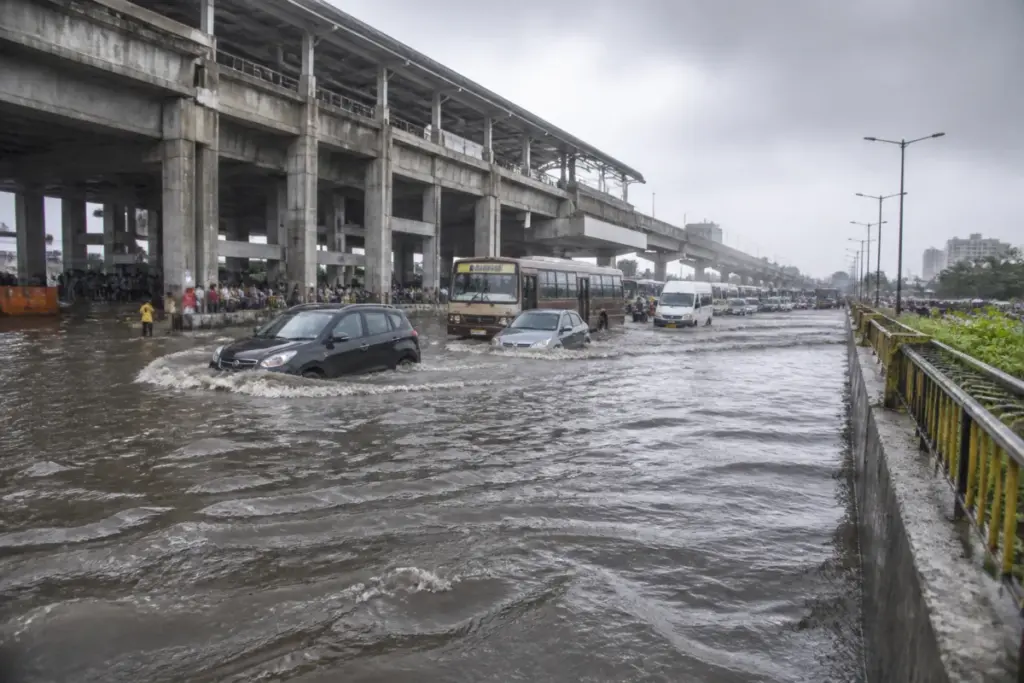
Kilambakkam bus terminus in Chennai’s southern suburbs faced severe access and traffic disruption after heavy rain on Saturday night left nearly three feet of water accumulated at its entrance and along the adjoining GST Road, according to a report by DT Next.
The water collected in front of the terminus like a pond, making it difficult for vehicles to enter and leave the transport hub. Cars and other vehicles were seen navigating the flooded stretch, while traffic movement on GST Road was severely affected.
The flooding directly disrupted access to the Kilambakkam bus terminus, which serves as a major transport hub for Chennai’s suburbs. Vehicles approaching the entrance had to move through the waterlogged section, slowing traffic and complicating movement for passengers and motorists.
Motorists told DT Next that the problem was recurring and attributed the waterlogging to inadequate stormwater drainage. They said the existing drains were not sufficient to carry rainwater to nearby waterbodies after periods of heavy rainfall.
The incident highlights the operational dependence of a major bus terminus on the drainage network around its approach roads. Even when the terminus itself remains accessible, flooding at the entrance can restrict bus circulation, delay private vehicles and affect passengers travelling to or from the facility.
The affected stretch also lies along GST Road, an important road corridor serving Chennai’s southern suburban areas. Water accumulation at the terminus entrance therefore affected both local access to the bus facility and broader vehicle movement on the highway.
The report did not specify the duration of the waterlogging, the volume of rainfall recorded, or any official response from the municipal or transport authorities. It also did not provide details of a permanent drainage improvement plan for the area.
The immediate disruption followed heavy rain on Saturday night, with the flooded approach to the terminus and the resulting traffic impact reported after the rainfall. Further official information on drainage clearance or restoration of normal movement was not included in the report.


