

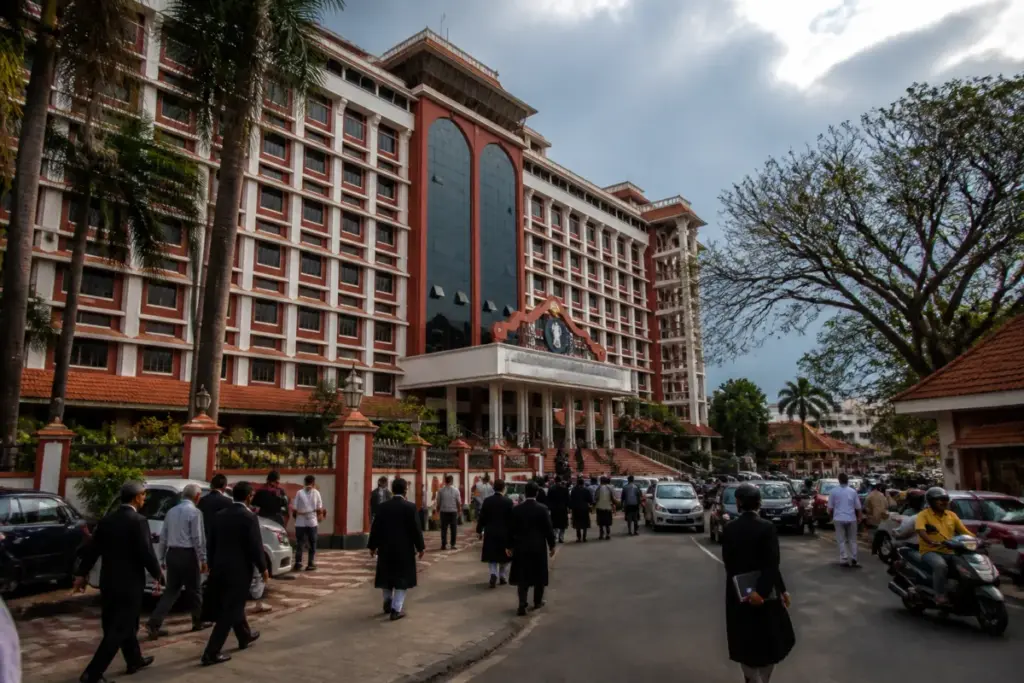
The Kerala High Court has declined to stay the state government’s order reconstituting the Keralam State Waqf Board, allowing a new panel headed by M C Mayin Haji to remain in place while petitions challenging the move are considered.
Justice S Manu, sitting in a special session on Saturday, referred petitions filed by former chairman K M Hamza and others to the division bench already hearing public interest litigations concerning the constitution of the board. The court said the reconstitution would remain subject to the final outcome of those proceedings.
The government order, dated October 16, replaced all members of the existing board, including Hamza, and appointed a new panel. The challenge to the order includes a contention that the state government did not have the authority to supersede the existing board and could only fill vacancies under Section 14 of the Waqf Act.
The petitioners also argued that the government issued the order on the eve of court holidays despite an assurance before the division bench that it would limit its action to filling existing vacancies. Their case is linked to wider petitions alleging that the earlier board had not been constituted in compliance with the Waqf Amendment Act, 2025.
Those public interest petitions have raised questions about the inclusion of non-Muslim members on the board. The composition of the new panel is also being defended by the state on the grounds that it is intended to meet statutory requirements, including representation for the Bohra community and the nomination of non-Muslim members.
The additional advocate general opposed the request for an interim stay, arguing that the government possessed an implied power to cancel the earlier appointments and take steps to ensure that the board was constituted lawfully. The government’s position is that the reconstitution was necessary to comply with the applicable statutory requirements.
The single bench noted that the division bench hearing the pending public interest litigations had not restrained the government from taking appropriate steps to ensure the lawful constitution of the board. On that basis, it declined to suspend the October 16 order.
The ruling does not finally settle whether the government was entitled to replace the entire board or whether the new composition complies with the law. Those questions will remain before the division bench, and the operation of the reconstituted board will be subject to the final outcome of the pending public interest litigations.


