

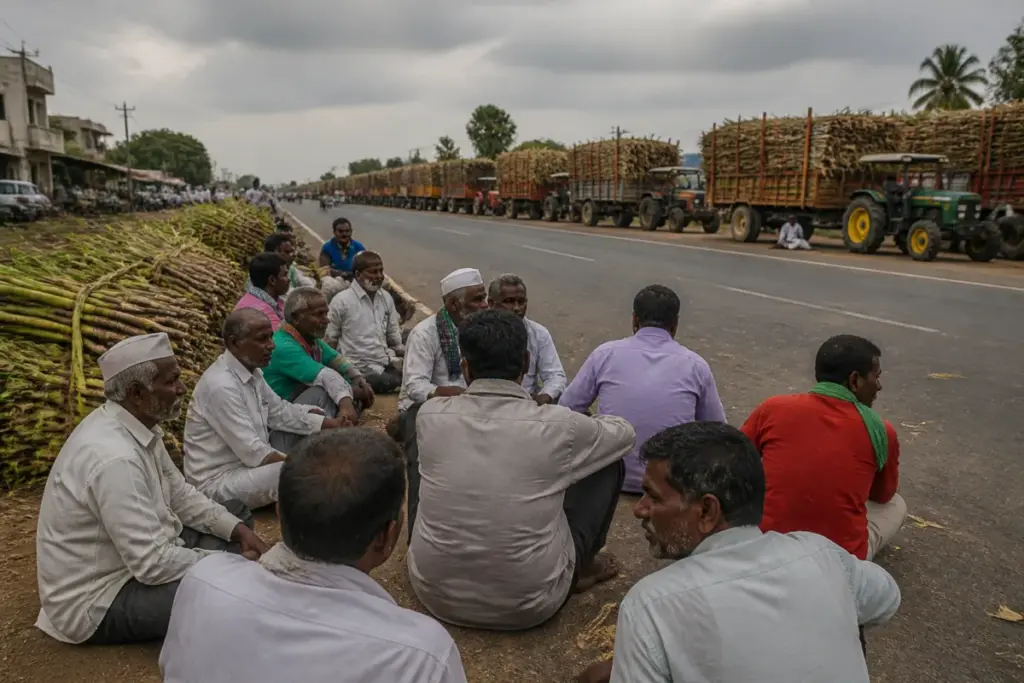
Karnataka sugarcane farmers have warned that they will resume protests from November 27 if their demands on cane prices, sugar prices and ethanol procurement are not addressed by November 26, raising the possibility of renewed highway blockades and transport disruptions across several districts.
The farmers are seeking a price of ₹5,500 per tonne for sugarcane, an increase in the minimum selling price of sugar from ₹31 to ₹60, and complete procurement of ethanol produced in Karnataka, according to a report by Prajavani. The demands come as the sugar season begins in the state and farmers intensify their campaign against what they describe as inadequate returns and difficulties facing the sugar and ethanol industries.
Farmers in Belagavi, Kittur, Haveri and Kalaburagi are among those who have participated in the agitation. Their protests have included blocking national highways, a reported 200-kilometre padayatra and the ‘Hubballi Chalo’ campaign. These actions have brought the dispute beyond the farm sector, with potential implications for road users, freight movement and the movement of agricultural produce to sugar factories.
The protest was temporarily suspended after Union Minister Pralhad Joshi gave an assurance to the farmers, according to the report. The farmers have set November 26 as the deadline for action on their demands and said the agitation would restart the following day if the demands are not met. The report did not specify the terms of the assurance or identify a government order implementing any of the requested price changes.
Chief Minister D.K. Shivakumar had also appealed to the farmers, but they did not withdraw their demands following that appeal, Prajavani reported. The present dispute therefore involves responsibilities at both the state and central levels. Sugarcane pricing, sugar realisation and ethanol procurement are connected to farm payments, mill operations, fuel policy and the market for sugar and its by-products.
The demand for ₹5,500 per tonne would directly affect the cost structure of sugar mills and the payments received by growers. The call to raise the minimum sugar selling price to ₹60 from ₹31 is linked to farmers’ argument that mills need better realisation to sustain higher cane payments. Farmers are also seeking complete procurement of ethanol produced in the state, a demand tied to the ability of distilleries and sugar factories to sell their output.
For cities and towns connected to Karnataka’s sugar belt, the dispute is also a transport and supply-chain issue. Highway blockades can affect passenger movement, freight schedules and the delivery of cane and industrial inputs. The report, however, does not provide an estimate of the number of farmers involved, the number of factories affected or the likely geographic extent of a renewed protest.
The next stated milestone is November 26, when the farmers’ deadline expires. If the demands remain unresolved, the organisations have warned that protests will resume across the affected areas from November 27.


