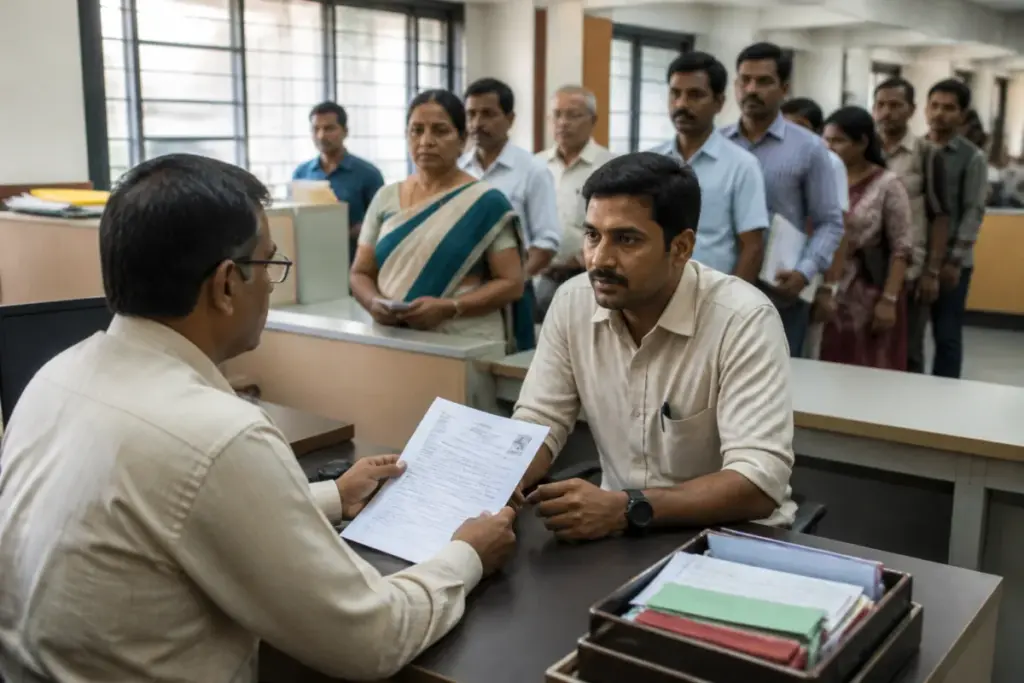
Karnataka Sakala services will now carry higher compensation for delays, deficient delivery and wrongful rejection of applications, while citizens found to have filed malicious complaints may also face a penalty of up to ₹1,500 per application, according to a government notification reported by Prajavani. The revised rates have come into effect immediately under the Karnataka Sakala Services (Amendment) Act, 2026.
The compensation will be recovered from the competent authority, designated officer or appellate authority responsible for failing to provide a notified service or dispose of an appeal within the prescribed time. The revised structure links the amount payable to the length of the delay.
For delays of one to five days, compensation will be calculated at ₹20 per day, subject to a maximum of ₹100. Delays of six to 10 days will attract ₹40 per day, capped at ₹300. For delays of 11 to 15 days, the rate will be ₹60 per day, with a maximum compensation of ₹600.
The amount rises to ₹80 per day for delays of 16 to 20 days, subject to a limit of ₹1,000. Delays of 21 to 25 days will attract ₹100 per day, with total compensation capped at ₹1,500. The provisions apply when designated officials fail to deliver services or dispose of appeals within the stipulated period.
Citizens may also receive compensation of up to ₹1,500 if a service is delivered deficiently or an application is rejected wrongly without a proper reason. The provision covers cases described in the notification as deficient services and wrongful rejections, placing financial responsibility on the concerned official when such lapses are established.
The amendment also provides for action against citizens who submit complaints intended to harm, harass or threaten government employees, or who file false grievances with malicious intent. If an investigation establishes that a complaint was malicious, the complainant may be fined ₹1,500 for each application. The same penalty may be imposed again if the conduct is repeated.
The government has said that the penalty against a complainant will be imposed only after giving the citizen an appropriate opportunity to present their grievance. Once ordered, the amount will be recovered in the same manner as arrears of land revenue.
The revised framework places both sides of the Sakala process under defined financial consequences: officials may be liable when services are delayed, deficient or wrongly rejected, while complainants may be penalised when their grievances are found to be deliberately malicious. The stated objective is to improve transparency and accountability in the delivery and disposal of public services.
According to a statement cited in the report, Karnataka government Principal Secretary Harsh Gupta said the amendment was intended to strengthen transparency and responsibility in public-service administration. The revised compensation and penalty rates are now applicable under the notified amendment.