

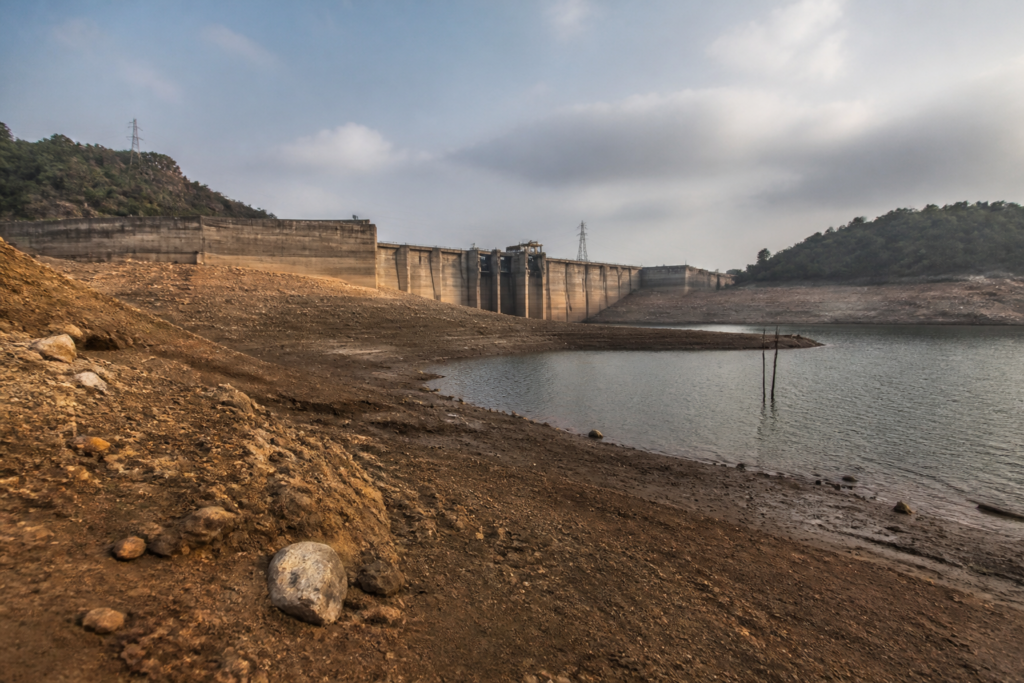
Karnataka’s reservoir storage has fallen nearly 30% below last year’s level as the state enters the post-southwest monsoon months with a 30% rainfall deficit, raising concerns over drinking water security in Bengaluru and other urban centres. Data from the Karnataka Water Resources Information System showed that 23 reservoirs held 297 tmcft of water on October 15, compared with 425 tmcft on the same date last year.
The state’s water situation has worsened earlier than usual. Concerns over scarcity typically intensify in January, but officials are now assessing the impact well before the end of the year. As many as 226 of Karnataka’s 240 taluks have been declared drought-hit.
Chief Minister D K Shivakumar has warned of possible water and power shortages in the coming months, saying the drought could worsen, and has urged residents to prepare for difficult conditions. The warning comes as Tamil Nadu presses for the release of 11 tmcft of pending Cauvery water.
A senior official said the fall in reservoir storage did not automatically indicate an immediate drinking water crisis. The official said the outcome would depend on how the available resources were managed, noting that reservoirs serve multiple purposes and that the impact differs according to local water sources, distribution infrastructure and demand.
The Cauvery basin, which supplies Bengaluru, Mysuru, Mandya and other towns, is facing the sharpest decline. Its four reservoirs held 38.3 tmcft of live storage, compared with 61.6 tmcft last year, representing a fall of nearly 38%.
The Krishna basin is relatively better placed, although its 17 reservoirs also recorded a decline. Storage in the basin stood at 258 tmcft, down 23% from 334 tmcft a year earlier.
The Krishnaraja Sagar reservoir, a key source for the Cauvery command area and Bengaluru, stood at around 100.6 feet on Thursday against its full reservoir level of 124.8 feet. Its storage was about 23.5 tmcft, less than half its total capacity of 49.5 tmcft.
For Bengaluru, water security will depend on managing available reservoir storage, downstream releases, groundwater levels and the remaining retreating monsoon. The official said authorities would also need to monitor consumption, reduce leakages, protect local water sources and prepare contingency plans for vulnerable settlements.


