

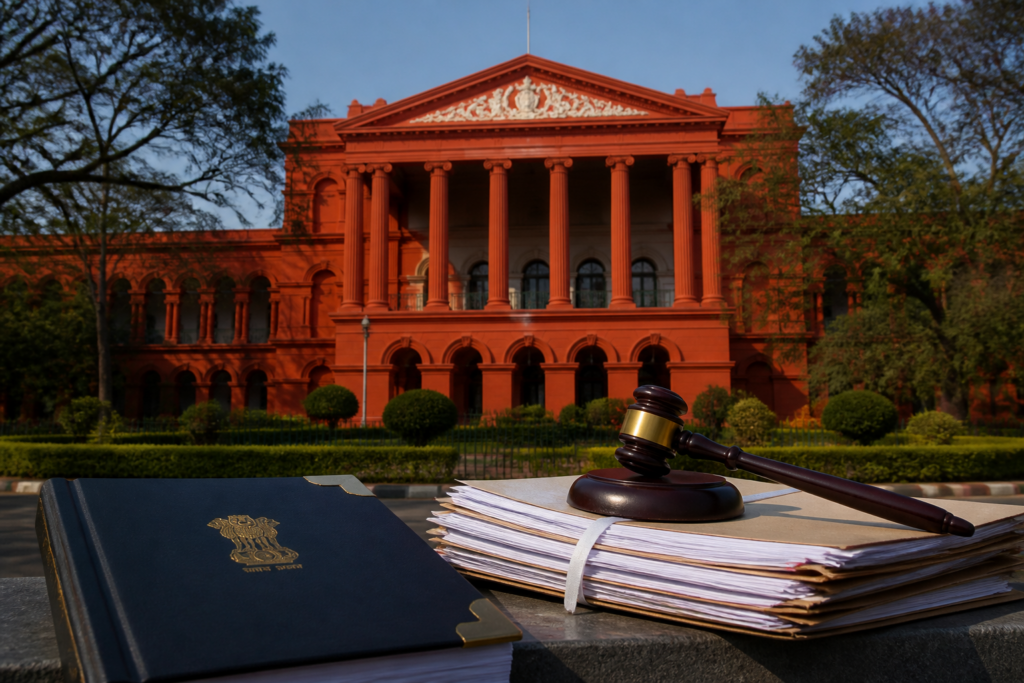
Karnataka’s decision on how to respond to the High Court’s rejection of its expanded Scheduled Caste and Scheduled Tribe quotas is becoming a test of how Indian states can pursue social representation while remaining within constitutional limits. The cabinet is expected to decide whether to challenge the order, seek the Centre’s help in placing the law in the Ninth Schedule, or assemble a stronger evidentiary case for retaining the higher quota.
The immediate dispute concerns a 2022 law that raised reservation for Scheduled Castes from 15% to 17% and for Scheduled Tribes from 3% to 7%. Alongside the existing 32% reservation for Other Backward Classes, the total reservation rose to 56%. The Karnataka High Court struck down the increase after finding that population share alone could not justify crossing the Supreme Court’s general 50% ceiling.
That finding makes the Karnataka reservation case more than a dispute over percentages. It places the state’s policy before a constitutional question: when can a state depart from the 50% limit, what evidence must support that departure, and can legislative or constitutional protection prevent later judicial review?
Tamil Nadu is being discussed because it has maintained a reservation structure above the ceiling for decades. Its total quota reached 68% in 1980, and the separation of the Scheduled Tribe quota from the Scheduled Caste allocation later took the total to 69%. Tamil Nadu enacted legislation in 1993 to protect the higher reservation, and the Constitution (Seventy-sixth Amendment) Act, 1994, placed that law in the Ninth Schedule.
But this history does not establish a simple legal route for Karnataka. The Supreme Court’s 1992 Indra Sawhney judgment established a general 50% ceiling while allowing departures in exceptional circumstances. Tamil Nadu’s experience therefore demonstrates that a state can pursue a higher quota through legislation and constitutional backing, but it does not remove the need to justify the policy within the broader constitutional framework.
The limits of Ninth Schedule protection were set out in the Supreme Court’s 2007 IR Coelho judgment. The court held that laws inserted into the Ninth Schedule after April 24, 1973, could still be reviewed if they damaged the Constitution’s basic structure. For Karnataka, this means that obtaining Ninth Schedule protection would not necessarily create an absolute shield against judicial scrutiny.
The institutional choices before Karnataka reflect three different strategies. An appeal would directly challenge the High Court’s reasoning and seek to preserve the law through the judicial process. A Ninth Schedule route would require the Centre’s cooperation and a constitutional intervention. A third option would be to address the evidentiary and procedural concerns identified by the court by demonstrating the extent of social and educational backwardness and explaining why a quota above 50% is necessary.
The third route is particularly important because the High Court’s objection, as described in the report, was not simply that Karnataka had used a high percentage. The court held that population share by itself could not justify breaching the ceiling. That places the burden on the state to provide a constitutionally sustainable explanation supported by evidence, rather than relying only on demographic proportions.
Deputy Chief Minister G Parameshwara and minister KH Muniyappa, both prominent Dalit leaders, have called for the 50% ceiling to be reviewed and urged the government to explore the Tamil Nadu model. Their position shows the political significance of the issue within Karnataka, but political support and legal sustainability are separate questions. Tamil Nadu’s model involved legislation, political consensus and a subsequent constitutional amendment; those elements did not eliminate the possibility of judicial review.
The presence of the 10% Economically Weaker Sections quota also forms part of the legal debate cited in the report. High Court advocate Hidayathulla Kuvenda argued that Karnataka’s case could become stronger if the 50% cap were removed and noted that the Indra Sawhney judgment allowed exceptions. His assessment points to the wider constitutional tension: the ceiling is treated as a general rule, but the same legal framework recognises that exceptional circumstances may exist.
This creates a demanding policy environment for states seeking to redesign reservation. A government must establish the social and educational conditions that justify differentiated treatment, show why the chosen percentage is necessary, and comply with the applicable legal and procedural requirements. A law that is politically persuasive but weakly documented can remain vulnerable even if it is placed within a constitutional protection mechanism.
The Karnataka dispute also illustrates how reservation policy is distributed across institutions. The state cabinet must decide its immediate response. The High Court has assessed the validity of the state law. The Centre would become relevant if Karnataka seeks Ninth Schedule protection. The Supreme Court could ultimately determine how the ceiling, exceptional circumstances and basic-structure review apply to the case. No single institution controls the full outcome.
The numbers explain why the legal dispute is difficult. Karnataka’s revised structure combines 17% reservation for Scheduled Castes, 7% for Scheduled Tribes and 32% for Other Backward Classes, taking the total to 56%. Tamil Nadu’s 69% model is substantially higher, but its legal position rests on a distinct legislative and constitutional history. Treating the two percentages as interchangeable would overlook the evidence and institutional steps behind Tamil Nadu’s arrangement.
The timeline is equally significant. The 50% ceiling came from the 1992 Indra Sawhney judgment. Tamil Nadu’s legislation followed in 1993, and the law entered the Ninth Schedule through the 1994 constitutional amendment. The later IR Coelho judgment in 2007 clarified that Ninth Schedule inclusion did not place post-1973 laws beyond all review. Karnataka therefore faces a legal landscape shaped by several successive decisions rather than a single precedent.
For citizens, the immediate consequence is uncertainty over the quota structure that will apply after the High Court’s order and over the route the government will choose. The supplied report does not establish the operational impact on specific admissions, recruitment processes or beneficiaries. Those details would depend on the final legal and administrative decisions, including any appeal or replacement framework.
The bigger urban and governance question is how states convert representation goals into durable public policy. Reservation affects access to public employment and education, but the dispute shows that implementation depends on evidence, legislative drafting, constitutional procedure and judicial review. The conflict is therefore not only about whether the quota should be 50% or 56%; it is also about whether the state can demonstrate why its chosen structure is constitutionally necessary.
Karnataka’s cabinet decision will indicate which institutional route the state prefers. An appeal would keep the dispute within the courts, a Ninth Schedule request would shift part of the process to the Centre and Parliament, and a revised evidentiary approach would seek to address the basis on which the High Court rejected the law. Until that next step is taken, Tamil Nadu remains a reference point for Karnataka—but not a guaranteed legal escape from the 50% ceiling.


