

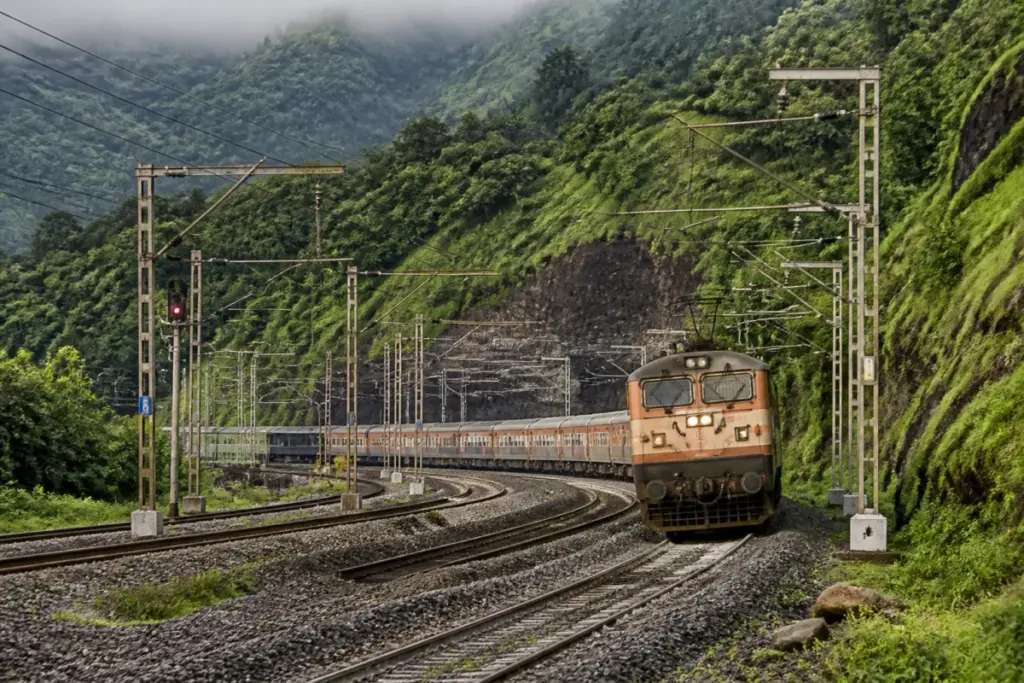
Central Railway has commissioned a 13.53-km third railway line between Kasara and Khardi after receiving clearance from the Commissioner of Railway Safety, marking the first completed phase of the long-pending Kalyan–Kasara corridor expansion.
The new line is expected to improve train operations at the Kasara end of the Mumbai suburban network, where local, mail and express, and freight services currently compete for limited track capacity. Central Railway said the Commissioner of Railway Safety inspected the line on October 17 and 18 before authorising it for operations.
A speed trial was conducted at 117 kmph, while the line has been cleared for train operations at a maximum speed of 100 kmph. The commissioning followed construction activity that continued until the final clearance was issued, according to a Central Railway spokesperson cited by Mid-Day.
The third line forms part of a larger approximately 67-km expansion between Kalyan and Kasara. The project is being implemented under the Mumbai Urban Transport Project expansion initiative and is intended to separate suburban, long-distance and freight movements more effectively on one of Central Railway’s most congested corridors.
The first phase covers the section between Asangaon and Kasara, described in the report as approximately 35 km. The newly commissioned stretch runs between Kasara and Khardi, located near the challenging Thal Ghat section. The additional track is expected to take some traffic away from the existing two lines and create greater operating flexibility at the Kasara end.
The Kalyan–Kasara corridor serves growing passenger traffic from areas including Titwala, Asangaon and Kasara. Local services on the route share the corridor with express and freight trains, creating scheduling constraints that can affect capacity and punctuality. Once the wider project is completed, the additional infrastructure is expected to support smoother movement of all three categories of services.
The line’s commissioning also highlights the operational importance of incremental rail capacity in the outer suburban network. While the 13.53-km section does not complete the wider corridor upgrade, it provides a usable additional track on a route where even partial segregation of services can help railway planners manage train paths more efficiently.
Rajesh Ghanghav, president of the Kalyan–Kasara–Karjat Railway Passengers’ Association, described the commissioning as important for passengers and thanked the railway administration for completing the work. He also urged the Railways to complete the remaining Khardi–Kalyan stretch at the earliest.
The next major milestone for the corridor will be the completion of the remaining sections of the third-line project. Until then, the newly commissioned Kasara–Khardi segment will operate as the first completed part of the wider expansion.


