

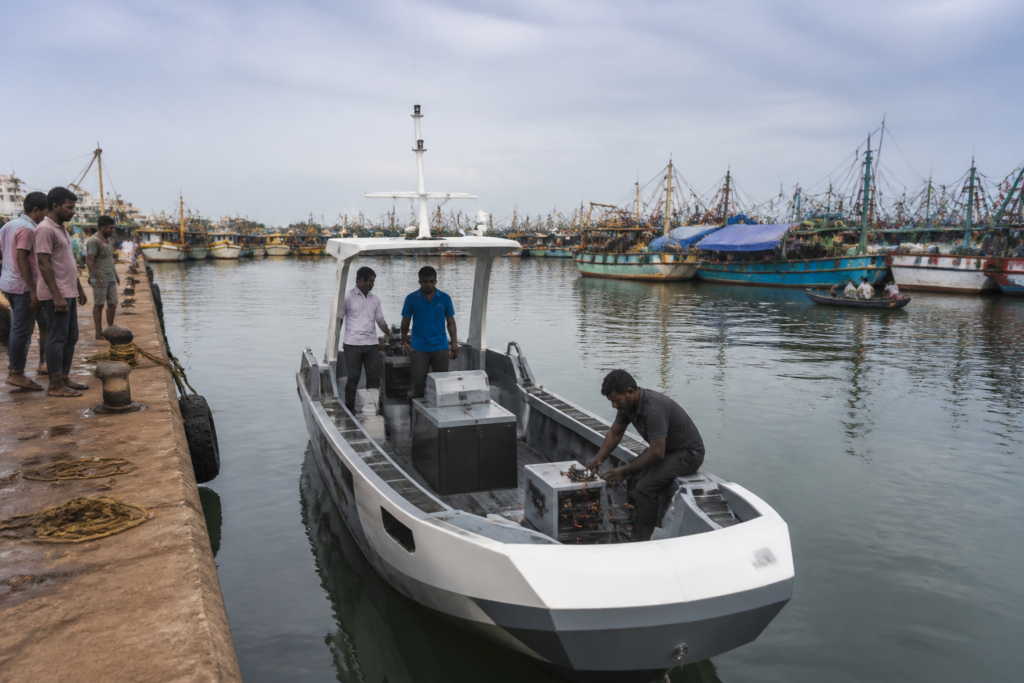
Kakinada is set to host the experimental launch of an electric fishing vessel, marking the reported beginning of Suraas Ventures Limited’s planned pan-India marine electric-vehicle operations. The launch, described by the company as the first of its kind in India, is scheduled to take place in Kakinada with MLA Vanamadi Venkateswara Rao, also known as Kondababu, expected to inaugurate the boat.
The electric fishing vessel is being manufactured by Suraas Ventures Limited as part of an effort to reduce fishing boats’ dependence on diesel. The company says the project is intended to lower fuel costs for fishermen, reduce environmental impacts and introduce electric propulsion and other clean technologies into the fisheries sector.
According to V.V. Rao, the company’s technical director and a retired additional director of the fisheries department, the boat can operate for six hours on a durable battery. He said this duration would be sufficient for local fishermen who venture out daily. The report does not provide details on the battery’s capacity, charging infrastructure, vessel speed, carrying capacity or the cost of the electric boat.
The Kakinada launch is being positioned as an experimental step rather than a full-scale commercial rollout. The company has said it plans to expand its operations across India and internationally over the next 24 months. Its stated target groups include fishing committees, tourism operators, government institutions and commercial marine stakeholders.
The proposed expansion places Kakinada at the centre of a wider industrial ambition. Suraas Ventures Limited says the city could develop into a manufacturing and service hub for marine electric vehicles, supporting production, maintenance and other services for electric boats. Any such expansion would depend on the performance of the initial vessel, the availability of charging and maintenance systems, and the ability of operators to adopt the technology. These details have not been established in the supplied report.
For fishing communities, fuel expenditure is a direct operating cost, making propulsion technology relevant to the economics of daily trips. However, the practical usefulness of an electric vessel will also depend on how long it can operate under actual fishing conditions, how quickly it can recharge and whether charging facilities are accessible near landing centres. The company’s six-hour operating claim is based on its statement and has not been independently evaluated in the supplied material.
The initiative also raises an infrastructure question for coastal cities: electric marine transport cannot scale through vessel manufacturing alone. It requires suitable shore-side power systems, charging points, technical support, battery-handling arrangements and operating protocols. The report does not state whether these facilities are already available at Kakinada or whether they are part of the company’s planned expansion.
V.V. Rao said the company may pursue a memorandum of understanding with the state and central governments if the first electric marine boat succeeds. The proposed MoU, government participation and the 24-month expansion plan remain future steps. The immediate milestone is the experimental launch in Kakinada and the vessel’s performance in local operations.


