

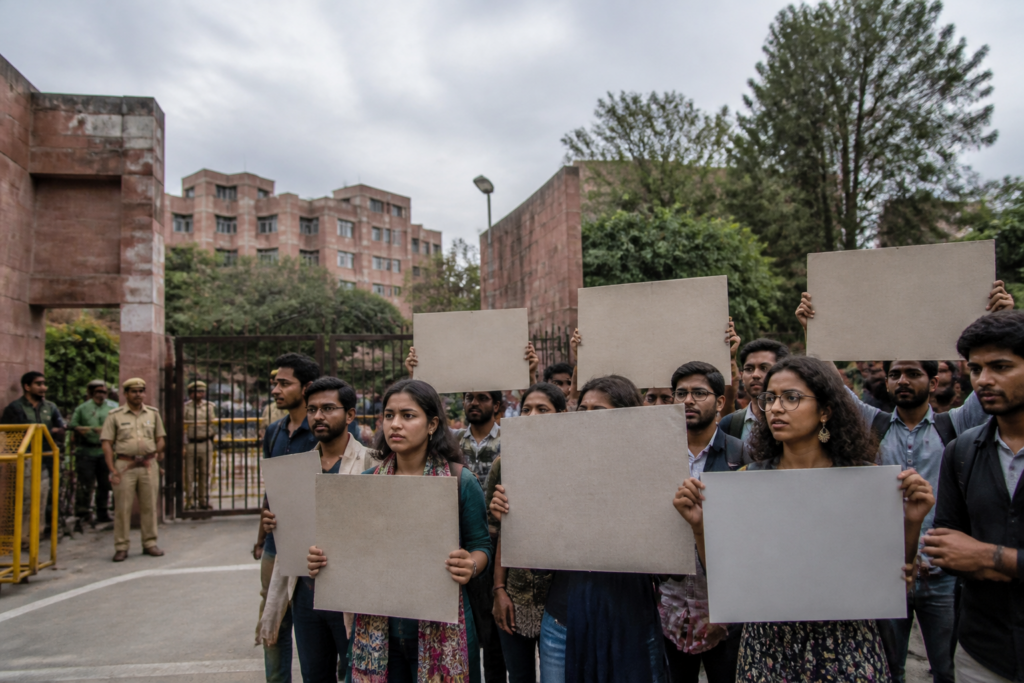
Akhil Bharatiya Vidyarthi Parishad students staged a protest at Jawaharlal Nehru University on October 14 against Congress MP and former JNU professor Angomcha Bimol Akoijam, days after the university dismissed him following an inquiry into sexual harassment complaints.
The protesters gathered at JNU’s main gate, carrying placards and raising slogans. They alleged that 11 students had filed complaints against Mr. Akoijam and questioned the Congress leadership’s public response to the matter. The protest brought a dispute involving campus safety, institutional disciplinary procedures and political accountability into the university’s public spaces.
Mr. Akoijam was a professor at the Centre for the Study of Social Systems under JNU’s School of Social Sciences. The university’s dismissal order was signed by Vice-Chancellor Santishree D. Pandit and said that the Internal Committee had conducted an inquiry and recommended major punishment based on its findings.
The order follows the formal institutional process prescribed for complaints of sexual harassment within the university. The report, however, does not provide details of the findings, the specific punishment recommendation or the timeline of the Internal Committee’s proceedings.
Mr. Akoijam has rejected the action, describing his dismissal as a “witch hunt”. He has also said that he had not received the dismissal order or the inquiry committee’s report. He challenged those making allegations that he sought sexual favours in exchange for marks to produce evidence, according to the report.
The competing claims highlight the two obligations facing universities in disciplinary cases: addressing complaints and protecting students from harassment, while also ensuring that the person facing action receives the procedural documents and opportunity to respond required under applicable rules. The material available in the report does not establish whether all stages of that process have been completed or whether the dismissal is being challenged through a formal legal or administrative proceeding.
The matter has also moved beyond the university’s internal disciplinary system. Delhi Police has served a notice on Mr. Akoijam asking him to join an investigation, according to reports cited by The Hindu. The report does not specify the provisions under which the notice was issued or the date by which he must appear.
The protest was held amid wider political attention because Mr. Akoijam is a sitting Congress MP. ABVP members questioned why the party had not issued a statement on the allegations and dismissal. The university’s dismissal order, the former professor’s objections and the police investigation now represent separate tracks that may determine the next phase of the case.
The immediate developments to monitor are Mr. Akoijam’s response to the Delhi Police notice, any formal challenge to the JNU dismissal and further disclosure by the university or investigating authorities about the inquiry and its findings.


