The Jantar Mantar trespass case involving CJP leaders Saurabh Das and Ashutosh Ranka has been transferred to the Delhi Police Crime Branch, while a special executive magistrate court has extended their judicial custody by two days, according to a report by Live Hindustan – NCR citing Delhi Police sources.
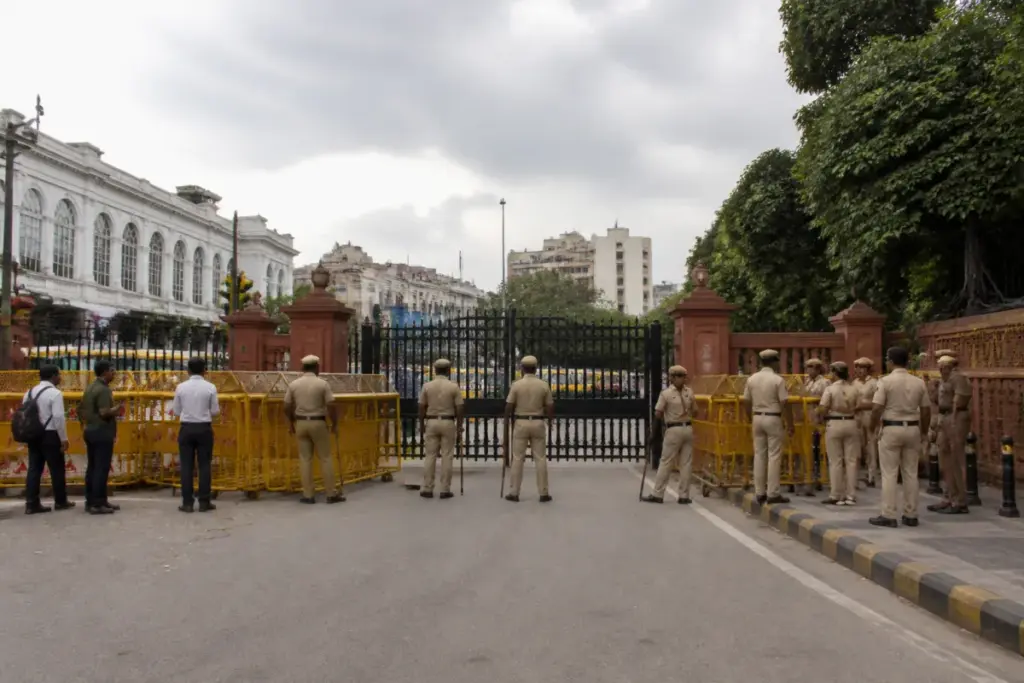
The two leaders were allegedly detained after entering Jantar Mantar by climbing over a closed gate. The development came after Jantar Mantar was removed from the list of designated protest venues. Police have described the entry as unauthorised, and the case concerns the enforcement of restrictions at one of Delhi’s most prominent public demonstration spaces.
The Crime Branch will now investigate the matter, the report said. It may also register a new case and question the two men. Any further request for their custody will depend on the course of the investigation and the applicable court process.
Das and Ranka had earlier been sent to five days of judicial custody on October 13. The police subsequently sought an extension, following which the special executive magistrate court ordered that their judicial custody be continued for two more days.
According to their lawyer, Abhik Chimni, Delhi Police argued that releasing the two leaders could pose a risk to public order and peace. The court accepted the police request for continued custody at this stage. CJP has said it would seek legal advice and consider challenging the magistrate court’s decision.
The court also took a strict view of the alleged conduct. As reported by Bar and Bench, the special executive magistrate court said the two leaders had violated the conditions of their bonds. The court observed that they had staged a protest after Jantar Mantar was removed from the list of protest sites and described the conduct as showing disregard for the law.
The court further recorded concerns that their release could lead to a disturbance of peace and public order. These observations form part of the reasoning cited for continuing their judicial custody, although the allegations remain subject to the legal process.
The transfer places the case with the Delhi Police unit that handles investigations requiring specialised scrutiny. The immediate issues before the authorities are the scope of the Crime Branch investigation, whether any additional case is registered, and whether the agency seeks further custody or questioning of the accused.
The case also highlights the administrative consequences of changing the status of a public protest venue. Restrictions at Jantar Mantar affect how demonstrations are regulated in central Delhi, where public access, security arrangements and the right to assemble are managed through police and administrative orders. The next formal developments will depend on the Crime Branch’s investigation and the court proceedings concerning the extended custody.